As an Amazon Associate I earn from qualifying purchases. Links in this article may be affiliate links. How we choose gear
Introduction: Why a Solar Panel and Inverter Kit Makes Sense in 2026
Picture this: a summer storm knocks out the power on your street, your neighbors fire up loud gas generators, and your fridge just… keeps humming. No fumes, no fuel run, no drama. That quiet confidence is exactly what a well-chosen solar panel and inverter kit buys you, whether it’s bolted to an RV roof, a backyard shed, or a cabin at the end of a gravel road.
Here’s the catch. A solar panel and inverter kit is only as good as its weakest component, and the listings rarely tell you which part that is. A 3,000W inverter paired with a single 100Ah battery looks impressive on paper, but in practice it can drain that battery in well under an hour at full load. A “400W kit” with a 30A controller may quietly throw away solar harvest on cold, bright mornings. These are the details that separate a system you love from one you resent.
This guide cuts through that noise. We compared seven real kits sold on amazon.com, from a budget 200W starter bundle to a 48V whole-cabin system, using manufacturer spec sheets, aggregated customer feedback, and plain math about watt-hours and peak sun hours. You’ll get honest analysis of who each kit fits, where each one cuts corners, and how to size your own system without guesswork.
One important 2026 reality check before we start: the federal 30% Residential Clean Energy Credit ended for systems installed after December 31, 2025, so the price on the box is now closer to your real cost. That makes picking the right-sized kit (rather than the biggest one) more important than ever.
What Is a Solar Panel and Inverter Kit?
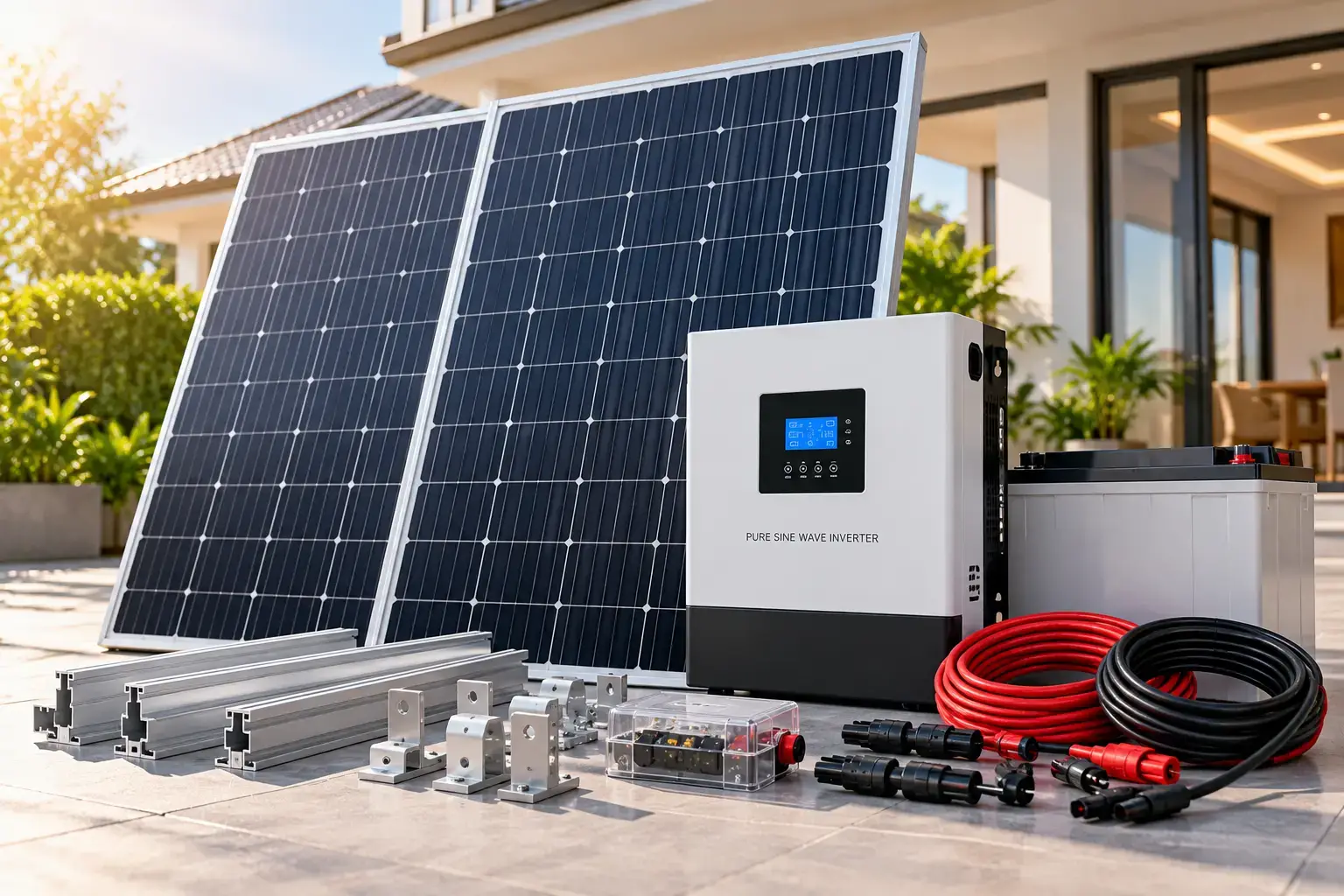
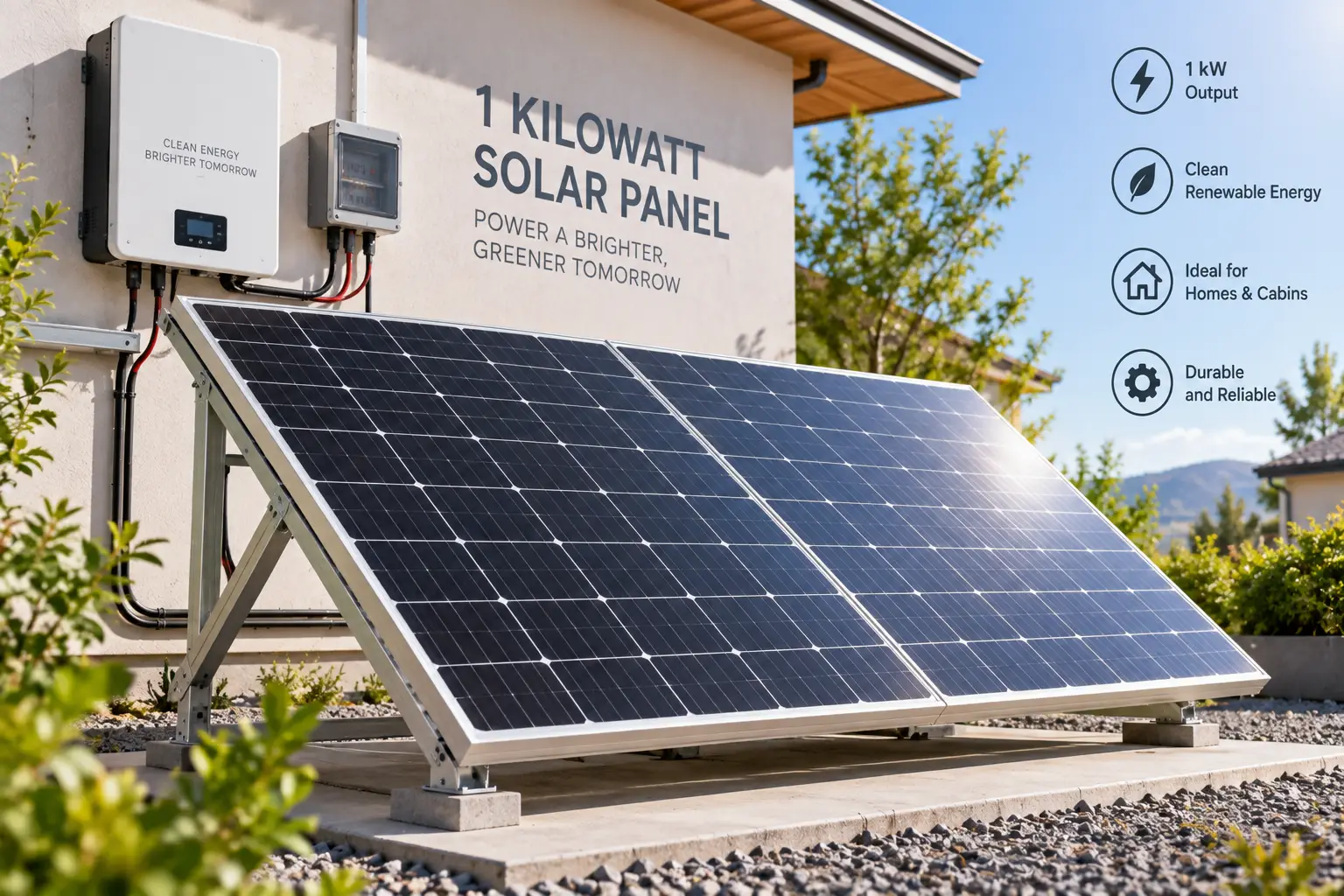
A solar panel and inverter kit is a bundled power system that pairs solar panels with an inverter that converts stored DC electricity into standard 120V AC household power. Most complete kits also include a charge controller, a battery, cables, and mounting brackets, so you can run normal appliances off-grid.
Think of it as a tiny private utility. The panels are your power plant, the charge controller is the traffic cop that protects the battery, the battery is your reservoir, and the inverter is the translator that turns battery power into the same kind of electricity your wall outlets deliver. If one of those roles is undersized, the whole system bottlenecks.
The U.S. Department of Energy’s overview of grid-connected and stand-alone renewable energy systems is a useful primer here, because it frames the key decision every buyer faces first: are you building a stand-alone (off-grid) system, or something that works alongside the utility? Every kit in this guide is designed primarily for off-grid or backup use, meaning it relies on batteries rather than feeding power back to the grid.
That distinction matters more than wattage. An off grid solar kit with battery and inverter needs its storage sized for cloudy days and overnight loads, while a grid-tied system can lean on the utility as a backstop. Get clear on which camp you’re in, and the rest of your shopping list gets dramatically shorter.
Quick Comparison: The 7 Best Solar Panel and Inverter Kits at a Glance
Kit
Solar Array
Battery Storage
Inverter
Approx. Price Range
Best For
ECO-WORTHY 200W 12V Complete Kit
200W (2×100W)
1.28kWh LiFePO4
1,100W pure sine
$400–$600
Weekend campers, sheds
ECO-WORTHY 1.6KWH 400W 12V Kit
400W (4×100W bifacial)
2.56kWh LiFePO4
2,000W pure sine
$800–$1,200
Mid-size RVs, vans
Renogy 200W 12V Complete Kit
200W (2×100W)
1.28kWh self-heating LiFePO4
1,000W pure sine
$900–$1,300
Cold-climate campers
ExpertPower 2.5KWH 12V Kit
400W (4×100W)
2.56kWh LiFePO4
3,000W inverter charger
$1,300–$1,800
Tiny homes with surge loads
ECO-WORTHY 1200W 24V System
1,170W (6×195W bifacial)
7.168kWh LiFePO4
3,000W
$2,000–$2,800
Full-time cabins
SunGold Power SGK-PRO3
600W (6×100W)
2.56–5.12kWh LiFePO4
3,000W pure sine
$2,300–$3,400
Heavy-appliance backup
ECO-WORTHY 5KW 48V Off-Grid Kit
2,340W (12×195W)
5.12kWh LiFePO4
5,000W all-in-one
$2,200–$3,200
Whole-cabin power
Prices are approximate ranges at the time of writing and may vary — check the current price on Amazon.
Looking at the table, the biggest jump in capability isn’t inverter size — it’s the ratio between solar array and battery. The ECO-WORTHY 1200W 24V System is the only kit here with enough storage to ride out a cloudy day for a modest cabin, while the ECO-WORTHY 5KW 48V Off-Grid Kit wins on daily harvest. Budget shoppers should note that the ECO-WORTHY 200W 12V Complete Kit and Renogy 200W 12V Complete Kit share nearly identical storage; you’re paying for the Renogy’s MPPT controller and cold-weather battery, not more power.
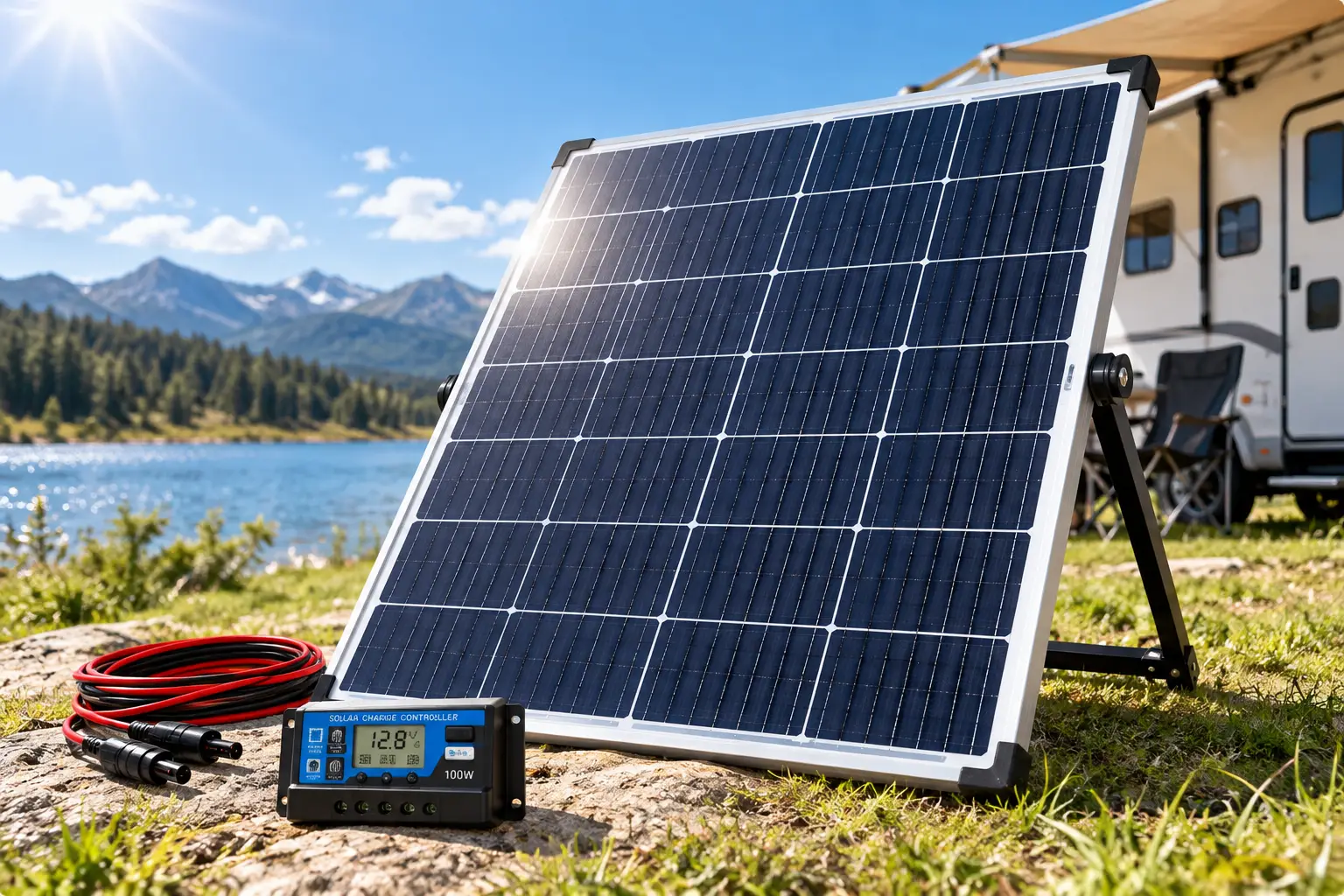
The ECO-WORTHY 200W 12V Complete Kit is the lowest-cost way to get panels, battery, controller, and a pure sine inverter in one box. It pairs two 100W monocrystalline panels with a 12.8V 100Ah LiFePO4 battery, a 30A PWM charge controller, and an 1,100W pure sine wave inverter.
In practice, 1.28kWh of storage runs LED lights, phone and laptop charging, a fan, and a 12V or efficient small fridge for a long weekend. ECO-WORTHY claims up to roughly 800Wh of daily generation, which assumes strong sun; plan on 500–700Wh on average days. The 1,100W inverter handles a coffee grinder or a small blender, but not a hair dryer or microwave running for long.
Based on comparing the specs, this is the kit for someone who wants to learn solar without a big commitment — a weekend camper, a shed owner, or a prepper building a basic emergency backup. The PWM controller is the honest trade-off: it’s simpler and cheaper than MPPT but wastes some harvest, especially if you later add panels.
Aggregated feedback in independent roundups consistently highlights how easy the physical setup is, while common complaints center on short included cables and limited expandability with the PWM controller.
Pros:
Lowest entry price for a complete lithium system
Pure sine inverter is safe for laptops
LiFePO4 battery lasts thousands of cycles
Cons:
PWM controller limits efficiency and future growth
Included cables run short for many layouts
Typically between $400 and $600 at the time of writing, the ECO-WORTHY 200W 12V Complete Kit is the best value for learning solar on a budget.
ECO-WORTHY 200W 12V Complete KitSee current price, sizes and reviews on Amazon.
The ECO-WORTHY 1.6KWH 400W 12V Kit doubles everything that matters compared with the starter bundle. You get four 100W bifacial panels, a 40A MPPT charge controller with a Bluetooth module, two 12V 100Ah LiFePO4 batteries (2.56kWh total), and an upgraded 2,000W pure sine inverter.
The “1.6KWH” in the name refers to estimated daily solar production, not storage — a distinction many buyers miss. The MPPT controller is the real upgrade here: it squeezes more usable energy from the panels on cold mornings and partial shade, and the Bluetooth app lets you check battery state from your phone instead of crawling into a storage bay. Bifacial panels can also pick up reflected light from their back side when ground-mounted over light-colored surfaces.
Here’s what to weigh: a 2,000W inverter will run a microwave or induction cooktop briefly, but those loads drain a 2.56kWh bank fast. This kit fits couples boondocking a few days at a time, van lifers, or a shed office with a laptop and monitor.
Customer feedback summarized across retail listings and roundups is generally positive about value for the wattage, though some buyers on deal forums question the long-term reliability of budget-brand controllers and inverters.
Pros:
MPPT controller harvests more energy than PWM
Bluetooth monitoring removes guesswork about battery state
Two batteries provide meaningful overnight reserve
Cons:
2,000W inverter outpaces the battery bank’s endurance
Inverter reliability questions appear in user discussions
Usually in the $800–$1,200 range, the ECO-WORTHY 1.6KWH 400W 12V Kit offers the best balance of capacity and price in this guide.
ECO-WORTHY 1.6KWH 400W 12V KitSee current price, sizes and reviews on Amazon.
The Renogy 200W 12V Complete Kit solves a problem cheaper kits ignore: lithium batteries can’t safely charge below freezing. Its 100Ah smart LiFePO4 battery has a built-in self-heating function, paired with two compact 100W panels, a Rover Li 40A MPPT controller, and a 1,000W pure sine inverter.
That self-heating feature means the battery warms itself before accepting charge on frosty mornings, so you don’t lose a day of solar while waiting for the sun to thaw things out. The Rover controller uses a four-stage charging algorithm and multiple electronic protections, and it’s oversized for 200W — which leaves room to add panels later without replacing it. Renogy also includes a fairly complete wiring set: Y-branch connectors, Z-brackets, a 20-foot 10AWG adapter kit, and tray cables.
What the spec sheet doesn’t emphasize is that the 1,000W inverter is the smallest in this roundup, so this is a low-draw system. It fits winter campers, hunters, ice-fishing shacks, and Northern cabin weekends.
Reviews for Renogy’s kits tend to praise documentation and brand support, while the recurring complaint is price: you pay noticeably more per watt than with ECO-WORTHY. We could not verify a consolidated Amazon rating for this exact bundle, so check the listing.
Pros:
Self-heating battery charges safely in freezing weather
The ExpertPower 2.5KWH 12V Kit is built around muscle. It combines four 100W monocrystalline panels, two 12V 100Ah LiFePO4 batteries with Bluetooth monitoring, a 30A MPPT controller that auto-detects 12V/24V, and a 3,000W pure sine wave inverter charger.
The inverter charger is the headline. Because it can also charge batteries from shore power or a generator and switch over automatically, it doubles as a whole-RV or tiny-home power hub. ExpertPower’s 3,000W 12V unit is rated for a 9,000W peak, which is what lets refrigerators, well pumps, and small power tools start without tripping.
Based on comparing the specs, there’s one mismatch to know: a 30A controller on a 12V bank tops out around 400W of panel input, so the controller — not the battery — becomes the ceiling if you expand solar. It suits tiny-house owners who need occasional heavy loads.
Aggregated feedback is mixed: roundups praise the turnkey component set, while a small set of Trustpilot reviews for the brand cites slow shipping and slow warranty resolution. That sample is tiny, so treat it as a caution, not a verdict.
Pros:
3,000W inverter charger handles big startup surges
Shore-power charging and automatic transfer built in
Bluetooth batteries make monitoring simple
Cons:
30A controller caps future solar expansion
Some buyers report slow warranty support
Typically between $1,300 and $1,800, the ExpertPower 2.5KWH 12V Kit delivers strong value when surge power matters more than solar growth.
ExpertPower 2.5KWH 12V KitSee current price, sizes and reviews on Amazon.
The ECO-WORTHY 1200W 24V System is where kits stop being “camping gear” and start acting like real infrastructure. Six 195W bifacial panels (1,170W total) feed a 24V system with two 12.8V 280Ah LiFePO4 batteries for 7.168kWh of storage, paired with a 3,000W inverter.
Moving to 24V halves the current compared with 12V at the same power, which means thinner, cheaper cables and less heat. ECO-WORTHY estimates around 5.52kWh of daily production in good sun. That’s enough to cover a full-size efficient refrigerator, lights, a laptop workstation, and a water pump — with storage that can bridge a gray day.
Here’s what to weigh: these 280Ah batteries are heavy, and panels at 195W each require roof or ground space for six full-size modules. It fits full-time tiny homes, hunting cabins used for weeks at a stretch, and serious off-grid hobbyists.
Reviews in independent roundups repeatedly single out the storage capacity as the standout. The common caution is that setup complexity rises noticeably at this size; this isn’t a 30-minute install.
Pros:
7.168kWh storage covers cloudy-day reserve
24V design reduces cable size and heat
Bifacial panels boost output on reflective ground
Cons:
Heavy batteries and panels complicate installation
Requires substantial mounting space for six panels
Generally in the $2,000–$2,800 range, the ECO-WORTHY 1200W 24V System offers the best storage-per-dollar ratio in this lineup.
ECO-WORTHY 1200W 24V SystemSee current price, sizes and reviews on Amazon.
The SunGold Power SGK-PRO3 is the kit for people who refuse to give up the microwave. It bundles six 100W monocrystalline panels, a 3,000W pure sine wave inverter converting 12V DC to 120V AC, a 60A MPPT solar charge controller, and either two 100Ah or two 200Ah LiFePO4 batteries with Bluetooth.
SunGold rates the inverter for a 9,000W surge for up to 20 seconds — a meaningful number for motor-driven loads like compressors, sump pumps, and table saws. The 60A MPPT controller has proper headroom for the 600W array. Choosing the 200Ah battery option (5.12kWh) is strongly recommended; with 100Ah batteries, a 3,000W inverter can theoretically empty the bank in under an hour.
What most buyers overlook: pulling 3,000W from a 12V battery means more than 250 amps of DC current. That demands short, thick cables and proper fusing. It fits hurricane-belt homeowners and off-grid workshops.
We found limited independent review data for this exact bundle, so we can’t summarize broad customer sentiment honestly. What’s verifiable is the spec sheet and manual availability. Check recent Amazon reviews before buying.
Pros:
9,000W surge rating starts demanding motor loads
60A MPPT controller matches the array properly
Battery size options let you scale storage
Cons:
12V at 3,000W demands very heavy cabling
Limited independent review data for this bundle
Ranging from roughly $2,300 to $3,400 depending on battery option, the SunGold Power SGK-PRO3 justifies its cost only with the larger batteries.
SunGold Power SGK-PRO3See current price, sizes and reviews on Amazon.
The ECO-WORTHY 5KW 48V Off-Grid Kit is the closest thing here to a complete solar power system for home use. It pairs twelve 195W panels (2,340W) with a 48V 5,000W all-in-one inverter that integrates the MPPT controller, plus a 51.2V 100Ah server-rack LiFePO4 battery (5.12kWh).
A 48V architecture is how professional off-grid systems are built: it cuts current to a quarter of a 12V system, so wiring is manageable even at 5,000W. By our own rough math, 2,340W of panels at 4.5 peak sun hours with typical system losses yields around 8kWh on a good day — enough to run a cabin’s fridge, lights, washing machine, and well pump. Server-rack batteries also stack neatly when you want more storage.
Based on comparing the specs, the trade-off is that daily harvest outruns storage. One 5.12kWh battery fills quickly, so we’d plan for a second. It fits remote cabins, homesteads, and whole-home backup for essentials.
Aggregated feedback from roundups rates this kit highly for value at its scale. Some listings for ECO-WORTHY’s 5kW inverters mention UL 1741 and battery UL 1973/UL 9540A certifications, but confirm this on your specific listing.
Pros:
48V design keeps currents and cables manageable
All-in-one inverter simplifies wiring and setup
Rack battery format makes storage easy to expand
Cons:
Single battery undersized relative to array output
Likely needs permits and a licensed electrician
Usually between $2,200 and $3,200, the ECO-WORTHY 5KW 48V Off-Grid Kit delivers the most daily energy per dollar in this guide.
ECO-WORTHY 5KW 48V Off-Grid KitSee current price, sizes and reviews on Amazon.
How the Top Kits Stack Up: Specs, Voltage, and Value
Kit
System Voltage
Controller
Est. Daily Harvest*
Days of Storage**
Best For
ECO-WORTHY 200W 12V Complete Kit
12V
30A PWM
0.5–0.8kWh
~1.5
Budget learners
ECO-WORTHY 1.6KWH 400W 12V Kit
12V
40A MPPT
1.2–1.6kWh
~1.8
RV couples
Renogy 200W 12V Complete Kit
12V
40A MPPT
0.6–0.9kWh
~1.5
Winter campers
ExpertPower 2.5KWH 12V Kit
12V
30A MPPT
1.2–1.5kWh
~1.8
Surge-heavy tiny homes
ECO-WORTHY 1200W 24V System
24V
MPPT
3.8–5.5kWh
~1.5
Full-time cabins
SunGold Power SGK-PRO3
12V
60A MPPT
1.8–2.4kWh
~1–2
Appliance backup
ECO-WORTHY 5KW 48V Off-Grid Kit
48V
Built-in MPPT
6.5–8.5kWh
~0.7
Whole cabins
*Our estimate at 4–5 peak sun hours with ~20% system losses. *Storage divided by estimated daily harvest.
The “days of storage” column tells a story the product listings don’t. The ECO-WORTHY 5KW 48V Off-Grid Kit harvests the most but stores less than one day of its own production, so it’s ideal for daytime-heavy use and begs for a second battery. The ECO-WORTHY 1200W 24V System and ECO-WORTHY 1.6KWH 400W 12V Kit hold the most balanced ratios, making them the safest choices for buyers who’d rather not tinker.
Don’t miss these top-rated solar picks!
Take your off-grid setup to the next level with this carefully curated lineup. Click a highlighted kit to check current pricing and availability. These picks will help you keep the lights on, the fridge cold, and the whole family comfortable — storm or no storm!
Getting Started: Your First 30 Days With a Solar Panel and Inverter Kit
Unboxing a solar panel and inverter kit is exciting, but the first month is when most avoidable mistakes happen. Here’s a practical roadmap.
Week 1: Bench test before you mount
Lay everything out in a garage or driveway and connect it temporarily. Confirm the battery reads its rated voltage (around 13.2–13.4V resting for a 12V LiFePO4), the controller recognizes it, and the panels produce current in direct sun. Finding a dead component now beats finding it on a roof.
Week 2: Install in the right order
Connect the battery to the charge controller first, then the panels. Reversing the order can damage some controllers. Install a fuse or breaker close to the battery’s positive terminal, and keep inverter cables as short as possible — length is the enemy of efficiency at 12V.
Week 3: Learn your real numbers
Use the Bluetooth app or a battery monitor to log your daily consumption. Most people underestimate phantom loads: routers, TVs on standby, and inverter idle draw (often 20–50W on larger units) add up overnight.
Week 4: Set a maintenance rhythm
Wipe panels monthly with water and a soft brush
Check terminal tightness after the first month (connections settle)
Keep LiFePO4 batteries between roughly 20% and 90% for daily use when possible
Turn the inverter off when you don’t need AC — it saves real energy
The most common first-month error? Running the inverter 24/7 “just in case.” On a 1.28kWh battery, a 40W idle draw alone eats nearly 1kWh a day.
Real-World Scenarios: Matching the Right Kit to Your Life
Specs only mean something in context. Here are three realistic buyer profiles and the kits that fit them best.
Scenario 1: Maya, the weekend van camper
A van owner takes a converted van out two weekends a month. They need lights, a 12V fridge, a fan, and laptop charging. Budget: under $700. The best fit is the ECO-WORTHY 200W 12V Complete Kit. Two panels fit the roof, and 1.28kWh of storage handles roughly 600–900Wh of daily use. If they later camp in shoulder seasons, they’d want to consider the Renogy 200W 12V Complete Kit for its self-heating battery instead.
Scenario 2: A family, hurricane-season backup in Florida
A family wants to keep a full-size fridge, a chest freezer, Wi-Fi, fans, and a few lights running through multi-day outages. Their budget is about $3,000, and they’ll ground-mount panels in the backyard. The SunGold Power SGK-PRO3 with 200Ah batteries handles compressor surges comfortably, and 600W of panels recharges a meaningful share daily. Alternatively, the ECO-WORTHY 1200W 24V System gives them far more storage for similar money — the smarter choice if surge loads stay modest.
Scenario 3: The weekend-to-full-time cabin builder
The cabin builder’s off-grid cabin in Colorado sits a half-mile from the nearest power line. They plan to live there part-time now and full-time in two years. The ECO-WORTHY 5KW 48V Off-Grid Kit is the foundation: the 48V architecture scales, and adding a second rack battery later is straightforward. For a remote site like this one, extending a utility line can cost far more than a complete solar setup.
Troubleshooting: 5 Common Problems and How to Fix Them
Problem 1: The battery never reaches full charge
Solution: Check for partial shading first — even one shaded cell can drag down a whole panel string. Then confirm your controller’s battery type is set to LiFePO4 (not lead-acid), which changes charge voltages. On the ECO-WORTHY 200W 12V Complete Kit, a PWM controller also loses efficiency when panel voltage runs far above battery voltage.
Problem 2: The inverter shuts off when the fridge starts
Solution: That’s a surge trip. Refrigerator compressors can briefly draw several times their running wattage. Either upgrade to a higher-surge unit like the 9,000W-peak inverter in the ExpertPower 2.5KWH 12V Kit, or check that your cables are thick enough — undersized cables cause voltage sag that mimics a low battery.
Problem 3: The battery won’t charge on cold mornings
Solution: It’s probably working as designed. Most LiFePO4 batteries block charging below freezing to protect the cells. The Renogy 200W 12V Complete Kit solves this with self-heating; otherwise, insulate the battery compartment.
Problem 4: Output drops sharply in summer
Solution: Heat reduces panel efficiency. Leave a few inches of airflow beneath roof-mounted panels, and don’t mount them flush against hot RV roofs.
Problem 5: The Bluetooth app shows wildly wrong percentages
Solution: Voltage-based estimates are unreliable with LiFePO4’s flat discharge curve. Fully charge the battery to resync, or add a shunt-based battery monitor for accurate readings.
How to Choose a Solar Panel and Inverter Kit
Choosing a solar panel and inverter kit comes down to seven decisions, made in this order:
Calculate your daily watt-hours. List every device, its wattage, and its hours of use. A 60W TV for 4 hours equals 240Wh. This single number drives everything else.
Find your peak sun hours. NREL’s free PVWatts calculator estimates solar production for your exact ZIP code — far more accurate than national averages.
Size the array. Divide daily watt-hours by peak sun hours, then add about 25% for losses. Using 1,500Wh at 5 sun hours means roughly 375–400W of panels.
Size the battery for autonomy. Multiply daily use by the number of cloudy days you want to cover. LiFePO4 batteries can typically use most of their rated capacity, unlike lead-acid.
Pick inverter size by peak load, not average load. Add up everything that might run at once, then check the surge rating for motor loads.
Choose system voltage. 12V suits small RV setups; 24V fits mid-size cabins; 48V is the standard above roughly 3,000W.
Verify certifications and support. Look for UL listings on the inverter and battery, plus a reachable U.S. support team.
The most expensive mistake is skipping step one. Buyers who start with the inverter wattage almost always end up with a big inverter and a too-small battery.
Off Grid Solar Kit With Battery and Inverter vs. Portable Power Station vs. DIY Parts
Approach
Upfront Cost
Expandability
Install Effort
Best For
Off grid solar kit with battery and inverter
Medium
High
Moderate
RVs, cabins, sheds
Portable power station + folding panels
Medium–High per kWh
Low–Medium
Minimal
Renters, apartments, tailgating
Piecemeal DIY components
Lowest per kWh
Highest
High
Experienced builders
An off grid solar kit with battery and inverter sits in the practical middle. Compared with a portable power station, you typically get more storage and solar per dollar and far more room to grow — but you trade away the grab-and-go convenience. A power station is unbeatable if you rent or need power that moves from room to room; a kit wins once you want permanent, roof- or ground-mounted capacity.
Piecemeal DIY builds can be cheaper per kilowatt-hour, and experienced builders often prefer hand-picking a premium inverter or controller. The catch is compatibility: mismatched voltages, under-rated cables, and controllers that don’t support LiFePO4 profiles are common pitfalls. Kits eliminate most of that guesswork because the components are pre-matched — the main reason a kit like the ECO-WORTHY 1.6KWH 400W 12V Kit makes sense for first-timers.
Based on the comparison, the decision rule is simple: if you’ll move it, buy a power station; if you’ll mount it, buy a kit; if you can read a wiring diagram fluently and want maximum value, build it yourself.
Solar Inverter Kit for RV: What Changes on the Road
Choosing a solar inverter kit for RV use isn’t the same as outfitting a cabin. Space, weight, vibration, and integration with your existing electrical system all change the calculus.
Roof real estate rules. Most RV roofs fit two to four 100W panels after accounting for vents, AC units, and skylights. That’s why 200–400W kits like the ECO-WORTHY 1.6KWH 400W 12V Kit dominate this category. Compact panels, like those in the Renogy 200W 12V Complete Kit, help on smaller trailers.
Stick with 12V for most rigs. Your RV’s house system almost certainly runs at 12V, so a 12V kit integrates with existing lights, pumps, and fans without a converter.
Consider an inverter charger. Units like the 3,000W inverter charger in the ExpertPower 2.5KWH 12V Kit charge batteries from shore power and switch over automatically when you unplug. That replaces your RV’s old converter and simplifies the whole system.
Secure for vibration. Use lock washers on terminals, strain relief on cables, and roof-mount brackets rated for highway speeds. Re-check connections after your first long drive.
Watch weight. Two 100Ah LiFePO4 batteries weigh roughly a quarter of an equivalent lead-acid bank — a real payload advantage on smaller trailers.
For boondocking couples, a 400W/200Ah setup is the sweet spot: enough to run a 12V fridge, lights, water pump, and devices indefinitely in sunny weather.
Complete Solar Power System for Home: What a Kit Can (and Can’t) Do
It’s tempting to view a large kit as a complete solar power system for home use. The honest answer is: it depends on what “home” means to you.
What a kit can do well. Larger 24V and 48V kits like the ECO-WORTHY 5KW 48V Off-Grid Kit can genuinely power a small, efficient off-grid cabin or a tiny home, and they make excellent backup for essential circuits — refrigerator, freezer, lights, internet, a well pump, and fans.
What a kit usually can’t do. A typical U.S. home uses far more electricity than these kits generate, and central air conditioning, electric water heaters, and electric ranges are the big hitters. Powering those off-grid requires a much larger array and battery bank than any kit in this guide.
The backup sweet spot. For most suburban homeowners, the smartest use is a critical-loads panel. An electrician moves your essential circuits to a sub-panel fed by the kit’s inverter, so outages leave your must-haves running while non-essentials go dark.
Grid-tie is a different product. None of these kits are designed to sell power back to your utility. If lowering your monthly bill is the goal, a permitted, grid-tied system with a utility interconnection agreement is the right path.
Based on comparing the specs, a 48V kit is the best stepping stone: start with essential-load backup, then expand storage toward cabin-scale independence.
Solar Panel Kit With Lithium Battery: Why LiFePO4 Took Over
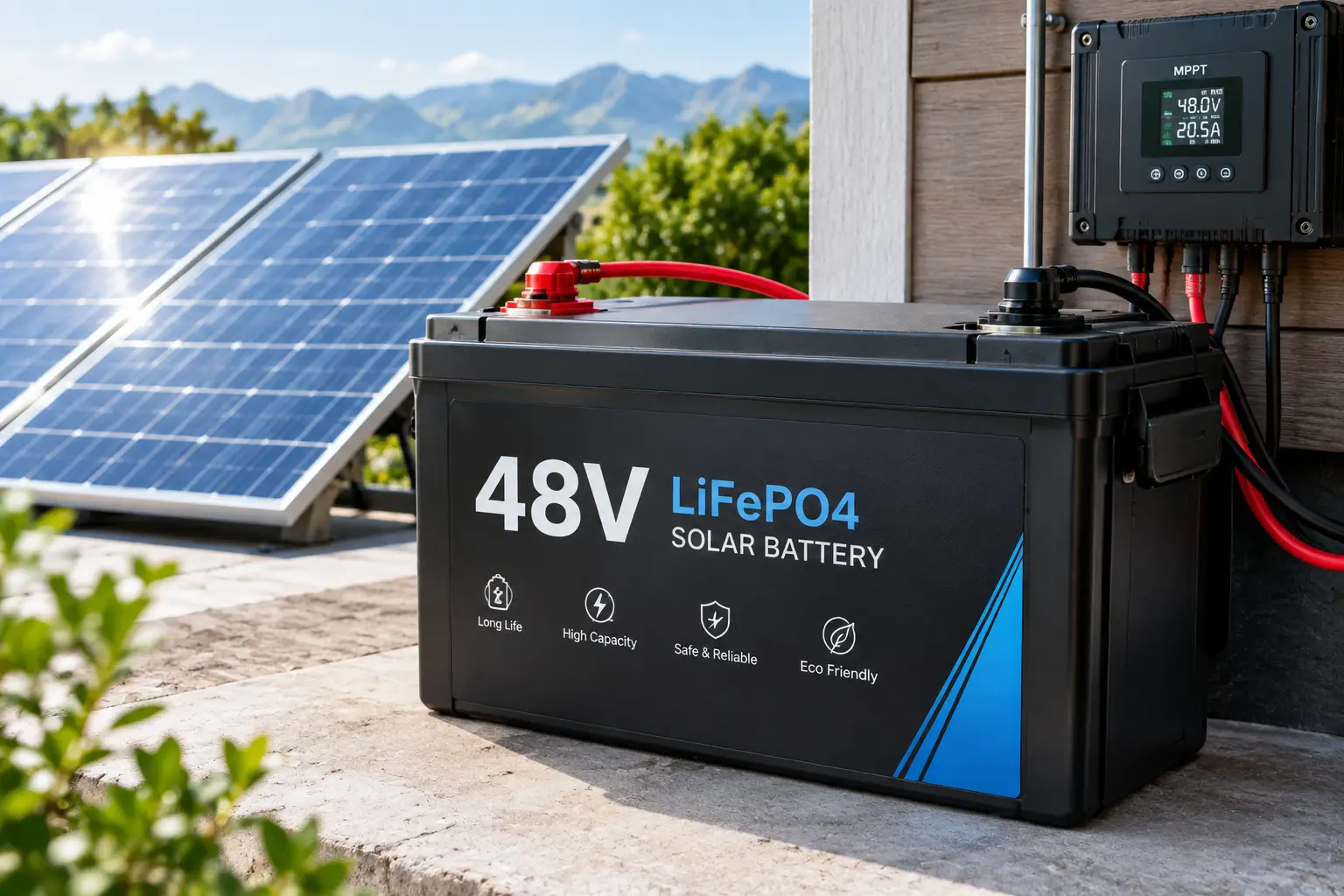
Every kit in this guide is a solar panel kit with lithium battery storage — specifically lithium iron phosphate (LiFePO4). There are good reasons lead-acid has nearly disappeared from complete kits.
Usable capacity. Lead-acid batteries are generally kept above about 50% charge to avoid shortening their lives, so a 100Ah lead-acid battery offers roughly 50Ah of practical use. LiFePO4 batteries routinely deliver most of their rated capacity, which roughly doubles usable storage for the same nameplate rating.
Cycle life. Quality LiFePO4 cells are commonly rated for several thousand cycles. In daily use, that’s many years of service, versus a few years for flooded lead-acid.
Weight and maintenance. LiFePO4 weighs much less and needs no watering or equalization charging.
Safety chemistry. LiFePO4 is considered more thermally stable than other lithium chemistries like NMC. That’s why it’s the standard for RV and home storage.
Features that matter (and ones that don’t). A built-in battery management system (BMS), low-temperature charge protection, and Bluetooth monitoring are worth paying for. “Grade A cells” claims are hard to verify, and flashy LED displays add little. Self-heating, as on the Renogy 200W 12V Complete Kit, matters only if you’ll charge below freezing.
The one weakness? Cold charging. Below 32°F, most LiFePO4 batteries won’t accept a charge without heating — plan your installation accordingly.
Long-Term Cost and Maintenance: The Real ROI
Kit
Approx. Price Range
Storage
Approx. Cost per kWh Stored
Value Verdict
ECO-WORTHY 200W 12V Complete Kit
$400–$600
1.28kWh
~$310–$470
Cheapest entry
ECO-WORTHY 1.6KWH 400W 12V Kit
$800–$1,200
2.56kWh
~$310–$470
Balanced value
ECO-WORTHY 1200W 24V System
$2,000–$2,800
7.168kWh
~$280–$390
Best storage value
ECO-WORTHY 5KW 48V Off-Grid Kit
$2,200–$3,200
5.12kWh
~$430–$625
Best harvest value
Cost per kWh includes panels and inverter, so it reflects total system value, not battery price alone.
The table reveals a pattern: storage-heavy kits like the ECO-WORTHY 1200W 24V System give you the most kilowatt-hours per dollar, while the ECO-WORTHY 5KW 48V Off-Grid Kit costs more per stored kWh because you’re paying for a much larger array and inverter. Choose based on whether your bottleneck is nighttime storage or daytime production.
Ownership costs to budget for: cables, fuses, and breakers not included in some kits (often $100–$300), mounting hardware for ground arrays, a possible electrician for larger systems, and eventual battery replacement after many years. Panels typically carry long power-output warranties; inverters and controllers usually carry shorter ones of a few years.
The 2026 tax reality. The federal Residential Clean Energy Credit no longer applies to systems installed after December 31, 2025, so don’t factor a 30% rebate into your math. Some states and utilities still run their own programs — check locally.
Safety, Regulations, and Standards
A solar panel and inverter kit stores serious energy, and the rules exist for good reasons.
Look for UL listings. For inverters, UL 1741 is the key safety standard; for batteries, UL 1973 and UL 9540A (fire propagation testing) carry weight. Some ECO-WORTHY listings for its 5kW inverter and 48V battery cite these standards — verify the exact model you buy.
Follow the National Electrical Code. NEC Article 690 covers solar PV systems, and Article 706 covers energy storage. Permanently installed home and cabin systems generally fall under local building codes, which typically require a permit and inspection. RV and portable systems usually don’t, but proper fusing still applies.
Fuse everything near the source. Every positive battery cable needs a fuse or breaker within a short distance of the terminal. A shorted LiFePO4 battery can deliver enormous current — enough to melt tools.
Size cables by amps, not by guesswork. At 12V, a 3,000W inverter like the one in the SunGold Power SGK-PRO3 can draw over 250A, typically demanding 4/0 AWG cable on short runs. Follow the manufacturer’s manual.
Never backfeed your home’s panel. Connecting an inverter to household wiring without a transfer switch or interlock can energize utility lines and endanger line workers. A licensed electrician should handle any connection to home circuits.
Ventilate inverters. They generate heat and need airflow; don’t seal them in cabinets.
Common Mistakes to Avoid When Buying a Solar Panel and Inverter Kit
Buying by inverter wattage. A huge inverter with a small battery is the classic rookie trap. Storage and harvest determine what you can actually run.
Confusing daily production with storage. Kit names like “1.6KWH” often describe estimated daily output, not battery capacity. Read the component list.
Ignoring the controller’s limit. A 30A controller on a 12V system caps panel input around 400W. Plan expansion around the controller, as with the ExpertPower 2.5KWH 12V Kit.
Skipping the sun-hours check. A kit that thrives in Arizona may struggle in Seattle winters. Use local data.
Assuming everything is included. Some kits exclude cables, fuses, or brackets. Budget for extras before you buy.
Choosing modified sine wave to save money. Every kit here uses pure sine wave output, and that’s the right call — modified sine can make motors hum, run hot, and confuse sensitive electronics. The Wikipedia overview of solar inverters explains the different inverter types if you want the technical background.
Forgetting cold weather. If you’ll charge below freezing, choose a self-heating battery like the one in the Renogy 200W 12V Complete Kit or insulate your battery bay.
Avoiding these seven mistakes matters more than picking the “best” brand.
FAQ: Solar Panel and Inverter Kit Questions Answered
What size solar panel and inverter kit do I need to run a refrigerator?
A modern full-size fridge uses roughly 1–2kWh daily. Plan for at least 400–600W of panels, 2.5kWh or more of LiFePO4 storage, and an inverter with strong surge capacity — around 2,000W continuous with high peak ratings.
Can I install a solar panel and inverter kit myself?
Small RV and shed kits are designed for DIY installation with basic tools. Larger 24V and 48V home systems often require permits, inspections, and a licensed electrician, especially if they connect to household circuits.
How long do the batteries in these kits last?
LiFePO4 batteries in quality kits are commonly rated for thousands of charge cycles, which translates to many years of daily use. Avoiding extreme heat, freezing-temperature charging, and constant full discharges extends their lifespan.
Is a solar panel and inverter kit worth it without the federal tax credit?
For off-grid sites, RVs, and outage backup, yes — the value comes from energy independence, not just savings. For lowering a suburban electric bill, a grid-tied system usually offers a better return.
Can I add more panels or batteries later?
Usually, but your charge controller and inverter set the limits. Check the controller's maximum input amps and voltage, and choose batteries designed for parallel connection. 48V rack-battery kits are the easiest to expand.
Conclusion: Picking Your Perfect Solar Panel and Inverter Kit
The right solar panel and inverter kit isn’t the one with the biggest numbers on the box — it’s the one whose panels, battery, and inverter are balanced for the way you actually live.
If you’re testing the waters, the ECO-WORTHY 200W 12V Complete Kit is the cheapest sensible start. For most RV owners and van lifers, the ECO-WORTHY 1.6KWH 400W 12V Kit hits the sweet spot of price, capacity, and MPPT efficiency. Cold-climate campers should pay up for the self-heating Renogy 200W 12V Complete Kit, while tiny-home owners who need surge power will appreciate the inverter charger in the ExpertPower 2.5KWH 12V Kit.
Going bigger? The ECO-WORTHY 1200W 24V System offers the best storage value for full-time cabins, the SunGold Power SGK-PRO3 handles heavy appliances during outages, and the ECO-WORTHY 5KW 48V Off-Grid Kit delivers the most daily energy — just budget for a second battery.
Whatever you choose, start by calculating your daily watt-hours, check your local sun hours, and respect the safety rules. Do those three things, and your kit will quietly pay you back every sunny day for years.
Ready to power up your independence?
Your off-grid journey starts with one smart choice. Click a highlighted kit above to check current pricing and availability on Amazon — and enjoy clean, quiet power the whole family can count on, storm or shine!
Disclaimer: This post contains affiliate links. As an Amazon Associate, I earn from qualifying purchases made through these links, at no additional cost to you.
Found this article helpful? Share it with someone who needs it!