
In This Article
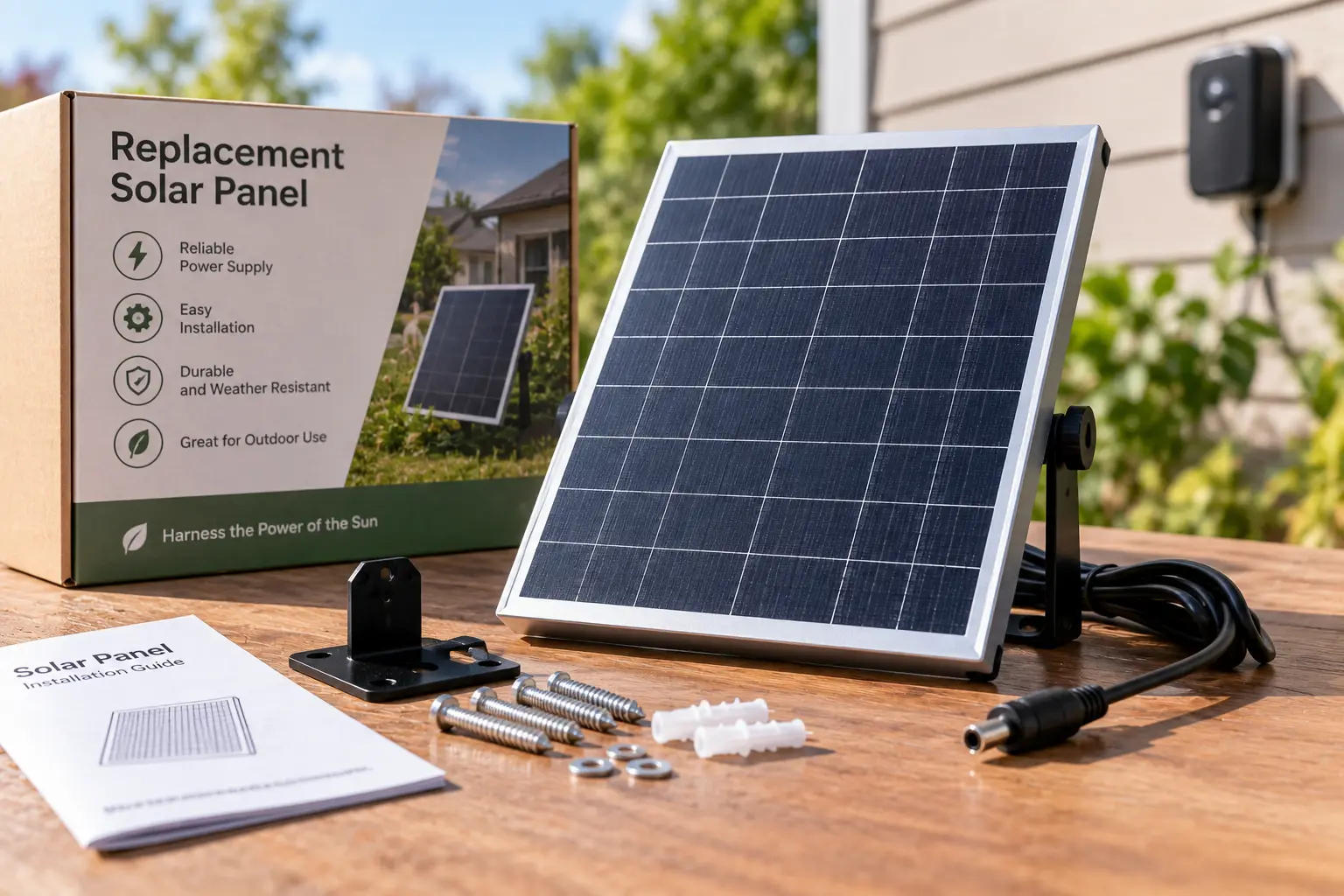
A replacement solar panel is any standalone photovoltaic module you buy to swap in for a damaged, underperforming, or outdated panel on an existing system — whether that system lives on an RV roof, a boat, a cabin, or your house. If you’re reading this, chances are one of your panels cracked in a hailstorm, degraded past its rated output, or simply can’t keep up with the battery bank and appliances you’ve added since you first went solar. The good news: you don’t need to rebuild your whole array from scratch. In most cases, a single compatible module — matched for voltage, wattage, and mounting footprint — gets you back to full power in an afternoon.
This guide breaks down seven real, currently available panels spanning entry-level 100-watt monocrystalline units up to high-output 400-watt bifacial pairs, based on published manufacturer spec sheets and aggregated customer feedback from real buyers. We’ll walk through what actually matters when you’re shopping for a replacement solar panel — busbar count, N-Type versus P-Type cells, IP ratings, and the compatibility quirks that trip up first-time DIYers — and we’ll translate that spec-sheet language into plain terms about what you’ll notice on your battery monitor. As the U.S. Department of Energy explains, individual photovoltaic cells are wired together into modules, and those modules can be used on their own or combined into larger arrays — which is exactly why swapping one panel is a realistic, contained project rather than an all-or-nothing system overhaul.
Affiliate Disclosure: This post contains affiliate links. As an Amazon Associate, we earn from qualifying purchases made through these links, at no additional cost to you.
Whether you’re patching a single-panel RV setup, upgrading a weekend camper to handle a fridge and fan, or replacing a failing module in a permanent off-grid cabin array, there’s a panel below sized for your situation — and a section further down walks through exactly how to size it correctly.
Quick Comparison: 7 Best Replacement Solar Panels
| Panel | Wattage | Cell Type | Efficiency | Best For |
|---|---|---|---|---|
| Renogy 100W N-Type | 100W | Monocrystalline N-Type | ~25% | Best overall replacement |
| HQST 100W 9BB | 100W | Monocrystalline | ~23% | Best budget replacement |
| Newpowa 100W Compact | 100W | Monocrystalline | ~21-23% | Best for tight roof space |
| ECO-WORTHY 100W N-Type | 100W | Bifacial-assist Mono | ~25% | Best value with bonus output |
| Newpowa 100W Flexible | 100W | Monocrystalline (flex) | ~23% | Best for curved surfaces |
| Renogy 200W Bifacial | 200W | N-Type Bifacial | ~25% | Best mid-range upgrade |
| Renogy 400W Bifacial (2-Pack) | 400W | N-Type Bifacial | ~25% | Best for full system replacement |
Looking at the table above, the entry-level 100W options cluster tightly on price but diverge on efficiency and physical footprint, which matters more than most buyers expect when a replacement panel has to fit into the exact mounting holes an old one left behind. The Renogy 100W N-Type and ECO-WORTHY 100W N-Type both use newer N-Type cells that edge out the older 9BB and 10BB designs on efficiency and heat tolerance, while the Renogy 200W Bifacial and Renogy 400W Bifacial step up for anyone replacing an aging panel with something that also expands total capacity.
💬 Ready to compare specs side by side before you buy? Check current availability and pricing on the panels above to see which one matches your existing mounting layout.
Top 7 Replacement Solar Panels: Expert Analysis
1. Renogy 100W N-Type Solar Panel — best overall replacement panel
The Renogy 100W N-Type earns the top spot because it solves the single biggest headache in replacing one panel in an existing array: physical mismatch. Renogy redesigned this model to be roughly 11% smaller and 8% lighter than its previous-generation 100W panel while holding the same rated output, which matters if your old mounting footprint is tight or your roof space is already maxed out.
Under the hood, the panel uses 16BB N-Type monocrystalline cells rated at around 25% conversion efficiency, meaning it packs in more usable wattage per square foot of roof than the older 5BB and 9BB designs still common on budget panels. In practice, that translates to slightly faster charging during the low-light hours at dawn and dusk, since N-Type cells tend to hold up better than P-Type cells when the sun angle isn’t ideal. It carries an IP67 rating on the junction box and is rated to handle 2400 Pa of wind load and 5400 Pa of snow load, which covers most rooftop and RV mounting scenarios in the continental US.
Who it’s for: RVers and van-lifers replacing a single damaged panel in a mixed array, and anyone prioritizing a compact physical footprint over raw price. Reviews consistently report straightforward installation using Renogy’s own Z-brackets and note the panel runs noticeably cooler to the touch than older polycrystalline units on hot days, though a handful of buyers mention the included cable leads are on the short side for larger RVs and may need an extension.
Pros:
- ✅ Compact footprint fits most existing mounting holes
- ✅ N-Type cells perform better in low light
- ✅ IP67-rated junction box for weather resistance
Cons:
- ❌ Included cable length may be too short for large rigs
- ❌ Premium pricing versus older P-Type panels
Expect to pay in the $90 to $120 range at the time of writing (check the current price, as it may vary); given the efficiency gain and compact size, it’s a strong value for anyone replacing rather than expanding.
2. HQST 100W 9BB Solar Panel — best budget-friendly replacement
The HQST 100W 9BB is the panel to reach for when your goal is simply restoring a broken panel’s output without spending much beyond what the original panel cost you. It’s one of the most widely stocked 100W replacement modules on Amazon, and that market presence keeps pricing competitive relative to newer N-Type alternatives.
HQST rates this panel at roughly 23% conversion efficiency using 9-busbar cell technology, a design generation behind the 16BB N-Type panels above but still a meaningful step up from the 5BB panels many RVs shipped with a decade ago. The company states the panel can deliver up to 500Wh of electricity per day under five hours of direct sun — a number worth treating as a best-case ceiling rather than a guarantee, since actual output depends heavily on your panel angle, shading, and regional sun hours. What the spec sheet doesn’t say outright, but the panel’s bypass-diode design implies, is that it’s built to minimize the power loss you’d otherwise see when part of the panel falls into partial shade from a nearby vent or antenna.
Who it’s for: budget-conscious RV owners and boat owners doing a like-for-like swap who don’t need the latest cell technology, just reliable, tested output. Aggregated customer feedback frequently praises the value for money and notes the anti-corrosion aluminum frame has held up well through multiple camping seasons, though a subset of reviews flag that the panel runs slightly larger than some legacy 100W panels, so it’s worth double-checking your mounting dimensions first.
Pros:
- ✅ Lowest cost per watt among the 100W panels
- ✅ Withstands 2400 Pa wind and 5400 Pa snow loads
- ✅ Wide availability makes warranty claims simple
Cons:
- ❌ Slightly larger footprint than some older 100W panels
- ❌ 23% efficiency trails newer N-Type competitors
Pricing typically falls between $65 and $90 (prices may vary), making it one of the most cost-effective ways to restore a dead panel’s worth of output.
3. Newpowa 100W Compact Monocrystalline Panel — best for tight RV roof space
If your old panel measured on the smaller side and you’re worried a replacement simply won’t fit the existing rail system, the Newpowa 100W Compact is worth a close look. At roughly 28.5 by 27.8 inches, it’s built with a squarer, more compact profile than many 100W competitors, which is a real advantage on RVs where roof real estate is already divided between vents, antennas, and AC units.
Newpowa uses 9-busbar monocrystalline cells here rather than the newest N-Type architecture, landing efficiency in the low-to-mid 20% range. The company backs the panel with a tiered warranty — two years on materials and workmanship, with power output guaranteed above 90% at year 10 and above 80% at year 25 — a structure that mirrors what you’d expect from residential-grade panels, not just camping gear. Based on comparing the physical dimensions against the other panels in this roundup, this is the one most likely to slot into a mounting footprint originally built for an older, smaller-format panel without any bracket modification.
Who it’s for: RV owners doing a direct swap where roof space is the binding constraint, and DIYers who’ve read independent hands-on reviews and want a panel with an established, well-documented track record. Reviews highlight the panel’s smaller size and lighter weight as standout advantages, and independent testers have noted it performs competitively against pricier panels despite its modest cost. A recurring complaint in customer reviews is that the pre-attached cable leads run shorter than some buyers expect, similar to a few other panels in this list.
Pros:
- ✅ Compact, square footprint fits tighter roof spaces
- ✅ Tiered 25-year output warranty structure
- ✅ Strong reputation from independent hands-on testing
Cons:
- ❌ Short pre-attached cable leads on some units
- ❌ Uses older 9BB cells instead of newer N-Type
Expect a price in the $80 to $100 range (check current pricing at checkout), positioning it as a mid-tier value pick between the budget HQST and the premium Renogy N-Type.
4. ECO-WORTHY 100W N-Type Solar Panel — best value with bonus bifacial-style output
The ECO-WORTHY 100W N-Type stands out in this lineup because it borrows a design trick usually reserved for pricier bifacial panels: a dual-sided cell layer that can capture some reflected light off snow, sand, or a light-colored RV roof, in addition to direct sunlight on the front face. ECO-WORTHY states this can add up to 15% extra output under the right conditions, though that figure represents a best-case scenario rather than a typical daily gain, since most RV and rooftop installs don’t have much reflective surface directly beneath the panel.
Feature-wise, it shares the 16-busbar N-Type cell architecture found on the pricier Renogy panel above, which means similar headline efficiency numbers (around 25%) and similar cold-weather and low-light performance characteristics. Here’s what to weigh: on a flat rooftop over light-colored membrane or gravel, the bifacial-style gain is a real, measurable bonus; mounted flush against a dark RV roof, you’re mostly paying for the front-side N-Type efficiency alone, which is still competitive but not dramatically different from the standard Renogy 100W.
Who it’s for: buyers replacing a panel on a light-colored rooftop, ground mount, or boat deck where reflected light is actually available, and anyone who wants N-Type efficiency at a slightly lower price point than the market leader. Reviews are largely positive on build quality and IP68 water resistance, with some buyers specifically calling out noticeably better performance on cloudy or hazy days compared to their old panel.
Pros:
- ✅ Dual-sided design can capture reflected light
- ✅ N-Type cells match premium-tier efficiency
- ✅ IP68-rated for stronger water resistance
Cons:
- ❌ Reflected-light bonus depends on mounting surface
- ❌ Fewer long-term reviews than more established brands
Pricing generally sits between $70 and $95 at the time of writing, making it a compelling middle ground between HQST’s rock-bottom pricing and Renogy’s brand premium.
5. Newpowa 100W Flexible Solar Panel — best for curved and irregular surfaces
Rigid glass-and-aluminum panels don’t work everywhere, and that’s the gap the Newpowa 100W Flexible fills. Built on a fiberglass-reinforced substrate rather than tempered glass, it weighs a claimed 3.8 pounds — a fraction of what a rigid 100W panel weighs — and can bend to follow curved surfaces like teardrop trailer roofs, pop-top campers, boat cabins, and overlanding rooftop tents.
The panel uses 10-busbar monocrystalline cells with roughly 23% efficiency, and Newpowa reduced the covered area between cells by about 22% versus older flexible designs specifically to squeeze more light-receiving surface into the same footprint. On paper, this means you get comparable wattage to a rigid 100W panel in a package that’s dramatically lighter and adhesive-mountable rather than bracket-mountable — a meaningful advantage if your existing installation used adhesive tape rather than drilled brackets and you don’t want to add new holes to a curved fiberglass roof.
Who it’s for: owners of teardrop trailers, pop-up campers, and boats where a rigid panel simply won’t conform to the mounting surface, or anyone replacing a cracked flexible panel with another flexible one rather than switching panel types entirely. Common feedback in reviews centers on the ease of adhesive installation and the panel’s ability to survive being walked on lightly (within the manufacturer’s guidelines), balanced against a well-documented tradeoff across the flexible-panel category: these panels tend to run hotter than rigid, air-gapped panels because they sit flush against the mounting surface, which can shave a few percentage points off real-world output on very hot days.
Pros:
- ✅ Conforms to curved RV, boat, and trailer roofs
- ✅ Under 4 lbs — dramatically lighter than rigid panels
- ✅ Adhesive-mountable with no drilling required
Cons:
- ❌ Runs hotter than rigid panels in direct sun
- ❌ Typically shorter lifespan than glass-faced panels
Price generally runs between $130 and $160 (prices fluctuate, so check current listings), a premium over rigid 100W panels that buys genuine mounting flexibility rather than raw output.
6. Renogy 200W Bifacial Solar Panel — best mid-range upgrade replacement
Sometimes “replacement” really means “replacement plus a little headroom,” and that’s where the Renogy 200W Bifacial comes in. Instead of swapping a dead 100W panel for another 100W panel, stepping up to this 200W bifacial module lets you double your array’s capacity in the same single-panel slot, which is appealing if you’ve added a fridge, fan, or second battery since your original install.
The panel’s dual-sided N-Type cells are rated to capture up to 30% more energy from reflected light hitting the rear face — light bouncing off snow, sand, concrete, or a light RV roof — on top of a front-side efficiency around 25%. Feature-by-feature, that bifacial gain is the headline differentiator versus the standard 200W Renogy panel: same front-side technology, but with an added energy source that costs nothing extra to capture once the panel is mounted with enough rear clearance to let light reach the back cells. IP68-rated construction pushes the weatherproofing a notch above the IP67 rating on Renogy’s standard-line panels, which matters more for marine and coastal installations than typical dry-climate RV use.
Who it’s for: RV and van owners upgrading from a single 100W panel who’ve outgrown their original battery-charging capacity, and cabin or shed owners mounting on a reflective roofing material where the bifacial gain is actually realized. Reviews are generally positive on build quality, though some buyers who mounted the panel flush against a dark roof (blocking the rear cells entirely) note the bifacial benefit essentially disappears in that configuration — a case where the marketing claim and the real-world result genuinely diverge based on installation choices.
Pros:
- ✅ Doubles capacity versus a standard 100W swap
- ✅ Bifacial cells add output on reflective surfaces
- ✅ IP68 rating suits marine and coastal use
Cons:
- ❌ Bifacial gain requires rear-facing light exposure
- ❌ Needs a larger mounting footprint than 100W panels
Expect pricing in the $180 to $220 range at the time of writing; for anyone replacing a failing panel while also expanding capacity, the value-for-money case is strong.
7. Renogy 400W Bifacial Solar Panel (2-Pack, 200W Each) — best for full off-grid or home system replacement
For cabins, sheds, and larger RVs running a genuinely power-hungry setup — think residential-style fridges, induction cooktops, or multiple battery banks — the Renogy 400W Bifacial kit gives you two 200W N-Type bifacial panels in one purchase, aimed at buyers replacing a whole aging sub-array rather than a single module.
Each panel shares the same 16BB N-Type bifacial cell architecture as the standalone 200W model above, with a rated efficiency around 25% and the same up-to-30% bifacial gain under the right mounting conditions. What sets this listing apart in practice is the built-in expansion path: because both panels ship matched from the factory with identical electrical specs (voltage, current, and tolerance), wiring them in series or parallel avoids the mismatch issues that can occur when you pair a brand-new panel with a partially degraded older one — a real risk when a home array’s original panels are eight or more years old and have lost a few percentage points of output to normal degradation. IP68-rated housings and a stated 10-year product commitment round out a spec sheet clearly aimed at semi-permanent installations rather than casual weekend use.
Who it’s for: off-grid cabin owners and full-time RVers replacing an entire under-performing sub-array at once, and anyone who’s calculated that patching a single old panel would leave the array electrically mismatched. Reviews commonly cite the matched-pair design as a meaningful advantage over buying two separate single panels at different times, and buyers running dark-roof RV installs note the practical output still comfortably beats a legacy 300W polycrystalline array even without the full bifacial bonus.
Pros:
- ✅ Matched pair avoids electrical mismatch issues
- ✅ 400W total output suits larger power draws
- ✅ N-Type bifacial cells across both panels
Cons:
- ❌ Higher upfront cost than single-panel replacements
- ❌ Requires more available roof or ground space
Pricing generally falls between $350 and $420 for the pair (check the current price, as availability and cost shift), which works out to roughly the same per-watt cost as the standalone 200W panel while solving the matched-pair problem outright.
✨ Don’t miss these exclusive deals! 🔍 Take your replacement solar panel search to the next level with this carefully curated lineup. Click a highlighted item to check current pricing and availability. These picks will help you get reliable, uninterrupted power the whole family — or the whole rig — can count on!
How to Replace a Solar Panel: A Step-by-Step Guide
Replacing a single panel in an existing array is a manageable weekend project if you take it step by step, but skipping the electrical-matching step is the single most common mistake DIYers make.
First, identify your existing panel’s specs — wattage, Vmp (voltage at max power), and physical dimensions — usually printed on a label on the panel’s back or junction box. If your array wires panels in series, your replacement’s voltage should closely match the others in that string; mismatched voltage between series-wired panels causes the whole string to underperform, capped by the weakest panel’s characteristics. If your array is wired in parallel, wattage and current matching matters more than voltage.
Second, power down the system completely before touching any wiring — disconnect the charge controller from the battery bank first, then disconnect the panel from the controller, since panels generate voltage any time they’re exposed to light, even when “off.” Third, remove the old panel’s mounting hardware, noting bracket positions with a photo if you’re reusing the same brackets. Fourth, mount the replacement using either the same Z-brackets or a fresh set sized for the new panel’s frame, sealing any new screw penetrations with marine-grade sealant to prevent roof leaks — a step reviewers across nearly every brand mention as easy to forget. Fifth, reconnect the MC4 connectors, verify polarity with a multimeter before restoring full power, and confirm your charge controller registers the new panel’s output within its expected range.
A common first-30-days mistake is mounting the new panel flush against the roof with zero air gap, which traps heat and reduces output — most manufacturers recommend at least a small standoff gap for rigid panels to let air circulate underneath.
Real-World Scenarios: Matching the Right Replacement Panel to Your Situation
If you’re a weekend camper running a single 12V fridge and some LED lighting off a small battery bank, a straightforward 100W swap like the HQST 100W 9BB or Newpowa 100W Compact restores your original capacity without overcomplicating the budget — you’re not adding load, so you don’t need to add wattage.
If you’re a full-time van-lifer who’s added a second battery, an inverter, and maybe a small AC unit since your original 100W install, replacing that single panel with the Renogy 200W Bifacial effectively doubles your daily charging capacity in the same mounting slot, which is often more practical than trying to find roof space for a second separate 100W panel.
If you’re an off-grid cabin owner whose original four-panel, 800W array has aged past the 10-year mark and one panel just failed outright, the smarter move is often the Renogy 400W Bifacial pair rather than a single mismatched replacement — swapping out two aging panels at once for a matched pair sidesteps the electrical-mismatch problem that comes from mixing an 8-year-old degraded panel with a brand-new one in the same string.
And if you’re dealing with a curved teardrop trailer roof where a standard rigid panel physically won’t sit flat, the Newpowa 100W Flexible is really the only category of product in this list built for that mounting surface — no amount of price or wattage comparison matters if the panel doesn’t physically conform to your roof.
Replacement Solar Panel vs. Full System Replacement: Which Makes Sense?
Choosing between swapping a single panel and replacing an entire array comes down to age, mismatch risk, and total remaining capacity — not just which failed panel is in front of you.
A single-panel replacement makes sense when the rest of your array is relatively young (under roughly five years old) and still performing close to its rated output; in that case, the small mismatch introduced by one newer, slightly more efficient panel is negligible, and your charge controller — particularly an MPPT controller — can generally handle minor voltage differences between strings without much lost efficiency. A full system replacement becomes the more cost-effective path once your array has crossed into its second decade, because NREL field research on panel degradation puts typical annual output loss in the 0.3% to 0.6% range for most crystalline-silicon panels; by year 15, an original panel may be operating 5-8% below its nameplate wattage, and pairing it with a brand-new, full-output panel wastes some of that new panel’s potential. In dollar terms, a single 100W swap costs a fraction of replacing an entire array, but if two or three panels in an aging system are all approaching failure simultaneously, batching that replacement — as with the Renogy 400W Bifacial pair — usually costs less per watt than sequential single-panel purchases over the following two or three years.
What to Expect: Everyday Performance After Replacing a Panel
Translating spec-sheet numbers into what you’ll actually notice starts with your charge controller’s display, not the panel’s rated wattage. A 100W panel rated at 25% efficiency, like the Renogy 100W N-Type or ECO-WORTHY 100W N-Type, will typically show measurably faster charging in the first and last hour of daylight compared to an older 9BB or polycrystalline panel, since N-Type cells hold their voltage better as light intensity drops. Under full midday sun, the difference between a 23%-efficient panel and a 25%-efficient panel is smaller than the spec sheets suggest — both will likely hit close to their rated wattage on a clear day, since efficiency differences show up most in marginal light conditions, not peak sun.
Bifacial panels like the Renogy 200W Bifacial behave differently depending entirely on what’s underneath them: mounted over a white RV roof membrane or light gravel, expect a genuine, measurable bump in daily kilowatt-hours; mounted flush against dark asphalt shingles or a black RV roof, expect performance close to what a standard (non-bifacial) panel of the same wattage would deliver, since there’s little usable reflected light reaching the rear cells.
Long-Term Cost and Maintenance of Replacement Solar Panels
Total cost of ownership for a replacement panel extends well past the purchase price, and the panels in this roundup differ meaningfully on that front. Rigid glass-faced panels — the Renogy, HQST, Newpowa Compact, and ECO-WORTHY models — require essentially no maintenance beyond an occasional rinse to clear dust, pollen, or salt spray, and their tempered glass typically outlasts flexible alternatives by a wide margin; Newpowa’s tiered warranty explicitly promises 80% output retention after 25 years, a useful benchmark for budgeting a panel’s realistic service life.
Flexible panels like the Newpowa 100W Flexible generally carry shorter practical lifespans — often five to ten years of heavy outdoor use before output noticeably declines — because the fiberglass substrate and adhesive mounting expose the cells to more heat cycling and flex stress than a rigid, air-gapped glass panel experiences. That shorter lifespan is a fair tradeoff for a curved-roof installation where no rigid panel would work at all, but it’s worth budgeting for a replacement cycle roughly twice as often as with a rigid panel. Across every panel in this list, the main ongoing cost isn’t the panel itself but peripheral wear items — MC4 connector corrosion in coastal climates, bracket hardware loosening from vibration on RVs, and occasional resealing of roof penetrations — all of which cost far less to address than a full panel replacement if caught early with a twice-yearly visual inspection.
Safety, Regulations, and Standards for Replacement Solar Panels
Every panel in this roundup is built around cells and junction-box components designed to meet UL 61730, the primary safety-testing standard referenced for photovoltaic modules sold and installed in the United States, covering everything from fire resistance to dielectric withstand and mechanical load testing. If you’re replacing a panel as part of a permanent home installation rather than a portable RV setup, it’s worth confirming your new panel’s paperwork lists compliance, since some installers and local permitting offices require documentation before signing off on a system modification. Beyond the panel itself, FTC guidance on solar power purchases recommends comparing your actual metered electricity usage against a system’s expected output rather than relying solely on a seller’s projected savings — sound advice whether you’re buying a full system or a single replacement module. IP ratings matter here too: IP65 indicates protection against low-pressure water jets and dust, while the IP67 and IP68 ratings found on most panels in this list indicate a higher tolerance for temporary submersion, relevant for marine installations and boats more than typical RV or rooftop use.
Common Mistakes to Avoid When Buying a Replacement Solar Panel
The single most frequent and costly mistake is ordering by wattage alone without checking physical dimensions — a “100W panel” from one brand can be several inches larger or smaller than another, and mismatched mounting holes turn a simple swap into a bracket-replacement project. A close second is ignoring voltage compatibility in series-wired arrays; pairing a panel with a significantly different Vmp than its neighbors can bottleneck the entire string’s output down to the weaker panel’s level, effectively wasting part of what you just paid for.
Buyers also commonly underestimate shipping damage risk with glass-faced panels — always inspect the glass and frame corners immediately upon delivery, before installation, since most sellers have tighter windows for damage claims than for general returns. Finally, assuming every panel labeled “12V” runs at 12 volts is a subtle but common misunderstanding; as manufacturers note, that “12V” designation refers to the battery system the panel is designed to charge, not the panel’s actual operating voltage, which typically runs higher (often 17-22V) to overcome voltage drop and charge a 12V battery efficiently.
Replacement Solar Panels for RV Owners: What’s Different
Replacement solar panels for RV applications carry a few considerations that don’t apply to a fixed home rooftop. Vibration from highway driving loosens fasteners faster than a stationary residential install, so torque-checking mounting bracket screws once or twice a season is worth the ten minutes it takes. Roof weight capacity is another RV-specific constraint — most RV roofs tolerate foot traffic and mounted panels fine, but stacking a heavy rigid panel on an already crowded roof (vents, AC units, antennas) can push total roof-load closer to a manufacturer’s limit than owners expect, which is part of why the lighter Newpowa 100W Flexible appeals to weight-conscious van-lifers. Finally, RV panels see far more temperature swings — baking in a desert parking lot one week, freezing in mountain campgrounds the next — making the temperature coefficient spec (how much power a panel loses per degree of heat) more relevant for RV buyers than it typically is for a home installation in a single climate zone.
Features That Actually Matter (and Ones That Don’t) on a Replacement Panel
Busbar count and cell type (N-Type versus P-Type) genuinely matter, since they directly drive real-world efficiency differences you’ll see on your charge controller, especially in low light. Physical dimensions matter enormously for a replacement panel specifically, more than for a first-time install, since you’re often constrained by existing mounting holes. IP rating matters if you’re in a marine environment or a climate with heavy rain, less so for a panel mounted under a covered carport.
What matters less than the marketing suggests: headline “up to 30% more power” bifacial claims, which only materialize under specific mounting conditions most buyers won’t have; and warranty length beyond about 10 years, since by that point most buyers have either upgraded their whole system or the panel has outlived the rest of their electrical components anyway.
Frequently Asked Questions
❓ How do I know what size replacement solar panel I need?
❓ Can I mix a new solar panel with older panels in the same array?
❓ Do I need a new charge controller when I replace a solar panel?
❓ How long does a replacement solar panel last?
❓ Is a bifacial replacement solar panel worth the extra cost?
Conclusion
A cracked panel, a storm-damaged array, or simply outgrowing your original setup doesn’t have to mean tearing out your whole solar system. As this roundup shows, the right replacement solar panel depends less on chasing the highest wattage number and more on matching physical dimensions, electrical specs, and mounting surface to what you already have — or deliberately upgrading capacity when your power needs have genuinely grown. For most straightforward swaps, the Renogy 100W N-Type and HQST 100W 9BB cover the budget-to-premium range of standard 100W replacements, while the Renogy 200W Bifacial and Renogy 400W Bifacial make sense once you’re ready to expand capacity rather than just restore it. Curved-roof setups have exactly one real solution here in the Newpowa 100W Flexible, and tight-footprint RVs are well served by the Newpowa 100W Compact.
Whichever panel fits your situation, take the time to verify voltage compatibility with your existing string and double-check physical dimensions against your current mounting holes before you buy — the small amount of research up front is what separates a clean afternoon swap from an unplanned bracket-replacement project.
✨ Ready to get your system back to full power? Compare current prices on today’s pick and start your replacement project this weekend! 🔋☀️
Recommended for You
- Off Grid AC: 7 Best Solar & Battery Options for 2026
- Best Portable Inverter Generator: 7 Top Picks for 2026 (Pros & Cons)
- What Does a Generac Generator Cost: 7 Best Options to Consider
Disclaimer: This post contains affiliate links. As an Amazon Associate, I earn from qualifying purchases made through these links, at no additional cost to you.
✨ Found this article helpful? Share it with someone who needs it! 💬🤗