As an Amazon Associate I earn from qualifying purchases. Links in this article may be affiliate links. How we choose gear
A liquid cooled generator from Kohler starts at 24 kW, not 20. The 20 kW model most shoppers search for, the Kohler 20RESCL, is built around a 999 cc air-cooled engine turning 3,600 rpm, according to Norwall’s spec page and a Portlandia Electric datasheet. Kohler’s own spec sheet for the liquid-cooled Kohler 24RCL describes a 2.2 L engine running at half that speed.
That gap shapes every buying decision in 2027. A water cooled generator costs more, weighs more and needs coolant care, so the cooling system should match your climate, your load and the hours the engine will really run. Kohler and Kubota spec sheets, dealer listings, a specialist retailer’s buying guide and owner threads on tractor forums supply the figures below, and each one is tied to the page it came from.
Four generators cover the realistic situations: a large home in hot country, a typical home that does not need liquid cooling at all, a small diesel for a shop or cabin, and a bigger diesel for heavier loads.
How do liquid cooled generators work, and what do they buy you?
A pump pushes coolant through the engine and into a radiator, and a thermostat meters the flow so the engine warms quickly and then holds a steady temperature. Norwall’s liquid-versus-air guide likens the setup to a modern car and says engines above roughly one liter generally use coolant, while smaller engines rely on a fan blowing air over the block.
Steady temperature is the whole point. The same guide warns that overheating shortens generator life and causes premature failure, and that an air-cooled unit costs less but can shut down when it gets too hot. Norwall also notes that a liquid-cooled design can carry a larger engine, which is how the power ceiling rises past the roughly 24 kW that air-cooled home units top out at.
One misconception needs correcting. Liquid cooling and low engine speed are separate features. Kohler’s liquid-cooled home line runs 1,800 rpm, while Kubota’s liquid-cooled diesels turn 3,600 rpm, per Kubota’s own spec pages. Only the 1,800 rpm designs get the quieter, slower-engine benefit.
Cost is the trade. A dealer guide from W Power Products puts liquid-cooled units at roughly 50 to 100 percent more than a comparable air-cooled model. Norwall’s air-cooled category page adds that most air-cooled units need about 18 inches of clearance to the building, while liquid-cooled models may need up to five feet.
Is a liquid cooled generator worth it? Climate, load, and hours decide
Climate comes first. Norwall recommends liquid cooling where temperatures often exceed 100 degrees Fahrenheit, and its guide gives a 15 kW home in the desert Southwest as a case where an air-cooled unit might overheat and shut down. In the Midwest, Northeast and along the East Coast, the guide says temperatures rarely pass 100 degrees and average-to-large homes generally need under 20 kW.
Load is second. Above roughly 18 to 24 kW, Norwall says a liquid-cooled unit becomes the likely choice because air cooling runs out of headroom. Below that, a 20 kW air-cooled set covers a large house.
Hours are third, and owners disagree on how much they matter. One poster on a tractor forum argued that water-cooled sets are generally more durable but that most buyers will never wear out an air-cooled unit on a few outages a year, adding that a generator running about 20 hours annually does not justify the extra upkeep. A 2015 owner review on AP Electric’s page for the Generac RG02224 takes the opposite view: that buyer picked liquid cooling for longevity and to avoid overheating, and said the electrician quoted the same installation cost for either type. Both are single reports, and they split along the lines of how often the generator runs.
Noise and upkeep round out the decision. The table below lines up the four picks; the measurement conditions differ between makers, which the analysis after it explains.
Generator
Cooling
Rated output
Engine speed
Sound at 7 m
Weight
Kohler 24RCLA
Liquid
24 kW LPG, 21 kW natural gas
1,800 rpm
54 dB(A) exercise, 61 dB(A) full speed
1,260 lb shipping
Kohler 20RESCL-200SELS
Air
20 kW LP, 18 kW natural gas
3,600 rpm
64 dB(A) exercise, 69 dB(A) run
About 500 lb
Kubota GL7000
Water-cooled diesel
7.0 kW standby
3,600 rpm
66 dB(A) at full load
About 518 lb
Kubota GL14000
Liquid-cooled diesel
12 kW rated, 14 kW surge
3,600 rpm
65 dB(A) no load, 67 dB(A) rated load
About 904 lb enclosed
The quietest numbers belong to the slow-turning Kohler 24RCLA, but Kohler’s sheet measures them with no load, so they are not a like-for-like match for full-load readings. The Kubota figures are full-load readings from Kubota’s page and a dealer listing. Treat the table as a ranking of design types, not a decibel contest.
How small can a liquid cooled generator get?
The answer depends on what you mean by generator. For automatic home standby, the smallest liquid cooled generator Kohler lists is 24 kW, and Generac’s 22 kW Protector QS, a liquid-cooled 1,800 rpm unit, now shows as discontinued on AP Electric’s page. Kohler’s 14 kW and 20 kW home models are air-cooled.
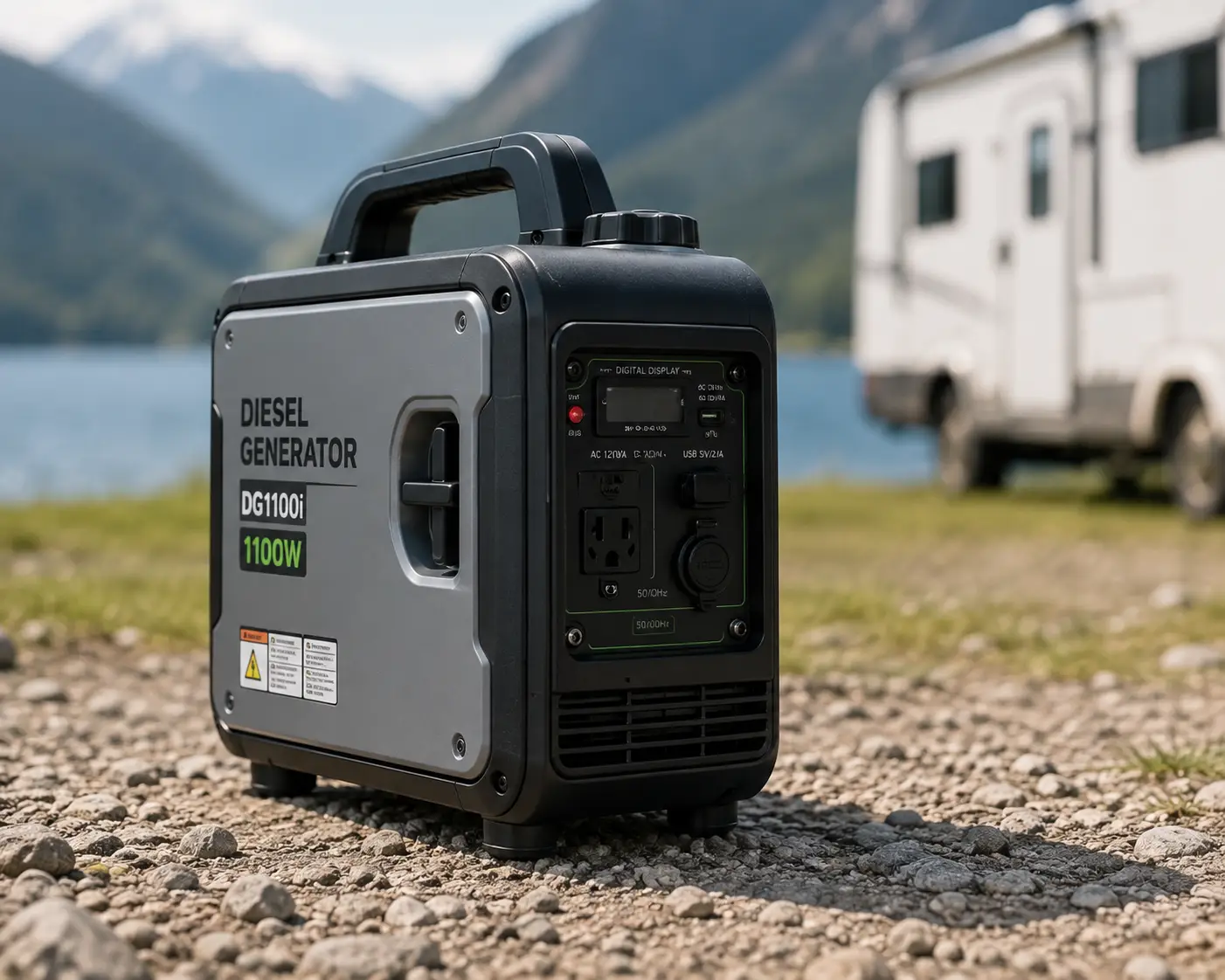
Portable and shop-sized diesels go much smaller. Yanmar’s YTG series covers water-cooled diesel sets from 5 kW to 12 kW, per Yanmar’s product page. Aurora’s own page for its Aurora 6 kW Yanmar Bare Bones Diesel Generator describes a radiator-cooled, 1,800 rpm, Tier 4 Final set with a five-year warranty. Kubota’s Kubota GL7000 sits near the bottom of that range at 7 kW.
What you give up is weight. Norwall notes that the GL7000 weighs more than 500 pounds, while a comparable 7,000-watt air-cooled portable weighs roughly 175 to 250 pounds with an empty tank. That is why a small diesel liquid cooled engine generator fits a fixed spot, a trailer or a workshop better than a carry-it-yourself job.
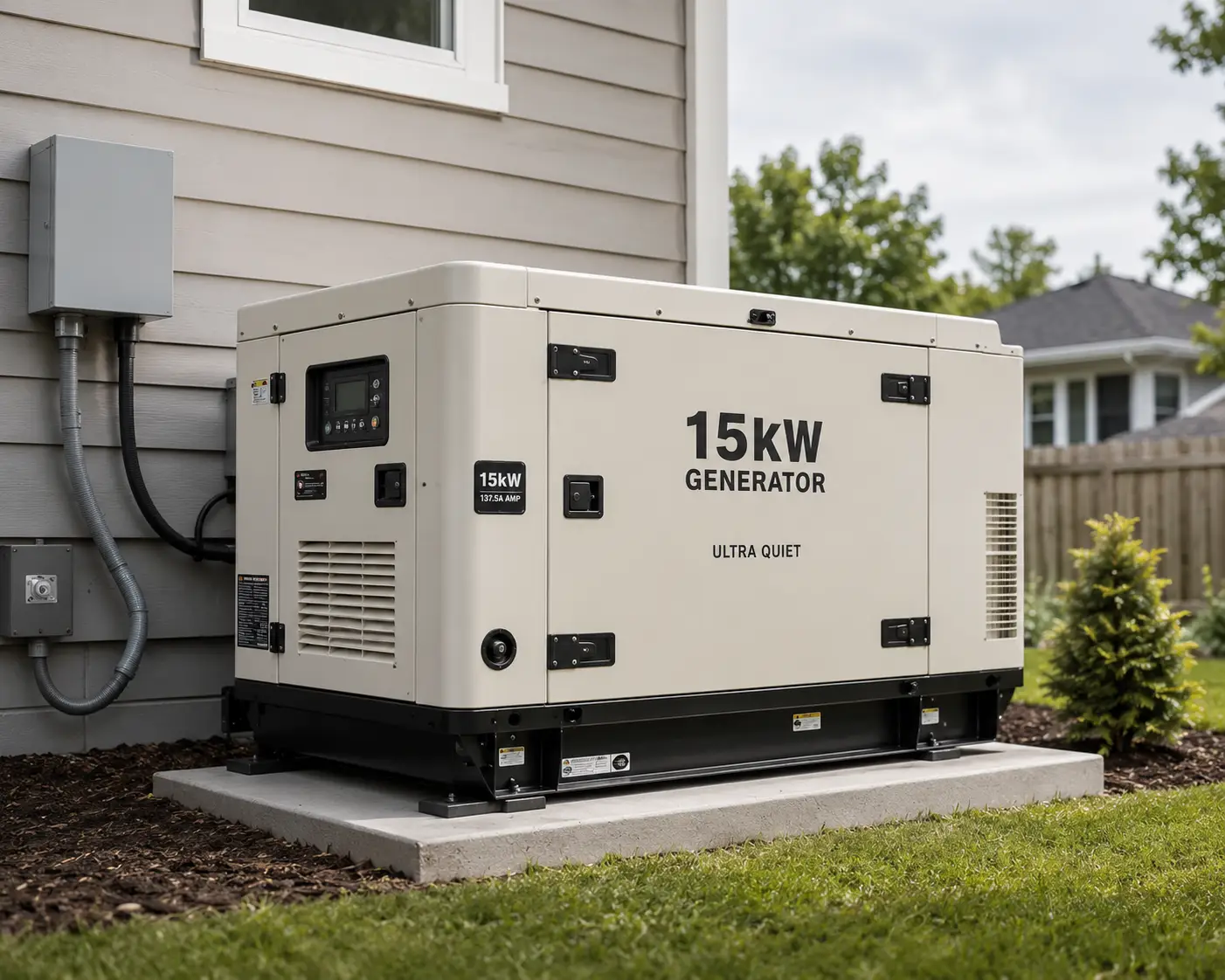
A large house with central air, a heat-pump water heater and long summer outages is the hypothetical buyer this unit answers. It is the smallest Kohler home generator with liquid cooling, so the Kohler 24RCLA is the closest real answer to the “Kohler 20 kW liquid cooled” searches.
Kohler’s 24RCL spec sheet lists 24 kW on LPG and 21 kW on natural gas for single-phase 120/240 V, a Kohler KG2204 2.2 L four-cylinder engine at 1,800 rpm, and sound of 54 dB(A) during weekly exercise and 61 dB(A) at full speed. The Kohler 24RCL spec sheet puts the unit at 74 by 32.9 by 46 inches and 1,260 pounds shipping weight, with a standard five-year or 2,000-hour limited warranty. Dealer pages note delivery needs a loading dock or forklift.
Cold climates add one detail: Kohler’s sheet lists an oil pan heater as the starting aid below 32°F, and Power Equipment Direct sells a 24RCLA-QS50 variant with a factory 500-watt block heater. Dealer listings from AP Electric, Power Equipment Direct and Factory Pure put the generator itself around $17,000 to $18,000. Kohler’s energy business now appears under the Rehlko name on some pages, so search both names.
Fuel use scales with load: Kohler lists 199 cubic feet of natural gas per hour at half load and 301 at full load.
Pros:
1,800 rpm engine and the lowest sound figures in this group
Five-year or 2,000-hour limited warranty
Liquid cooling for long, hot outages
Cons:
Around 1,260 pounds and a forklift-level delivery
The most expensive pick here by a wide margin
Kohler 24RCLASee current price, sizes and reviews on Amazon.
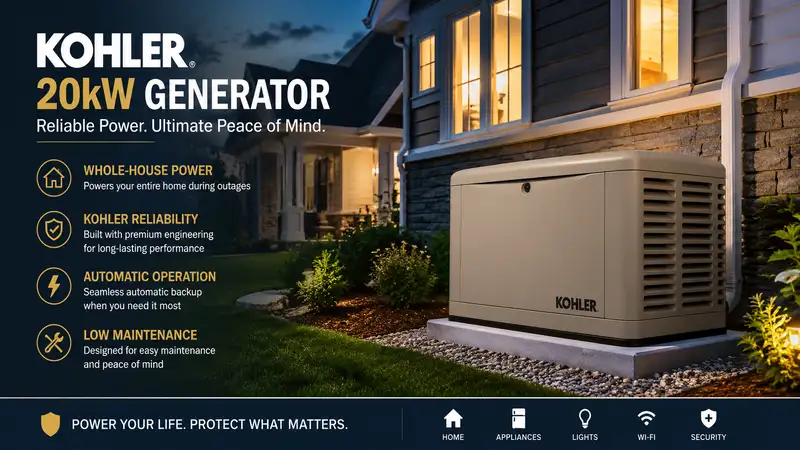
Searching for Kohler 20kW liquid cooled generator reviews leads here, and the honest finding is that the model people mean is air-cooled. Power Equipment Direct shows 51 reviews on its page for the Kohler 20RESCL-200SELS, but those describe an air-cooled generator.
The numbers: 20 kW on LP and 18 kW on natural gas, a Kohler Command Pro CH1000 engine at 3,600 rpm, and 64 dB(A) in exercise mode and 69 dB(A) running, per Portlandia Electric’s datasheet. Power Equipment Direct lists it at about 500 pounds and 48 by 26.2 by 29 inches, with a five-year or 2,000-hour warranty. Norwall says the package includes Kohler’s RXT 200-amp service-rated transfer switch, a corrosion-proof polymer enclosure and an Ethernet port for OnCue monitoring.
Compared with the 24 kW liquid-cooled unit, it weighs roughly 760 pounds less, and Norwall says air-cooled clearances can be as little as 18 inches. Dealers sell several 20RESCL packages with different transfer switches, including a 100-amp 16-circuit version on Power Equipment Direct, so match the suffix to the panel you have. The trade-off is heat: it is the pick for moderate climates, and Norwall’s guidance says it is the option that can overheat in a desert summer.
Kohler 20RESCL-200SELSSee current price, sizes and reviews on Amazon.
3. Kubota GL7000 — the smallest diesel in this group
Price puts this one in its own tier. Norwall’s Kubota page lists the Kubota GL7000 at around $6,500 to $7,000, far below the home standby units and above most portable generators.
Kubota’s page gives the specs: 6.5 kW prime and 7.0 kW standby output, a two-cylinder Z482 water-cooled diesel at 3,600 rpm, a 7.4-gallon tank and about 518 pounds. Runtime on the tank is 10 hours at full load and 16.5 hours at half load, and the sound rating is 66 dB(A) at 7 meters. The Kubota GL7000 page lists those figures; no warranty appears there.
A poster weighing a liquid-cooled diesel set on a tractor forum voiced two reservations that apply to small diesels in general: about 10 hours on the internal tank, and a high cost per kilowatt. This is a workshop, cabin or job-site unit for someone who accepts the weight.
Check current availability on Amazon.com.
Kubota GL7000See current price, sizes and reviews on Amazon.
4. Kubota GL14000 — twelve kilowatts of diesel for heavier loads
When a 7 kW diesel runs out of headroom, the Kubota GL14000 is the next step in Kubota’s lineup. A dealer listing gives 12 kW rated and 14 kW surge power, 50 amps at 120/240 V single phase, and a three-cylinder Kubota D902 liquid-cooled diesel of 898 cc, which Norwall’s page for the series also names.
The same listing shows a 9.62-gallon tank good for about 11 hours, sound of 65 dB(A) at no load and 67 dB(A) at rated load at 7 meters, and 904 pounds enclosed. Emissions are EPA Tier 4 Final and CARB. The warranty is two years, against five years or 2,000 hours on the Kohler home units, which matters if the generator will sit idle for long stretches.
Norwall says Kubota’s liquid-cooled design stays cooler through long hot-weather runs, and its guide notes that liquid-cooled portables still need on-schedule maintenance. One forum owner described an Aurora set that gave off an electrical smell and lost its hour-meter reading when it was needed, a single report that argues for exercising any diesel before storm season.
Pros:
12 kW rated output from a liquid-cooled diesel
Tier 4 Final emissions listed
Enclosed design with a roughly 11-hour tank
Cons:
A two-year warranty and 904-pound enclosed weight
3,600 rpm, so no slow-engine noise advantage
Kubota GL14000See current price, sizes and reviews on Amazon.
Assuming the Kohler 20 kW is liquid cooled is the first miss, and it is a costly one because the real liquid-cooled start is a size up, with a higher price and a bigger pad. Compare the cooling type before comparing prices.
Reading an exercise-mode decibel figure as the outage volume is the second. Kohler’s 54 dB(A) belongs to the weekly test run, and the 61 dB(A) full-speed figure is a no-load reading.
Skipping coolant care is the third. Cummins service literature estimates that over 40 percent of major engine repair costs trace back to improper cooling system maintenance, and Kohler’s manuals call for checking the coolant level and keeping any block heater submerged before it is energized. An air-cooled unit skips that entire chore, which is part of why it wins for owners who run the generator rarely.
Ignoring weight and clearance is the fourth. A 1,260-pound unit needs a forklift, a firm pad and, per Norwall, up to five feet of clearance. Those costs sit outside the generator’s own price.
Kohler 20 kW cooling, small diesels, and upkeep: straight answers
Is the Kohler 20 kW generator liquid cooled?
No. The 20RESCL uses a 999 cc Kohler CH1000 air-cooled engine running at 3,600 rpm, according to Norwall and Portlandia Electric listings. Kohler's liquid-cooled residential line begins at 24 kW with the 24RCL series, which runs a 2.2 L engine at 1,800 rpm.
How do liquid cooled generators work?
A pump pushes coolant through the engine and into a radiator, and a thermostat regulates the flow so the engine warms up quickly and then holds a steady temperature. Norwall likens it to a modern car and says engines above one liter generally use it.
What is the smallest liquid cooled generator?
It depends on the type. Yanmar lists water-cooled diesel sets from 5 kW, and Kubota's GL7000 is a 7 kW water-cooled diesel. For automatic home standby, Kohler's liquid-cooled line starts at 24 kW.
Is a liquid cooled generator worth it?
Norwall recommends liquid cooling where temperatures often exceed 100 degrees Fahrenheit or where loads pass roughly 18 to 24 kW. In milder regions, average to large homes generally need under 20 kW, where an air-cooled unit costs less. W Power Products puts the premium at 50 to 100 percent.
Do liquid cooled generators need more maintenance?
Yes, the coolant system adds work. Cummins service literature says over 40 percent of major engine repair costs trace to improper cooling system maintenance, so coolant level, hoses and radiator deserve checks. Kohler's 24RCL sheet also lists an oil pan heater below 32°F.
Which liquid cooled generator to settle on
The deciding line is 100 degrees and 20 kW. A home in hot country, or one whose loads pass what a 20 kW air-cooled set can carry, gets real value from the Kohler 24RCLA, and its slow 1,800 rpm engine also brings the lowest sound figures in this group. Everyone else, a typical home in a moderate climate, is better served by the Kohler 20RESCL-200SELS, which costs less, weighs about 760 pounds less and needs no coolant care.
For shops, cabins and job sites, the Kubota GL7000 is the small entry and the Kubota GL14000 adds headroom. Both are heavy and run 3,600 rpm, so size them to the load and plan on regular exercise. Whichever liquid cooled generator you shortlist, confirm what ships in the box before ordering. Check current availability on Amazon.com.