As an Amazon Associate I earn from qualifying purchases. Links in this article may be affiliate links. How we choose gear
A hurricane-zone home with a full freezer and a flooding driveway needs something different from an ice-storm cabin, and the disaster relief generators on sale in 2027 span a wide gap, from a 23.8-pound battery box to a 198-pound gas unit on wheels. Maker spec sheets, federal storm-safety guidance, specialist-press power-station reviews and owner threads from recent Florida hurricane seasons shape the five matches below. Watts are only half the question; the days of fuel or battery decide the rest. That is why the best disaster relief generators for one household can be the wrong buy for the next.
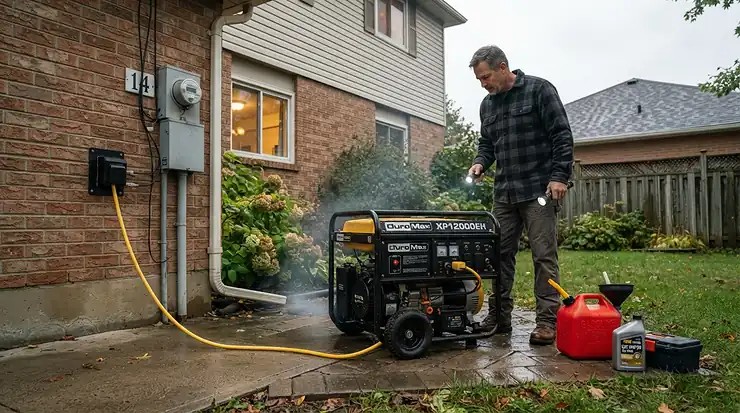
Safety comes before any model choice. CPSC’s hurricane guidance links about 92 deaths to portable generators, out of the more than 400 carbon monoxide poisoning deaths the CDC reports each year. The same page says to run a generator outdoors at least 20 feet from the house and never in a garage, on a porch or under a carport. Every pick here either has a carbon monoxide shutoff or produces no exhaust at all, and CPSC still wants battery-powered CO alarms on every level of the home.
Fuel, watts, noise and weight: what separates these five
Fuel comes first because it sets how long a machine can keep going. Consumer Reports notes that portable gas models require storing large quantities of gasoline mixed with stabilizer to get through a prolonged outage, and a Jacksonville utility’s generator guidance warns that gas stations may be closed while the power is out. A dual fuel generator adds propane as a second source. A battery unit swaps fuel for a recharge source: the grid, a car or solar panels.
Watts come second. The running figure is what a machine can hold continuously, and the starting figure is a brief surge for motors. The five picks run from 1,500 to 8,000 watts, so a load list copied from appliance nameplates settles the size before any brand does. A dealer page for the Generac GP8000E notes that even this largest unit will not run central air conditioning.
Noise matters over several nights. Honda lists 48 dB(A) at quarter load and 57 at full rated load for the Honda EU2200i, Champion lists 64 dB(A) for its 4,500-watt inverter, and Generac’s page leaves the noise field blank. Weight decides who can move the machine: 23.8 pounds for the Jackery Explorer 1000 v2 per TheSolarLab, 47.4 for the Honda EU2200i, 92.6 for the Champion 4500W Dual Fuel Inverter Generator, 114.1 for the EcoFlow DELTA Pro 3 as measured by OutdoorGearLab, and 198 for the Generac GP8000E on dealer listings.
Pick
Fuel or storage
Maker output
Runtime or capacity
Weight
CO safeguard
Honda EU2200i
Gasoline
1,800W rated, 2,200W max
8.1 h at 1/4 load on a 0.95-gal tank
47.4 lb
CO-MINDER shutoff
Champion 4500W Dual Fuel Inverter Generator
Gasoline or propane
3,650W (gas) or 3,285W (propane) running, 4,500W starting
22 h (gas) or 21 h (20-lb propane) at 1/4 load
92.6 lb
CO Shield shutoff
Generac GP8000E
Gasoline
8,000W running, 10,000W starting
7.9-gal tank; 10 to 12 h at 50% load, depending on the source
198 lb
COsense shutoff
Jackery Explorer 1000 v2
Battery, 1,070Wh
1,500W, 3,000W surge
910Wh measured by OutdoorGearLab
23.8 lb
No exhaust
EcoFlow DELTA Pro 3
Battery, 4,096Wh
4,000W, 8,000W surge
3,790Wh measured by OutdoorGearLab
114.1 lb
No exhaust
The gasoline units trade weight for capacity in a steady order. The Honda EU2200i is the lightest and quietest but caps at 1,800 running watts, the Champion 4500W Dual Fuel Inverter Generator roughly doubles the output and adds propane, and the Generac GP8000E carries the most power and the most mass. The two battery units remove fuel logistics and exhaust, yet both depend on something to refill them, and OutdoorGearLab’s measured capacity lands below the rated figure on each. Found a match for your outage? Take a closer look at the listings after the entries below.
Fuel math for a multi-day outage
Sample calculation, with the assumptions stated: each machine runs around the load its maker uses for the runtime figure, day and night, and is refueled on schedule. Appliance duty cycles vary, so treat the results as planning numbers, not forecasts.
The Honda EU2200i burns one 0.95-gallon tank in 8.1 hours at a quarter of its rated load, about 450 watts. Over 24 hours that is roughly three tanks, near 2.8 gallons a day, or about 11 gallons across four days. The Champion 4500W Dual Fuel Inverter Generator holds 4.02 gallons and runs 22 hours at a quarter of its gasoline running watts, around 900, which works out to about 4.4 gallons a day. On propane, a 20-pound cylinder lasts 21 hours at that load, so a household needs a little over one cylinder a day.
The Generac GP8000E is the heavy drinker. Its 7.9-gallon tank at 50% load (about 4,000 watts) lasts 10 hours by the spec table and 12 by the spec sheet, which means roughly 16 to 19 gallons a day, or about 63 to 76 gallons over four days.
The batteries need no fuel, only recharging. OutdoorGearLab’s measured 910Wh from the Jackery Explorer 1000 v2 feeds a 100-watt average load for about nine hours (910 ÷ 100). The 3,790Wh measured from the EcoFlow DELTA Pro 3 covers the same load for about 38 hours, a day and a half.
Which portable generator for a power outage suits which household
Each entry below ties one of these disaster relief generators to one situation. It is a set of matches, not a ranking.
1. Honda EU2200i — quiet power for essentials on little fuel
For a household that needs a refrigerator, a few lamps, a router and phone chargers kept alive, this inverter generator is the lowest-fuel route in the group. Honda’s spec page lists 1,800 rated watts and 2,200 max from a 0.95-gallon tank, 3.2 hours at rated load, and a CO-MINDER system that shuts the unit down before carbon monoxide near it becomes dangerous. Two units can be linked with an optional cable for up to 4,400 watts, and the warranty is three years residential.
Owner evidence leans on efficiency. Popular Mechanics’ Ezra Dyer wrote during a four-day Hurricane Florence outage that the machine ran four or five lamps, a fridge, a TV, three fans and a coffeemaker while needing few refuelings. On a Grassroots Motorsports thread after Hurricane Milton, one poster recommends the Honda EU2200i as quiet enough to sleep beside and large enough for a small window air conditioner. A forum member on Bob Is The Oil Guy reports that an older EU2000i with a 6-gallon external tank on a quick-connect carried a Florida home through a 60-hour outage; that is one owner’s account of the previous model, not a measured result for this one.
The limits are plain. A single 20-amp duplex outlet means every load shares one cord run, and Consumer Reports notes that inverter models cost significantly more than conventional ones of similar claimed wattage. Check the current price on Amazon.com. Honda’s page also states that this model is not sold in California.
Honda EU2200iSee current price, sizes and reviews on Amazon.
Short outlet list, no 240V and no GFCI receptacles: the model 201321 offers one 120V 30A RV outlet (TT-30R), one 120V 20A duplex and a 12V port. The trade is capacity and fuel choice. Champion’s page lists 4,500 starting watts, 3,650 running on gasoline and 3,285 on propane, a 4.02-gallon tank, electric start with the battery included, 64 dB(A), 92.6 pounds and a three-year warranty with lifetime technical support. A propane hose with a built-in regulator ships in the box, and an optional parallel kit links two compatible units.
CO Shield monitors carbon monoxide and stops the engine when levels turn unsafe, and Champion lists PGMA G300-2023 compliance, though its page states the system does not replace an indoor CO alarm.
Real-use reports center on starting on propane. A Forest River forum member who owns a 3,500-watt Champion dual-fuel inverter says it is always a little more difficult to start on LPG, and a poster on a Winnebago owners forum reports that a new 2,500-watt unit would not start on propane after ten priming pulls out of the box. Commenters in a Cool Down roundup attribute most propane-start complaints to opening the tank valve too fast or skipping the regulator prime. Those are smaller Champion models, which makes one practice run on each fuel before storm season a sensible habit; Champion’s manual also says to turn the generator off before switching fuels. A Lowe’s review summary for a Champion 4500-watt dual-fuel inverter adds that buyers value propane for avoiding carburetor upkeep, with the caveat that the summary is machine-generated and includes incentivized reviews. Check the current price on Amazon.com.
Champion 4500W Dual Fuel Inverter GeneratorSee current price, sizes and reviews on Amazon.
3. Generac GP8000E — whole-home essentials through a transfer switch
At 198 pounds with a 7.9-gallon tank, this is the only gasoline unit here sized to run a set of house circuits instead of a few cords. Generac lists 8,000 running and 10,000 starting watts, COsense carbon monoxide protection and a three-year limited warranty, and the maker’s spec sheet adds a fuel gauge, hour meter, low-oil shutdown, two 120V 20A GFCI duplex outlets and compatibility with HomeLink manual transfer switches. A dealer listing also shows a 120/240V NEMA L14-30R outlet. Consumer Reports describes portable generators in this class as providing 5,000 to more than 8,000 watts but usually weighing 200 pounds or more.
Sources disagree on runtime. Generac’s spec table says 10 hours at 50% load, its description says up to 11 and the spec sheet says 12, so the label on the exact unit settles it. Generac sells 49-state/CSA and 50-state versions under different model numbers; compare the exact model number before ordering. Maker and dealer pages put the unit between roughly $1,050 and $1,450.
One Sam’s Club reviewer bought the GP8000E after a two-day ice storm and planned to add a transfer switch, which fits how a unit this size is meant to be used. The maintenance warning comes from Generac itself: its portable generator troubleshooting guide names old fuel clogging the carburetor as the most common cause of startup problems, and says running the generator regularly or storing it properly prevents them. A tank that large makes fuel rotation a real chore.
Generac GP8000ESee current price, sizes and reviews on Amazon.
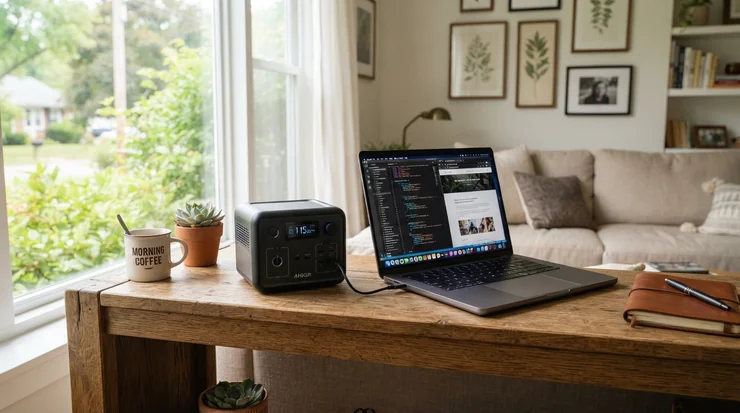
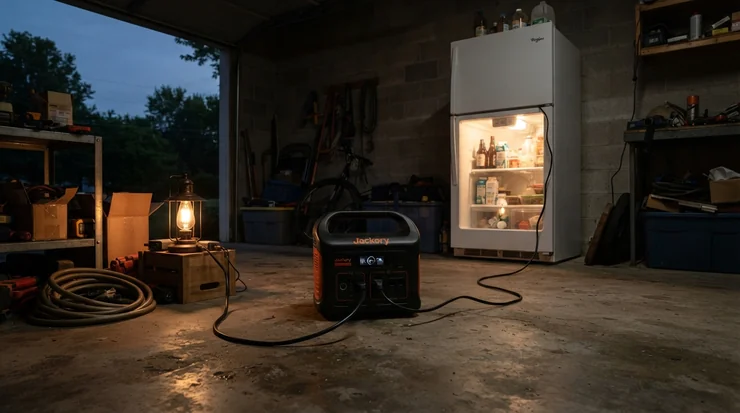
For outages measured in hours, and for rooms where exhaust is not an option, a battery unit removes the fuel question. TheSolarLab’s review lists 1,070Wh of capacity, 1,500W of output and 23.8 pounds. Its reviewer ran a 1,479-watt load for 37.5 minutes against an expected 43, an 87.5% efficiency result, and held loads just over 1,500 watts for ten minutes. A 2,200-watt surge shut the unit down within seconds, which the reviewer called standard for the class.
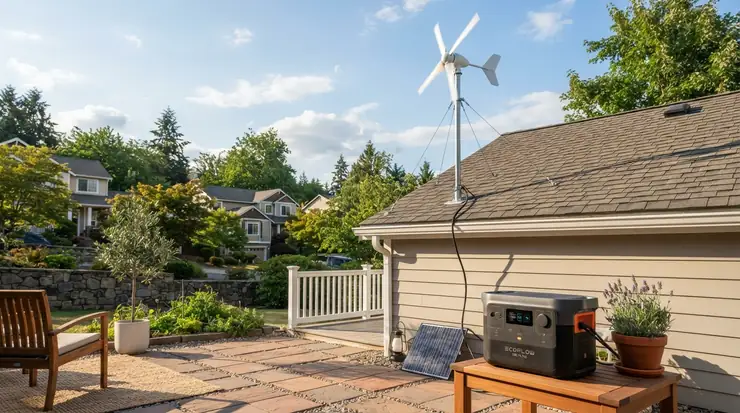
Recharging is quick: about 1 hour 35 minutes from a wall outlet, just under an hour in the emergency charging mode (which the reviewer says may shorten battery life with frequent use), and about 4.5 hours from 400W of solar in optimal conditions. The drawbacks are specific. The battery cannot be expanded, pass-through input drops sharply under heavy loads, solar input uses MC3 connectors that narrow the choice of third-party panels, and the reviewer criticizes Jackery’s customer support. OutdoorGearLab counts only three AC outlets, and TechRadar notes the unit is not weatherproofed.
TheSolarLab’s and TechRadar’s price notes put it between about $450 and $800, depending on the seller and the sale. Per the earlier calculation, OutdoorGearLab’s measured 910Wh is about nine hours for a 100-watt load.
Jackery Explorer 1000 v2See current price, sizes and reviews on Amazon.
Testers at OutdoorGearLab measured 3,790Wh from the EcoFlow DELTA Pro 3 against its 4,096Wh rating, then ran a refrigerator, a TV and a space heater from it at once during overnight outages and recharged it in under three hours. The OutdoorGearLab review scored it 81 overall, second of 14 power stations, with 9.6 for power output and 4.0 for portability.
The maker numbers explain why: 4,000 watts (30 amps) of output, an 8,000-watt surge, up to 2,600 watts of solar input, seven AC outlets, expandable capacity up to 48kWh, a claimed 4,000-cycle LiFePO4 battery and a five-year warranty. That suits a multi-day outage where sun is available and nobody wants to store gasoline.
The costs are weight and complexity. OutdoorGearLab calls the 114.1 pounds extremely heavy and says it takes two people to lift into a vehicle or up stairs, describes the many outlet options as complicated next to simpler designs, and notes that space heaters and other high-draw appliances can run only a few hours. The advertised 1,800-watt charging input was never fully reached in its testing, which peaked above 1,600 watts. The review calls the price expensive, so check the current price on Amazon.com.
EcoFlow DELTA Pro 3See current price, sizes and reviews on Amazon.
Carbon monoxide, cords and backfeed: rules that apply to every unit
Three rules cover most of the danger. CPSC advises running a portable generator outdoors at least 20 feet from the house, exhaust pointed away from any building people can enter, windows closed and nearby vents sealed. It also advises choosing a model with a CO shutoff and looking for certification to PGMA G300 and UL 2201. The Honda EU2200i, the Champion 4500W Dual Fuel Inverter Generator and the Generac GP8000E each list a shutoff of this kind, but a shutoff is a backup to placement and alarms, not a substitute.
The second rule is never to connect a portable generator to a home’s wiring through a wall outlet. CenterPoint Energy’s guidance warns that doing so can backfeed electricity into the lines and endanger utility workers, and a Jacksonville utility advises connecting the generator directly to appliances with properly sized, grounded cords. A manual transfer switch or interlock installed by a licensed electrician is the legal route for powering house circuits, and the rules vary by state and utility.
The third is the alarm: battery-operated or battery-backup CO alarms on every level and outside each sleeping area, tested monthly, with the instruction to get outside and call 911 if one sounds.
Keeping the machine ready to start
A generator that will not start in the first hour of an outage solves nothing. Generac’s guidance traces most startup trouble to stale fuel in the carburetor, and Champion’s manual for its inverter line says the engine works with gasoline containing 10% or less ethanol. Consumer Reports’ advice to mix stabilizer into stored gasoline fits both.
Propane sidesteps part of the problem, since a 20-pound cylinder in a closet does not go stale the way a gas can does. The batteries have their own routine: keep them charged and within the maker’s stated temperature range, because operating outside it can limit charging and discharging, according to one dealer’s summary of the Jackery manual.
Plug, surge and fuel mismatches that leave a generator idle
Outlet mismatches come up first. The Champion 4500W Dual Fuel Inverter Generator has no 240V outlet, so it will not feed a 240V panel; the Honda EU2200i has one 20-amp duplex, so a high-amp load is out of reach; only the Generac GP8000E dealer listing shows a 120/240V outlet.
Surge limits come next. TheSolarLab’s reviewer saw the Jackery Explorer 1000 v2 shut down within seconds on a 2,200-watt surge, and motor loads such as well pumps or compressors draw more at start than the label’s running number suggests.
Then comes the gap between rated and usable capacity, visible in OutdoorGearLab’s measurements for both batteries. A power station with no sun or wall power behind it is a one-time supply, while a gasoline unit with no fuel behind it is an expensive ornament.
Generator size, fuel and placement: quick answers
How far from the house should a portable generator run?
CPSC says to run it outdoors at least 20 feet from the house, with the exhaust pointed away from any building people can enter. Never use one in a garage, on a porch or under a carport, because opening doors or windows does not ventilate enough.
What size generator is enough for a power outage?
Add up the running watts printed on the nameplates of everything that must stay on, then leave room for motor starts. Small inverter units start near 1,800 running watts and large open-frame units reach 8,000. A dealer page for an 8,000-watt portable notes it cannot run central air conditioning.
Can a portable power station replace a gas generator in an outage?
For short outages, yes, since it has no exhaust and no fuel to store. Capacity is the limit: a battery measured at 910 watt-hours feeds a 100-watt load for roughly nine hours. Longer outages need solar or a fuel-burning generator to recharge it.
Is a dual fuel generator better for hurricanes?
It adds a second fuel, which helps if gasoline runs short, but propane lowers output; one maker lists 3,650 running watts on gasoline and 3,285 on propane. Some owners report harder starts on propane, so practice with both fuels before storm season.
Can you plug a generator into a wall outlet to power the house?
No. Utilities warn that connecting a portable generator to home wiring can backfeed into the power lines and endanger line workers. Use cords straight to appliances, or have a licensed electrician install a transfer switch or interlock that suits your generator and local rules.
Match the days of outage to the fuel you can store
Picking among disaster relief generators starts with how many days the lights must stay on. For a day or two of essentials, the Jackery Explorer 1000 v2 needs no fuel and the Honda EU2200i needs very little. Where propane is easier to stock than gasoline, the Champion 4500W Dual Fuel Inverter Generator adds a second fuel. A household that wants to run house circuits through a transfer switch is the case for the Generac GP8000E, along with a plan for 16 to 19 gallons a day at half load. The EcoFlow DELTA Pro 3 suits a home with sun to refill it and two people to move it.
Whichever machine wins, place it outdoors and 20 feet from the house, and keep the battery CO alarms working. Spotted one that fits? Take a closer look at its listing below.