
In This Article
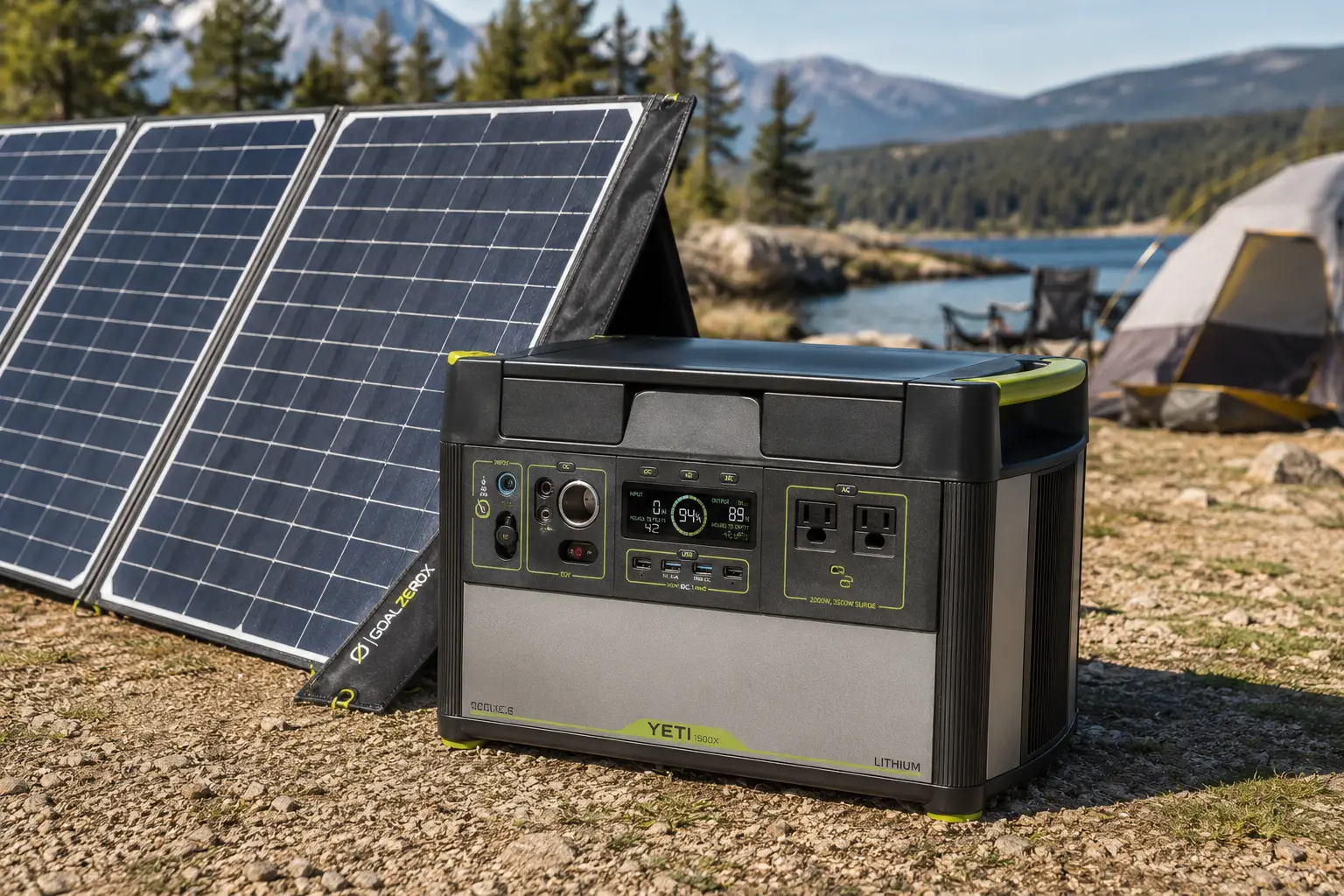
A yeti solar generator is, at its core, a portable battery you can refill with sunlight instead of gasoline — and in 2026, that idea has quietly become mainstream. Goal Zero built the category with its original Yeti line, and after BioLite’s acquisition of Goal Zero in April 2025, the brand has doubled down on LiFePO4 battery technology across nearly its entire lineup, trading the shorter-lived lithium-ion cells of older models for packs rated at 4,000-plus charge cycles. That single shift changes the math on almost every buying decision in this category, from how long a unit lasts to how much backup power actually costs per year of ownership.
If you’re shopping for a yeti solar generator right now, you’re probably weighing one of a few scenarios: keeping a fridge and a few lights running during a blackout, powering a weekend of car camping, or building genuine off-grid capability for a van or cabin. Those are three very different jobs, and the seven real, currently available models we cover below span all of them — from an 8-pound unit you can toss in a daypack to a nearly 4,000-watt-hour system built to run a home office through a multi-day outage.
This guide leans on real spec sheets, real aggregated customer feedback, and side-by-side analysis rather than a rehash of marketing copy. Prices shift constantly on Amazon, so every figure below is a range rather than an exact number — always check the current price before buying. Let’s get into what actually separates a good yeti solar generator from an overpriced battery in a nice case.
This post contains affiliate links. As an Amazon Associate, I earn from qualifying purchases made through these links, at no additional cost to you.
What Is a Yeti Solar Generator?
A yeti solar generator is a Goal Zero Yeti portable power station paired with a compatible solar panel, forming a two-part system that stores electricity in a rechargeable battery and refills it from sunlight via an MPPT charge controller. Unlike a gas generator, it runs silently, produces no exhaust fumes, and can safely be used indoors, which is why it’s become a go-to option for both outdoor recreation and home emergency backup.
Technically, “Yeti” refers only to the power station half of the equation — the battery, inverter, and ports. Pair it with a Boulder or Nomad solar panel and you’ve got a complete solar generator capable of recharging indefinitely as long as the sun cooperates. According to the Consumer Product Safety Commission’s guidance on lithium-ion battery fires, battery chemistry and build quality matter enormously here, which is part of why LiFePO4 (lithium iron phosphate) has become the preferred cell type for this category — it’s more thermally stable than the older lithium-ion packs.
Quick Comparison: Yeti Solar Generator Lineup at a Glance
| Model | Capacity | AC Output | Best For |
|---|---|---|---|
| Yeti 300 | 297Wh | 350W (600W surge) | Ultralight solo trips |
| Yeti 500 | ~499Wh | 500W (1,000W surge) | Car camping & tailgating |
| Yeti 700 | 677Wh | 600W (1,000W surge) | Weatherproof mid-size backup |
| Yeti 1500 | 1,505Wh | 2,000W (3,600W surge) | Rugged all-around home/off-grid |
| Yeti PRO 4000 | ~3,994Wh | 3,600W (7,200W surge) | Serious home backup |
| Yeti PRO 8000 | 7,988Wh | 3,600W (7,200W surge) | Whole-home multi-day backup |
| Jackery Explorer 1000 v2 | 1,070Wh | 1,500W (3,000W surge) | Budget-conscious mid-size buyers |
Looking at the table, capacity and output don’t scale together in a straight line — the Yeti 1500 nearly triples the output of the Yeti 700 while only roughly doubling watt-hours, which tells you Goal Zero prioritized inverter headroom on that model for running power tools and larger appliances. If your main concern is simply keeping small devices alive during a short outage, the Yeti 300 or Yeti 500 covers that need without paying for capacity you won’t use, while anyone thinking about running a refrigerator or sump pump for days should be looking at the Yeti PRO 4000 or larger.
💬 One click helps other shoppers make an informed choice too! 😊
Top 7 Yeti Solar Generators: Expert Analysis
The following seven products cover the real, currently available range of Goal Zero’s Yeti lineup, from ultralight to whole-home backup, plus one closely matched competitor for context. Every unit below uses LiFePO4 battery chemistry unless otherwise noted, and every price is a range — always confirm the current listing before you buy.
1. Goal Zero Yeti 300 — lightest in the entire lineup
The Yeti 300 is Goal Zero’s answer to “I don’t want to carry a cooler-sized battery just to keep my phone alive.” At just over 8 pounds, it’s genuinely one-handed portable, which matters more than spec sheets suggest once you’re the one hauling gear to a campsite.
Its 297Wh LiFePO4 battery delivers 350W of continuous AC output with a 600W surge, enough for laptops, drones, CPAP machines, and small air pumps, but not enough for a coffee maker or a full-size cooler running continuously. The IPX4 water resistance and UL2743 safety certification mean it’s built to handle a splash of rain or a dusty truck bed, which is more than can be said for a lot of budget competitors in this weight class.
This is squarely a solo-adventurer or minimalist’s pick — it’s not trying to be a home backup solution, and it shouldn’t be judged as one. Reviews consistently report that the fast wall-charging (roughly 50 minutes to full) is the standout feature, since it removes the “I forgot to charge it” anxiety that plagues slower competitors. A recurring theme in aggregated feedback is that the 297Wh capacity is genuinely limiting for anything beyond light device charging — a coffee maker or space heater will trip it almost immediately.
Pros:
- ✅ Among the lightest power stations with a full LiFePO4 battery
- ✅ Recharges from empty to full in under an hour on wall power
- ✅ IPX4 water resistance for real outdoor use
Cons:
- ❌ Too small for continuous high-draw appliances like fridges
- ❌ Exceeds FAA carry-on battery limits, so it’s a road-trip unit, not a flight companion
The Yeti 300 typically sits in the $300 to $350 range, and for the portability and battery chemistry you’re getting, it’s a fair value pick for anyone whose power needs are genuinely modest — check the current price before ordering, since Goal Zero runs seasonal promotions fairly often.
2. Goal Zero Yeti 500 — best value for weekend car camping
Sitting right above the 300 in the lineup, the Yeti 500 is the sweet spot for people who want noticeably more runway without stepping up to a heavier unit. Its roughly 499Wh battery and 500W continuous AC output (1,000W surge) is enough to run a portable fridge, string lights, and several devices simultaneously through a weekend trip.
What most buyers overlook with this model is how much the doubled capacity over the 300 changes real-world usability — running a CPAP overnight or keeping a cooler cold for a multi-day trip becomes realistic rather than a stretch. The app-based monitoring lets you track charge level and output remotely, which sounds like a gimmick until you’re trying to decide whether to run the grill one more time before bed.
Based on comparing the specs against its predecessor, the 500X, the newer 6th-generation Yeti 500 trades some of that model’s port variety for the safety and longevity benefits of LiFePO4 chemistry — a reasonable trade for most buyers, though van-lifers who relied on specific legacy ports should double-check compatibility before switching. Aggregated reviews of the Yeti 500 lineup consistently note that it strikes a workable balance between weight (around 13 to 14 pounds) and capacity, making it the most commonly recommended “first real power station” in the Goal Zero catalog.
Pros:
- ✅ Comfortably powers a portable fridge for a full weekend
- ✅ App-based monitoring for remote charge tracking
- ✅ LiFePO4 chemistry rated for 4,000-plus cycles
Cons:
- ❌ Struggles with continuous loads above 500W
- ❌ Costs more than similarly specced competitors like the Jackery Explorer 500
Pricing for the Yeti 500 typically falls in the $450 to $600 range depending on bundles and promotions, and at that price it holds up reasonably well against the value-for-money competition once you factor in Goal Zero’s longer battery lifespan and US-based support.
3. Goal Zero Yeti 700 — best weatherproof mid-size pick
The Yeti 700 occupies an interesting middle spot: bigger than the 500, but still light enough (around 22 pounds) to load into a truck bed without a second person. Its 677Wh battery and 600W AC output (1,000W surge, 850W combined AC/DC) is enough to run pellet grills, power tools, and portable fridges — genuinely useful outputs rather than just device-charging territory.
Here’s what the spec sheet doesn’t say outright: the Yeti 700 is rated to operate down to -4°F, which is a meaningful detail for anyone doing shoulder-season camping or storing gear in an uninsulated garage over winter. Pass-through charging means you can top off the battery while simultaneously powering something else, a small but genuinely useful feature during extended outages when solar input is inconsistent.
Reviews consistently report satisfaction with the 105-minute full recharge time on wall power, though a recurring critique — echoed by professional reviewers — is that its continuous power output lags some competitors at a similar price point, and one independent review ranked it lower overall among 12 tested units specifically because of that output-to-price ratio.
Pros:
- ✅ Rated for extreme cold down to -4°F
- ✅ Fast 105-minute recharge from empty on wall power
- ✅ Pass-through charging while powering devices
Cons:
- ❌ Continuous output trails some similarly priced competitors
- ❌ Not the fastest solar recharge in its capacity class
You’ll typically see the Yeti 700 priced between $600 and $700, putting it firmly in the mid-range tier — it’s a fair value if durability and cold-weather reliability matter more to you than squeezing every last watt of output per dollar.
4. Goal Zero Yeti 1500 — best rugged all-around pick
Launched in March 2026, the Yeti 1500 6th-generation model is arguably the most significant release in Goal Zero’s recent history, and it shows in the specs: a 1,505Wh LiFePO4 battery paired with a 2,000W inverter and 3,600W surge, wrapped in an aluminum enclosure rather than the plastic housing used on most competitors.
What that aluminum shell means in practice is durability that goes beyond marketing language — it’s built to survive being bounced around a truck bed, exposed to rain, or left in a hot vehicle over a weekend, conditions that have historically been the Achilles’ heel of portable power stations. The IPX4 rating and 10x faster recharging compared to previous Yeti generations (Goal Zero cites full recharge in as little as 1.1 hours on wall power) mean less downtime waiting to top off between uses.
Here’s what most buyers overlook: with a 2,000W continuous output, the Yeti 1500 can run genuinely demanding equipment — power tools, full-size refrigerators, even certain window units — putting it in a different usability tier than the smaller Yeti models despite only a roughly 3x capacity jump. It meets UL 2743 battery safety requirements, the leading US standard in this category, which matters if you’re planning to rely on it for home backup rather than just recreational use.
Pros:
- ✅ Aluminum enclosure built for real off-road and outdoor abuse
- ✅ 2,000W continuous output handles power tools and full-size fridges
- ✅ UL 2743-certified battery safety and roughly 10-year rated lifespan
Cons:
- ❌ At roughly 53 pounds, it’s a two-hand lift, not a grab-and-go unit
- ❌ Premium pricing compared to similarly specced non-Goal-Zero competitors
Expect to pay somewhere in the $1,400 to $1,500 range for the Yeti 1500, and given the durability upgrades and LiFePO4 chemistry, it’s a legitimately strong value for anyone who wants one power station that can handle both off-grid trips and home backup duty without compromise.
5. Goal Zero Yeti PRO 4000 — best for serious home backup
Once you’re thinking about backing up more than a few outlets during an extended outage, the Yeti PRO 4000 is where the Goal Zero lineup gets genuinely serious. Its roughly 3,994Wh LiFePO4 battery pairs with a 3,600W continuous inverter and a massive 7,200W surge rating, enough headroom to run nearly any home appliance short of central air conditioning.
The fast-charging numbers here are worth dwelling on: 1,800W AC input can take the unit from 0% to 80% in about two hours, and it accepts up to 3,000W of solar input for a similarly fast off-grid recharge. What that means in practice is you’re not stuck waiting half a day to refill a battery this size, which has historically been the main drawback of large-capacity power stations. It also carries UL2743 and FCC Class B certifications, plus a battery management system Goal Zero says performs more than 100 safety checks per second — meaningful detail for a unit this large, given that oversized batteries carry proportionally higher fire risk if the BMS is inadequate.
Based on comparing this unit against smaller Yetis, the jump in both capacity and price is substantial, so this isn’t a casual purchase — it’s aimed squarely at homeowners planning for multi-day outages, off-grid cabins, or van conversions that need to run a genuine electrical load. Reviews of the PRO 4000 highlight the automatic transfer switch functionality (when paired with Goal Zero’s Haven system) as the standout feature, with users reporting seamless failover during simulated outages.
Pros:
- ✅ 3,600W continuous output runs nearly any household appliance
- ✅ Recharges from 0% to 80% in about 2 hours on AC power
- ✅ Expandable into a whole-home backup system via Haven transfer switches
Cons:
- ❌ At over 115 pounds, it requires a cart or two people to move
- ❌ Represents a significant investment compared to mid-size Yeti models
Pricing on the Yeti PRO 4000 typically lands somewhere in the $3,000 to $4,000 range depending on bundle configuration, and while that’s a serious outlay, the expandable ecosystem and 3,600W continuous output make it a defensible choice for anyone who’s decided home battery backup is worth the investment.
6. Goal Zero Yeti PRO 8000 — best for whole-home, multi-day backup
The Yeti PRO 8000 isn’t a separate product so much as a configuration — pairing the Yeti PRO 4000 power station with a matching Tank PRO 4000 expansion battery to combine for 7,988 watt-hours of total storage. When connected, the two units sync to function as a single, much larger battery.
What that combined capacity means in practice: Goal Zero positions this as capable of backing up an entire home’s essential circuits for multiple days during an extended outage, not just a handful of devices for an evening. Paired with the Haven 10 transfer switch, it can automatically back up up to 10 dedicated circuits — lights, refrigeration, internet, a well pump — without the homeowner needing to run extension cords through windows during a storm.
Here’s the honest trade-off: this is the most expensive, heaviest configuration in the lineup, and it’s overkill for anyone whose needs are genuinely recreational. It’s a home-resilience investment, not a camping accessory, and should be evaluated against that use case specifically. The expandability is also genuinely modular — Goal Zero’s ecosystem allows adding additional Tank batteries later, so buyers aren’t necessarily locked into 8,000Wh if their needs grow.
Pros:
- ✅ Nearly 8,000Wh of expandable, whole-home backup capacity
- ✅ Compatible with Haven 10 for automatic 10-circuit failover
- ✅ Modular — additional Tank batteries can be added later
Cons:
- ❌ Combined weight and footprint require dedicated space, not a portable setup
- ❌ Highest price point in the Yeti lineup by a wide margin
Given the combined hardware, expect the Yeti PRO 8000 configuration to typically run in the $5,500 to $6,500 range, which positions it as a genuine alternative to a whole-home standby generator for buyers who prioritize silent, fume-free operation over the lowest possible upfront cost.
7. Jackery Explorer 1000 v2 — best budget alternative to a mid-size Yeti
Rounding out this list with a genuine point of comparison: the Jackery Explorer 1000 v2 isn’t a Goal Zero product, but it directly competes with the mid-size Yeti models and is worth including for buyers weighing options rather than assuming brand loyalty. Its 1,070Wh LiFePO4 battery delivers 1,500W continuous output with a 3,000W surge — output roughly comparable to the smaller Yeti models, at a noticeably lower price.
The standout practical feature here is charging speed: Jackery’s v2 platform can recharge from empty to full in about an hour on wall power, a meaningful upgrade over the original Explorer 1000 and competitive with even the newer Yeti 1500’s fast-charge claims. What most comparisons overlook is that the port selection (three pure sine wave AC outlets, USB-A, USB-C, and a car port) covers nearly everything a typical household or camping setup needs, without the premium Goal Zero charges for its ecosystem integration.
Reviews consistently rate this unit highly for reliability and ease of use, with independent testers specifically noting it as one of the strongest values in the category. The trade-off, honestly, is ecosystem: Jackery’s solar panels and accessories are a separate universe from Goal Zero’s, so if you’re already invested in Boulder or Nomad panels, switching brands means starting over on compatible accessories.
Pros:
- ✅ Roughly comparable output to a mid-size Yeti at a lower price
- ✅ Full recharge in about one hour on wall power
- ✅ Strong, consistent reliability ratings from independent reviewers
Cons:
- ❌ Not compatible with Goal Zero’s solar panel or accessory ecosystem
- ❌ Lacks Goal Zero’s UL2743-specific home-backup transfer switch integrations
The Jackery Explorer 1000 v2 typically prices in the $450 to $800 range depending on promotions, making it one of the strongest value plays for anyone who wants Yeti-1500-adjacent output without the Yeti-1500 price tag.
Getting Started: Setting Up and Maintaining Your Yeti Solar Generator
Unboxing a yeti solar generator for the first time is straightforward, but a few early habits determine whether it lasts the rated 4,000-plus cycles or degrades faster than expected. First, give it a full charge before first use, even though most units ship with a partial charge — this lets the battery management system calibrate properly from the start. Second, register the unit with Goal Zero if you plan to use it for home backup; this simplifies warranty claims and firmware updates, which matter more than most buyers expect given that Goal Zero has issued firmware updates addressing safety recalls on newer models.
For solar charging, pairing matters more than raw panel wattage. An undersized panel won’t damage the unit, but it will dramatically extend charge times — a 100W panel in ideal sun might take 12-plus hours to fully recharge a Yeti 700, versus roughly 6 hours with a 200W panel. Position panels perpendicular to the sun and reposition them every hour or two for meaningfully faster charging, especially with foldable briefcase-style panels that don’t track the sun automatically.
Long-term, the main maintenance task is simply avoiding storage at 0% or 100% charge for extended periods — most manufacturers, including Goal Zero, recommend storing LiFePO4 units around 50-80% charge and topping off every few months if the unit sits unused. Keep vents clear of dust, and avoid charging or discharging in direct extreme heat, since battery management systems will throttle performance to protect the cells, and repeated thermal stress shortens lifespan even with LiFePO4’s improved tolerance over older lithium-ion chemistry.
Real-World Scenarios: Matching the Right Yeti to Your Situation
The weekend tailgater: If you’re powering a Bluetooth speaker, string lights, and a handful of phones for a Saturday afternoon, the Yeti 300 or Yeti 500 covers this easily without paying for capacity you’ll never use. Budget for the panel separately if you want to extend runtime through a full weekend without a wall outlet nearby.
The van-life or off-grid cabin owner: Someone living with a small fridge, laptop charging, and occasional power tool use needs sustained daily output, not just occasional bursts. The Yeti 700 or Yeti 1500 fits this use case, with the 1500’s higher continuous wattage giving more headroom for unexpected loads like a space heater on a cold morning.
The suburban homeowner preparing for outages: If your priority is keeping a refrigerator, Wi-Fi router, and a few lights running through a multi-day storm-related blackout, the Yeti PRO 4000 — or the Yeti PRO 8000 if you want true whole-home coverage — is the appropriate tier. Pair it with a transfer switch rather than running extension cords through doors and windows, both for safety and code-compliance reasons.
The budget-conscious first-time buyer: If you like the idea of a mid-size power station but the Yeti 1500’s price gives you pause, the Jackery Explorer 1000 v2 delivers comparable practical output at a meaningfully lower cost, provided you don’t need Goal Zero’s specific accessory ecosystem.
How to Choose the Right Yeti Solar Generator
- Start with your actual wattage needs, not a round number. Add up the running watts (not just the wattage rating) of what you plan to power simultaneously — a refrigerator alone typically needs 100-800W depending on size and age.
- Check the surge rating, not just continuous output. Motors in fridges, power tools, and air compressors briefly draw far more than their running wattage at startup; an inadequate surge rating means the unit trips even though the continuous number looked sufficient.
- Match battery chemistry to how often you’ll use it. LiFePO4 units cost more upfront but last roughly 8x longer in cycle count than older NMC lithium-ion models — a better long-term value for daily or frequent use.
- Factor in weight realistically. A 115-pound unit is fantastic for stationary home backup and genuinely impractical for solo backpacking; match the unit to how it will actually move, not an aspirational scenario.
- Confirm solar panel compatibility before you buy. Goal Zero’s connector types have changed across generations (8mm on legacy Yeti X units, HPP on current-generation Yetis), so verify you’re not buying panels that need an adapter you didn’t budget for.
- Consider whether you need home-backup integration. If whole-home circuit backup is the goal, only the larger PRO-series units support transfer switch integration — smaller Yetis are recreational-focused by design.
- Price the full system, not just the power station. A solar generator is the power station plus panels; factor panel cost into your total budget rather than being surprised later.
Yeti Solar Generator vs. Gas Generator: Which Wins for Home Backup?
The comparison most buyers actually care about isn’t Yeti-versus-Yeti, it’s Yeti-versus-traditional-gas-generator. Gas generators still win on raw, sustained output-per-dollar and unlimited runtime as long as fuel is available — a mid-size gas unit can often out-power even the Yeti PRO 4000 for a fraction of the upfront cost. But that comparison changes considerably once you account for total cost of ownership and practical constraints: gas generators require stored fuel (which itself degrades and poses a fire hazard), regular maintenance like oil changes, and can’t be safely run indoors due to carbon monoxide risk.
A yeti solar generator, by contrast, has no fuel to store or stale, produces zero emissions, runs silently, and can be used indoors or in enclosed spaces where a gas generator would be dangerous. The trade-off is capacity ceiling and recharge dependency — without sun or a wall outlet, even the largest Yeti eventually runs dry, whereas a gas generator just needs more fuel. For most suburban outage scenarios lasting under a week, a Yeti PRO 4000 or Yeti PRO 8000 paired with solar panels can realistically keep pace with a small gas generator while avoiding the fumes, noise, and fuel-storage liability — a genuinely fair trade for many households, though not a universal upgrade.
| Factor | Yeti Solar Generator | Gas Generator |
|---|---|---|
| Indoor use | Safe | Dangerous (CO risk) |
| Noise | Silent | Loud |
| Fuel | None needed with solar | Requires stored gasoline |
| Runtime limit | Battery + solar dependent | Fuel-supply dependent |
| Upfront cost | Higher per watt | Lower per watt |
The table makes the trade-off explicit: a Yeti solar generator wins decisively on safety and operating cost once you factor in fuel and maintenance, but a gas generator still wins on raw sustained output for buyers who need to power heavy equipment for days on end without access to sun or an outlet.
✨ Don’t miss these exclusive deals!
🔍 Take your home backup setup to the next level with this carefully curated lineup. Click a highlighted item to check current pricing and availability. These picks will help you keep the essentials running through your next outage.
Common Mistakes to Avoid When Buying a Yeti Solar Generator
Buyers new to this category tend to make the same handful of errors. The most common is undersizing capacity by only calculating device wattage and ignoring runtime — a 500Wh battery running a 100W device theoretically lasts 5 hours, but real-world inverter inefficiency (typically 85-90%) shaves meaningful time off that estimate, so budgeting a buffer matters. A second frequent mistake is skipping the solar panel purchase entirely and assuming a wall outlet will always be available — during the exact power outage scenario most buyers are prepping for, that outlet won’t exist, making the “generator” half of “solar generator” essentially useless without panels.
Buyers also commonly overlook surge wattage when comparing models on price, since two units with identical continuous output can have dramatically different surge ratings, and an underpowered surge rating means the unit shuts down the instant a compressor-driven appliance kicks on. Finally, a subtler mistake is buying capacity based on worst-case emergency scenarios alone without considering everyday utility — a Yeti PRO 4000 that sits unused 50 weeks a year is a worse value than a Yeti 700 that gets used monthly for camping and still covers most realistic outage scenarios.
Features That Actually Matter (and Ones That Don’t)
Cutting through the spec-sheet marketing: battery chemistry (LiFePO4 versus older lithium-ion) matters enormously for long-term value, since it directly determines how many charge cycles — and therefore years — you’ll get before capacity noticeably degrades. Surge wattage matters more than most buyers initially assume, since it determines whether the unit can actually start the appliances you’re planning to run. Solar input wattage matters if you intend to rely on the sun rather than a wall outlet, since it directly controls recharge speed during an outage when time matters most.
What matters less than the marketing suggests: app connectivity is convenient but not essential — you can operate every Yeti model perfectly well from its built-in display. Similarly, headline “surge” numbers on cheaper competing brands are sometimes measured under generous lab conditions that don’t reflect sustained real-world loads, so cross-referencing independent reviews (rather than trusting a spec sheet in isolation) is worth the extra ten minutes before buying.
Yeti Solar Generators for RV, Van Life, and Off-Grid Living
For RV and van-life use specifically, the calculus shifts toward daily sustained output rather than occasional emergency capacity. Someone living in a van full-time needs a unit that can handle a compressor fridge running continuously, laptop charging for remote work, and occasional power tool use for maintenance — realistically putting the Yeti 700 or Yeti 1500 in play depending on how much they’re running simultaneously. The Yeti 1500‘s combination of 2,000W continuous output and roughly 1.1-hour recharge time on shore power makes it particularly well suited to the stop-charge-drive rhythm of van life, where charging windows are often short and unpredictable.
Off-grid cabin owners face a different constraint: consistent daily solar exposure rather than occasional shore power, which makes MPPT charge controller efficiency and total solar input wattage more important than fast AC recharge speed. In that context, the Yeti PRO 4000‘s 3,000W maximum solar input becomes genuinely useful — it can absorb a much larger panel array than smaller Yetis, translating directly into more usable power on cloudy days when panel output drops.
Long-Term Cost and Maintenance: What a Yeti Really Costs Over 10 Years
The sticker price of a yeti solar generator is only part of the ownership cost. LiFePO4 batteries rated for 4,000-plus cycles translate to roughly a decade of daily use before meaningful capacity loss, which changes the cost-per-year math considerably compared to older lithium-ion units rated for 500 to 800 cycles. A Yeti 500 used a few times a month for years will likely outlast its warranty by a wide margin, while a Yeti PRO 4000 cycled daily as primary off-grid power will get real, measurable use out of its rated lifespan.
| Model | Approx. Price Range | Rated Cycles | Est. Cost Per Cycle* |
|---|---|---|---|
| Yeti 300 | $300–$350 | 4,000+ | Under $0.09 |
| Yeti 1500 | $1,400–$1,500 | 4,000+ | Roughly $0.36 |
| Yeti PRO 4000 | $3,000–$4,000 | 4,000+ | Roughly $0.88 |
*Estimated using the low end of each price range divided by rated cycle count; actual cost depends heavily on real-world usage patterns and doesn’t account for panel costs.
Looking at the table, cost-per-cycle actually rises with capacity in this simplified model, which makes intuitive sense — you’re paying a premium for headroom and output, not just storage. The practical takeaway is that buying more capacity than you’ll regularly use doesn’t just waste money upfront; it also means you’re paying more per actual use cycle over the unit’s life, reinforcing the earlier point about matching capacity to realistic, recurring needs rather than worst-case scenarios alone.
Safety, Regulations, and Standards for Solar Generators
Because these units store meaningful amounts of energy in lithium-based batteries, safety certification isn’t a nice-to-have — it’s a genuine differentiator between reputable brands and cheaper alternatives. The CPSC’s warning on defective lithium-ion power stations is a useful reminder that not every brand in this category meets the same bar; the agency’s report cited dozens of fire and explosion incidents tied to substandard cells and battery management systems from a lesser-known manufacturer sold through Amazon.
Goal Zero’s current-generation Yeti models are tested to UL 2743 — the leading US safety standard for portable power stations — and the PRO 4000 additionally carries FCC Class B certification. If you’re considering integrating a unit into home backup with a transfer switch, that installation typically requires an electrician for code compliance, since improperly wired backfeed into a home’s panel poses a serious safety risk regardless of which brand of power station is behind it. For air travel, note that most Yeti models well exceed the FAA’s 100Wh carry-on lithium battery limit, so these are road-trip and home-use devices, not luggage.
Frequently Asked Questions
❓ Is a yeti solar generator worth the price compared to cheaper alternatives?
❓ How long does a Goal Zero Yeti battery last before it needs replacing?
❓ Can I charge a Yeti solar generator with any solar panel?
❓ What size Yeti solar generator do I need for home backup during outages?
❓ Is it safe to run a Yeti solar generator indoors during a power outage?
Conclusion
Choosing the right yeti solar generator ultimately comes down to matching real, recurring power needs to the right tier rather than chasing the biggest number on a spec sheet. For solo trips and light device charging, the Yeti 300 or Yeti 500 covers the job without unnecessary expense. Weekend warriors and cold-weather campers get real value from the Yeti 700, while the newly launched Yeti 1500 stands out as the most versatile all-around pick in the current lineup thanks to its rugged aluminum build and genuinely useful 2,000W output. For serious home backup, the Yeti PRO 4000 and the expandable Yeti PRO 8000 configuration deliver whole-home resilience that rivals a small gas generator without the fumes or fuel-storage headaches — and if budget is the deciding factor over Goal Zero’s ecosystem, the Jackery Explorer 1000 v2 remains a genuinely strong alternative in the mid-size tier.
Whichever model fits your situation, remember that a yeti solar generator is really two purchases — the power station and the solar panel — and budgeting for both up front avoids the common mistake of ending up with a battery you can only recharge from a wall outlet. Check current prices before buying, since Goal Zero and its retail partners run frequent promotions that can meaningfully change the value equation month to month.
✨ Found this article helpful? Share it with someone who needs it! 💬🤗
Recommended for You
- USB Battery Charger: 7 Best Picks for AA/AAA in 2026
- UPS Generator: 7 Best Battery Backup Picks for 2026 Outages
- Brands of Generators: 7 Best Picks & Buying Guide for 2026
Disclaimer: This post contains affiliate links. As an Amazon Associate, I earn from qualifying purchases made through these links, at no additional cost to you.
✨ Found this article helpful? Share it with someone who needs it! 💬🤗