
In This Article
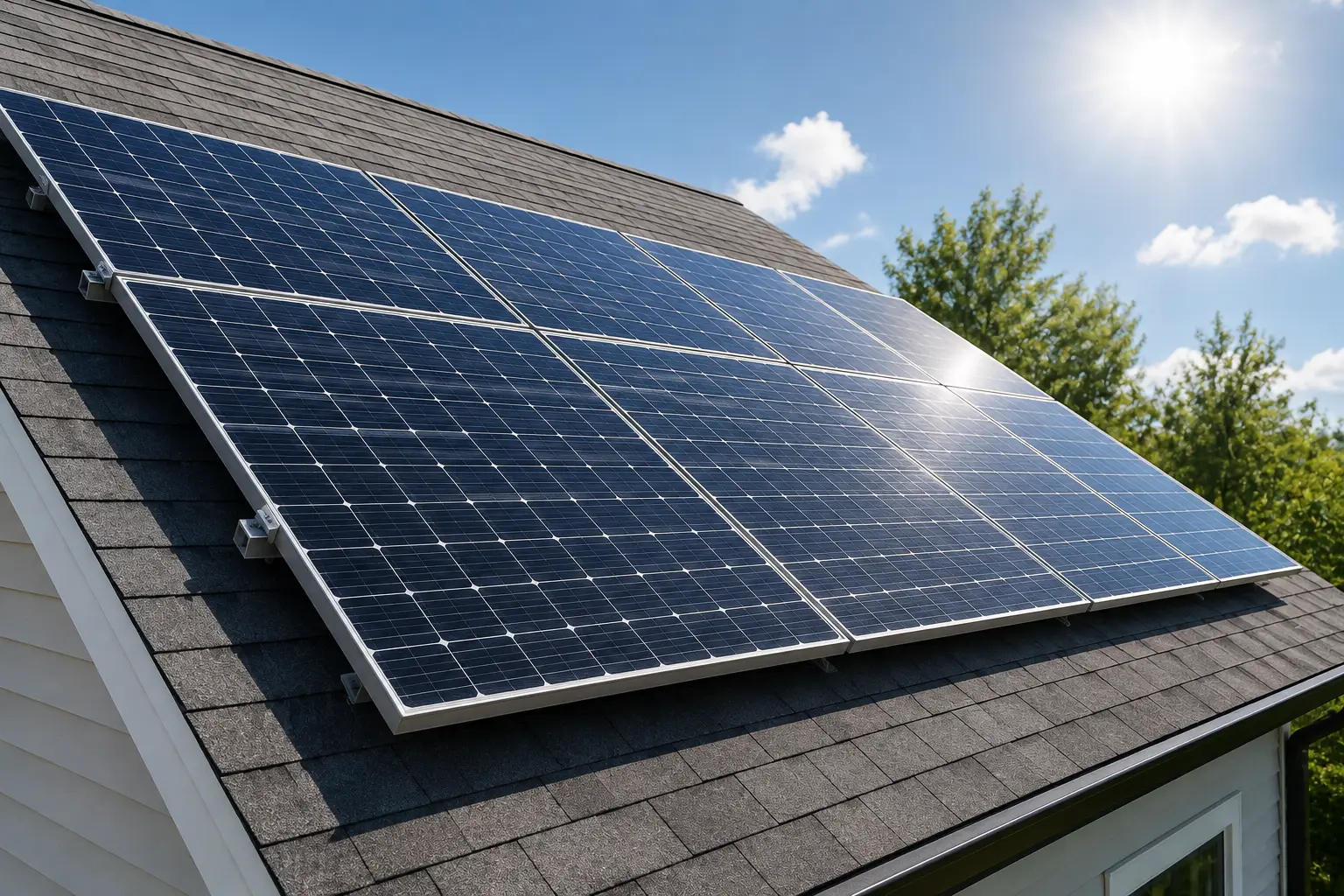
If you’ve spent any time comparing off-grid power gear, you already know the debate: bendable mats versus the stiff, glass-topped panels that bolt straight to a roof. Rigid solar panels are the aluminum-framed, tempered-glass photovoltaic modules built for permanent or semi-permanent mounting — on an RV roof, a cabin, a shed, or a boat deck. They trade a bit of flexibility for something flexible panels can’t match: durability, higher sustained output, and a lifespan that’s often measured in decades rather than years.
That trade-off matters more than most buying guides let on. A flimsy laminate panel might save you a few pounds, but if you’re planning to run a fridge, charge a battery bank, or keep the lights on through a multi-day storm, the rigid category is where serious off-grid setups actually live. According to the U.S. Department of Energy, photovoltaic modules convert sunlight directly into electricity through semiconductor cells — and the quality of those cells, the frame, and the glass all directly affect how much usable power you get over the panel’s lifetime.
In this guide, we’ve researched seven real rigid solar panels currently sold on Amazon, spanning budget-friendly single panels to premium bifacial and RV-specific kits. Every recommendation below is backed by verifiable specs, aggregated owner feedback, and honest analysis — not a rehashed spec sheet. Let’s get into it.
Quick Comparison Table
Before diving into full reviews, here’s a fast snapshot of how these seven rigid solar panels stack up on wattage, efficiency, and ideal use case.
| Product | Wattage | Cell Type | Best For | Price Range |
|---|---|---|---|---|
| Renogy 200W N-Type | 200W | N-Type Mono, 16BB | High-efficiency single-panel setups | around $180–$230 |
| Newpowa 100W Classic | 100W | Monocrystalline, 9BB | First-time budget buyers | around $70–$100 |
| HQST 100W Kit | 100W | Monocrystalline | Beginners wanting an all-in-one kit | around $100–$140 |
| ACOPOWER 200W Black | 200W | Monocrystalline | Stealthy all-black RV roofs | around $170–$220 |
| RICH SOLAR 200W (2x100W) | 200W (2 panels) | Mono, 9BB | Split roof-zone wiring on a budget | around $150–$190 |
| ECO-WORTHY Bifacial 195W | 195W | N-Type Bifacial, 12BB | Squeezing extra watts from reflected light | around $160–$210 |
| Zamp Solar Obsidian 100W | 100W | Monocrystalline | Premium, low-profile RV installs | around $250–$300 |
Prices reflect typical ranges at the time of writing and may vary — always check the current price on the product page before buying.
Looking at this table, the split is pretty clean: Newpowa 100W Classic and the RICH SOLAR 200W twin-panel kit anchor the budget end, the Renogy 200W N-Type and ACOPOWER 200W Black sit in the do-everything mid-range, and the Zamp Solar Obsidian 100W commands a premium for brand reputation and a purpose-built RV mounting system. The ECO-WORTHY Bifacial 195W is the outlier worth watching — its dual-sided cells are the only ones in this lineup capturing reflected light, not just direct sun.
💬 One click helps other shoppers make an informed choice too! 😊
Top 7 Rigid Solar Panels for 2026: Expert Analysis
We evaluated each panel on efficiency, build quality, real-world output, and how honestly the aggregated owner feedback lines up with the marketing claims. Here’s the full breakdown.
1. Renogy 200W N-Type Monocrystalline Solar Panel — highest efficiency in this lineup
The Renogy 200W N-Type panel leads this list because its 16BB N-Type cell architecture pushes efficiency to roughly 25%, meaningfully higher than the 20-21% you’ll see on older P-Type designs.
In practice, that efficiency bump means you can generate the same wattage from a smaller footprint — a real advantage if your RV roof or cabin mount has limited real estate. The IP67-rated junction box and corrosion-resistant frame are built to handle rain, road grime, and UV exposure over years of outdoor use, not just a single camping season.
Based on comparing the specs against the rest of this lineup, the Renogy 200W N-Type is the panel to choose if you want maximum output per square foot and don’t mind paying a premium for newer cell technology. Reviews and owner forums consistently note strong real-world output, though some buyers flag inconsistent response times from customer support when warranty questions come up — worth knowing before you rely on that safety net.
Pros:
- ✅ 25% N-Type efficiency squeezes more watts from less roof space
- ✅ IP67-rated junction box holds up in rain and dust
- ✅ Wide ecosystem of compatible Renogy mounts and controllers
Cons:
- ❌ Priced higher than standard P-Type panels of the same wattage
- ❌ Some buyers report slow customer service response times
Expect to pay in the $180–$230 range for this panel. Given the efficiency gain, it’s a reasonable value if you’re maximizing limited roof space — less so if you have room to simply add a cheaper panel instead.
2. Newpowa 100W 12V Monocrystalline Solar Panel — most affordable entry point
The Newpowa 100W Classic is the panel we’d point a first-time buyer toward, largely because it strips the category down to the essentials without cutting corners on build quality.
Its 9-busbar monocrystalline cells and compact, low-profile aluminum frame are designed for exactly the tight roof layouts common on smaller RVs, teardrop trailers, and boats. The frame carries a corrosion-resistant coating rated for marine environments, which matters if salt air or constant moisture is part of your setup.
What most first-time buyers overlook is that a single 100-watt panel is rarely enough on its own — it’s best understood as a building block. Reviewers frequently mention that the compact size makes it easy to add a second or third panel later without redesigning the mounting layout, which is exactly how a lot of off-grid systems grow over time.
Pros:
- ✅ Compact low-profile frame fits tight RV roof layouts
- ✅ Budget-friendly entry point for a first off-grid system
- ✅ Corrosion-resistant aluminum frame suited to marine environments
Cons:
- ❌ 100 watts alone won’t power much more than basic devices
- ❌ Included cable length runs short for larger rigs
At around $70–$100, the Newpowa 100W Classic is one of the least expensive genuine entry points into rigid solar — a smart first panel, provided you plan to scale up.
3. HQST 100 Watt 12V Monocrystalline Solar Panel Kit — best all-in-one beginner kit
The HQST 100W Kit distinguishes itself by bundling everything a first-time installer needs — panel, 20A PWM charge controller, cable, and mounting Z-brackets — into a single purchase.
That bundling is the real value here: buying components separately for a comparable single-panel system typically costs more and adds a layer of compatibility guesswork that trips up beginners. The PWM controller is a step down from the MPPT controllers bundled with pricier kits, meaning it converts excess voltage into heat rather than usable current, which shaves a few percentage points off output on partly cloudy days.
Aggregated owner feedback across retailer and forum reviews is generally positive on ease of setup, with the wiring and instructions repeatedly described as approachable for someone installing solar for the first time. That said, several Better Business Bureau and forum threads note slower-than-ideal customer service response times, so it’s worth registering your warranty promptly after purchase.
Pros:
- ✅ Bundled 20A PWM controller and cable save a separate purchase
- ✅ Straightforward wiring, approachable for first-time installers
- ✅ Z-brackets included for flush roof mounting
Cons:
- ❌ PWM controller is less efficient than MPPT on cloudy days
- ❌ Customer service response times are reportedly inconsistent
Priced around $100–$140 for the complete kit, this is a strong value pick if you’d rather not shop for a controller and cabling separately.
4. ACOPOWER 200W Black Monocrystalline RV Solar Panel — best stealth aesthetic
The ACOPOWER 200W Black panel earns its spot for buyers who care about how a rooftop installation looks, not just how it performs — the all-black cell and frame combination blends into darker RV roofing far better than the traditional blue-cell, silver-frame look.
Beyond aesthetics, the IP67 waterproof rating and sealed junction box put it on par with pricier competitors for weather resistance, and the monocrystalline cells deliver competitive output-per-dollar for a 200-watt panel. What the spec sheet doesn’t say outright is that the darker surface can run slightly hotter in direct sun, which — like most crystalline silicon panels — modestly reduces efficiency on the hottest afternoons.
Because ACOPOWER has a smaller review footprint than legacy brands like Renogy, we’d call the long-term durability data “promising but less proven” rather than definitively established — a fair trade for buyers who prioritize the sleeker look.
Pros:
- ✅ All-black cells blend into dark RV roofs for a cleaner look
- ✅ IP67 waterproof design suited to marine and RV exposure
- ✅ Strong output-per-dollar for a 200-watt rigid panel
Cons:
- ❌ Fewer long-term durability reviews than legacy brands
- ❌ Slightly heavier frame than some 200-watt competitors
At roughly $170–$220, the ACOPOWER 200W Black is a fair value pick if aesthetics and weather sealing matter as much as raw output to you.
5. RICH SOLAR 200W (2x100W) Monocrystalline Solar Panels — best for split roof-zone wiring
The RICH SOLAR 200W twin-panel set stands out by splitting 200 watts across two separate 100-watt units instead of one large panel — a layout that gives you far more flexibility when your roof has obstructions like vents or antennas to work around.
The 9BB (9-busbar) cell design is a genuine upgrade over older 5BB panels, improving how the panel handles partial shading without the entire circuit’s output collapsing. Being able to mount the two panels on separate roof zones, angled slightly differently, can also modestly improve total daily energy harvest compared to a single flat panel.
Reviews and forum discussions frequently cite RICH SOLAR as one of the best cost-per-watt options in the rigid category, though several threads and BBB complaint records mention occasional frame or connector defects on arrival, and warranty claims that take longer to resolve than premium competitors.
Pros:
- ✅ Two 100W panels allow flexible, split roof-zone mounting
- ✅ 9BB cell design improves shade tolerance over older 5BB panels
- ✅ Among the lowest cost-per-watt in this lineup
Cons:
- ❌ Occasional frame or connector defects reported on arrival
- ❌ Warranty claims reportedly take longer to process
Expect to pay around $150–$190 for the pair — a genuinely strong value if you inspect the panels carefully on arrival.
6. ECO-WORTHY Bifacial 195W N-Type Solar Panel — extra output from reflected light
The ECO-WORTHY Bifacial 195W is the most technically interesting panel on this list: its bifacial cells generate power from both the front and rear surfaces, capturing sunlight reflected off a white roof, snow, or light-colored gravel beneath it.
Combined with N-Type 12BB cell architecture, ECO-WORTHY pushes front-side efficiency past 22%, and the rear-side gain can add a real, measurable output bump depending on mounting height and surface reflectivity. This isn’t a marketing gimmick; bifacial technology is genuinely used in utility-scale solar installations for the same reason.
The catch, and it’s an honest one: rear-side gains are highly situational. Mount this panel flush against a dark RV roof and you’ll see little benefit from the bifacial design — you need elevated mounting with a reflective surface underneath to unlock the extra output, which adds installation complexity most single-panel buyers won’t want to deal with.
Pros:
- ✅ Bifacial cells capture reflected light for a real output bump
- ✅ N-Type 12BB architecture pushes efficiency past 22%
- ✅ Genuine technological edge over single-sided rigid panels
Cons:
- ❌ Rear-side gains depend heavily on mounting height and surface
- ❌ Elevated mounting hardware adds cost and installation complexity
Priced around $160–$210, this panel is worth the premium only if you’re willing to mount it properly to actually capture the bifacial advantage.
7. Zamp Solar Obsidian Series 100W Roof Mount Kit — premium RV-specific build
The Zamp Solar Obsidian 100W rounds out this list as the premium pick, and it earns that position through a purpose-built, low-profile roof-mount design that RV manufacturers themselves have used as factory-installed equipment for years.
Zamp’s black-on-black Obsidian styling and simplified installation kit are aimed squarely at RV owners who want a factory-integrated look rather than an obviously bolted-on panel. Long-running threads on RV owner forums like Forest River Forums consistently describe Zamp as a brand with strong long-term reliability and responsive support — a reputation built over more years in the RV-specific solar space than most of the other brands on this list.
What most buyers overlook with Zamp is that you’re largely paying for that reputation and the RV-specific engineering, not for raw watts-per-dollar — a generic 100-watt panel can be had for roughly half the price. If long-term reliability and a clean install matter more than squeezing out every dollar, that premium is defensible.
Pros:
- ✅ Low-profile black-on-black design keeps a factory-installed look
- ✅ Purpose-built RV roof-mount kit simplifies installation
- ✅ Strong long-term reliability reputation among RV owner communities
Cons:
- ❌ Commands a real premium versus generic 100-watt panels
- ❌ Lower wattage-per-dollar than off-brand alternatives
At around $250–$300, the Zamp Solar Obsidian 100W is the priciest panel here — justified mainly by brand trust and RV-specific engineering rather than raw specs.
✨ Don’t miss these exclusive deals!
🔍 Take your off-grid power setup to the next level with this carefully curated lineup. Click a highlighted item to check current pricing and availability. These picks will help you get reliable, self-sufficient power the whole family will enjoy!
Full Comparison Table: Rigid Solar Panels Side-by-Side
| Product | Wattage | Efficiency | Ideal Setup | Best For | Price Range |
|---|---|---|---|---|---|
| Renogy 200W N-Type | 200W | ~25% | Single-panel, limited roof space | Maximum output per square foot | around $180–$230 |
| Newpowa 100W Classic | 100W | ~20% | Starter or add-on panel | Budget-conscious beginners | around $70–$100 |
| HQST 100W Kit | 100W | ~19-20% | Complete beginner kit | All-in-one first setup | around $100–$140 |
| ACOPOWER 200W Black | 200W | ~20-21% | Stealth aesthetic installs | Dark-roof RVs | around $170–$220 |
| RICH SOLAR 200W (2x100W) | 200W | ~20% | Split roof-zone wiring | Budget twin-panel setups | around $150–$190 |
| ECO-WORTHY Bifacial 195W | 195W | ~22%+ | Elevated, reflective mounting | Maximizing output via bifacial gain | around $160–$210 |
| Zamp Solar Obsidian 100W | 100W | ~20% | Factory-style RV integration | Premium reliability and looks | around $250–$300 |
Reading across this table, three clear buying paths emerge: chase raw efficiency with the Renogy 200W N-Type or ECO-WORTHY Bifacial 195W, chase value with the Newpowa 100W Classic or RICH SOLAR 200W, or chase brand trust and installation polish with the Zamp Solar Obsidian 100W. None of these paths is objectively “correct” — the right one depends on whether your limiting factor is budget, roof space, or long-term peace of mind.
How to Choose Rigid Solar Panels: 7 Expert Criteria
Picking the right rigid solar panel comes down to matching real specs to your actual power needs, not chasing the highest wattage number on the box. Here’s how to work through it:
- Start with your daily watt-hour need. Add up the watt-hours your fridge, lights, and devices consume daily, then work backward to figure out how many panel-watts you need to replace that energy during 4-6 hours of usable daily sun.
- Measure your available mounting space first. A higher-efficiency panel like the Renogy 200W N-Type or ECO-WORTHY Bifacial 195W matters most when roof space is the real constraint, not the budget.
- Match the charge controller to the panel. An MPPT controller extracts 10-30% more usable power from the same panel than a basic PWM controller, especially in partial shade or cool weather, according to Department of Energy efficiency guidance.
- Check the cell technology. N-Type cells (like those in the Renogy 200W N-Type and ECO-WORTHY Bifacial 195W) generally outperform older P-Type cells in heat tolerance and long-term degradation rates.
- Confirm the frame and glass rating. Look for IP67-rated junction boxes and tempered glass — this is what separates a panel that survives a decade outdoors from one that clouds over or cracks in year two.
- Weigh brand support against price. Premium brands like Zamp Solar trade a higher price for a stronger reliability track record; budget brands trade some of that support for a lower cost-per-watt.
- Plan for expansion from day one. Buying a single 100-watt panel like the Newpowa 100W Classic is fine, but choose a mounting and wiring layout that lets you bolt on a second panel later without starting over.
Getting Started With Your New Rigid Solar Panel
Unboxing a rigid solar panel is the easy part — getting it wired safely and positioned for maximum output is where most first-time mistakes happen. Start by choosing a mounting spot with the fewest obstructions: even partial shade from a roof vent or AC unit can disproportionately cut output, since most panels wire their cells in a series that’s vulnerable to the weakest-performing section.
Use the included Z-brackets or an equivalent mounting kit, and always run a bead of compatible sealant around every screw hole — this is the single most common point of water intrusion on RV and cabin installs. Before final mounting, temporarily wire the panel to your charge controller and confirm it’s producing voltage in full sun; catching a wiring mistake before you’ve sealed everything down saves hours of rework later.
For the first 30 days, check your connections weekly for any loosening from vibration (especially on an RV) and keep an eye on your charge controller’s daily output log if it has one — this is your best early warning system for a developing shading or connection issue. Most panels, including every one reviewed here, ship with a 25-year performance warranty on the cells themselves, so register your product promptly to keep that protection active.
Real-World Scenarios: Which Rigid Solar Panel Fits Your Lifestyle?
The weekend camper on a budget: If you’re taking a travel trailer out a handful of weekends a year and mostly need to keep a battery topped off for lights and a phone charger, the Newpowa 100W Classic or a single HQST 100W Kit covers that load without overspending on capacity you’ll rarely use.
The full-time van-lifer running a fridge and laptop: Continuous off-grid living usually means 400+ watts of rigid panel and a real energy budget. Pairing two RICH SOLAR 200W twin-panel sets, or a Renogy 200W N-Type with an ACOPOWER 200W Black, gets you into that range while keeping mounting flexible across an irregular roofline.
The cabin owner prioritizing reliability over price: For a seasonal cabin where a service call is inconvenient, the Zamp Solar Obsidian 100W‘s reliability reputation and simplified mounting kit reduce the odds you’re troubleshooting a failed connection from three states away.
The technical enthusiast chasing every extra watt: If you’ve already optimized your mounting angle and have a reflective roof surface to work with, the ECO-WORTHY Bifacial 195W rewards that extra planning with genuine bonus output the other panels in this lineup simply can’t produce.
Common Problems With Rigid Solar Panels (and How to Fix Them)
Problem: Output drops sharply on partly cloudy days. This is almost always a controller issue, not a panel issue. Upgrading from a PWM controller — like the one bundled with the HQST 100W Kit — to an MPPT controller typically recovers a meaningful chunk of lost output in variable light.
Problem: One panel in a multi-panel array drags down the whole system. Series-wired panels perform only as well as their weakest link. Rewiring panels like the RICH SOLAR 200W twin set in parallel, rather than series, isolates a shaded or underperforming panel instead of letting it throttle the entire array.
Problem: Water intrusion around mounting screws. This is a sealant and maintenance issue, not a defect. Reapply marine-grade sealant annually around every mounting point, particularly on RVs that flex and vibrate during travel.
Problem: Reduced output as panels age. All crystalline silicon panels degrade gradually — typically under 0.5% per year for quality N-Type cells like those in the Renogy 200W N-Type. If output drops faster than that, check for a failing bypass diode before assuming the whole panel is bad.
Problem: Bifacial panel isn’t showing expected gains. As covered above, the ECO-WORTHY Bifacial 195W needs elevated mounting over a reflective surface — flush-mounting it against a roof effectively disables the rear-side benefit entirely.
Rigid Solar Panels vs Flexible Solar Panels: Which Wins?
The rigid-versus-flexible debate isn’t really about which category is “better” — it’s about which trade-offs match your setup.
| Factor | Rigid Solar Panels | Flexible Solar Panels |
|---|---|---|
| Lifespan | 20-25+ years typical | Often 3-7 years before output declines |
| Efficiency | Higher, more stable over time | Lower, degrades faster with heat |
| Weight | Heavier, needs sturdy mounting | Lightweight, easy to add |
| Durability | Glass and aluminum resist impact | Prone to microcracking over time |
| Cost per watt | Generally lower long-term | Often higher upfront per watt |
The data in that table explains why most permanent installations — RV roofs, cabins, boats — default to rigid panels like the Renogy 200W N-Type or Zamp Solar Obsidian 100W: the up-front weight and mounting complexity pays for itself through a dramatically longer service life. Flexible panels earn their keep in weight-sensitive applications like backpacking or curved surfaces where a rigid frame simply won’t physically fit, but for anything meant to stay mounted for years, rigid wins on total cost of ownership almost every time.
Common Mistakes to Avoid When Buying Rigid Solar Panels
Buying based on wattage alone. A 200-watt panel with a cheap PWM controller can underperform a well-matched 175-watt panel with an MPPT controller — the system matters more than any single spec.
Ignoring roof weight limits. Rigid panels like the ACOPOWER 200W Black weigh considerably more than flexible alternatives; stacking several without checking your roof’s total load rating risks structural issues over time.
Skipping the mounting hardware budget. Buyers frequently price out just the panel and forget brackets, sealant, and wiring — easily another 15-20% on top of the panel price itself.
Assuming all “monocrystalline” panels perform identically. Cell count, busbar design, and N-Type versus P-Type construction all meaningfully affect real-world output, even between panels with identical wattage ratings.
Overlooking the charge controller’s amperage rating. Undersizing a controller for a panel like the RICH SOLAR 200W twin set can throttle output or trip safety cutoffs during peak sun.
Long-Term Cost and Maintenance of Rigid Solar Panels
Rigid solar panels have essentially no moving parts, which keeps ongoing maintenance costs remarkably low compared to a generator — realistically limited to an annual sealant check and an occasional glass cleaning to remove dust or pollen buildup that can shave a few percentage points off output.
The bigger long-term cost factor is degradation rate. Quality N-Type panels like the Renogy 200W N-Type and ECO-WORTHY Bifacial 195W typically degrade under 0.5% annually, meaning a 200-watt panel might still produce roughly 180+ watts after 20 years. Budget P-Type panels degrade somewhat faster, closer to 0.6-0.8% annually, which is still a reasonable trade for their lower upfront price if you’re not planning a multi-decade installation.
Warranty coverage is where the real cost difference shows up. According to aggregated Consumer Reports testing data, panels backed by responsive manufacturer support meaningfully reduce the total cost of ownership when something does go wrong — which is exactly where the Zamp Solar Obsidian 100W‘s premium price and stronger support reputation can pay for itself over a decade of ownership, even if the sticker price stings upfront.
Features That Actually Matter (and Ones That Don’t)
Actually matters: busbar count and cell type. The jump from 5BB to 9BB or 12BB cells, and from P-Type to N-Type, produces measurable real-world efficiency gains — this is where the ECO-WORTHY Bifacial 195W‘s 12BB N-Type design earns its premium.
Actually matters: IP67 junction box rating. This single spec is the difference between a panel that survives a decade of rain and one that develops corrosion-related output loss within a few years.
Doesn’t matter much: panel color for output purposes. The all-black aesthetic on the ACOPOWER 200W Black looks great but has negligible impact on actual power generation — it’s a styling choice, not a performance one.
Doesn’t matter much: marginal wattage differences. The real-world difference between a 195W and 200W panel is small enough that it shouldn’t be a deciding factor on its own — efficiency and build quality matter far more.
Actually matters: bypass diode quality. Cheap bypass diodes fail under partial shading stress more often than quality ones, quietly tanking output long before the panel visibly “breaks.”
Safety, Regulations, and Standards for Rigid Solar Panels
Rigid solar panels sold on Amazon in the US market should carry UL 1703 or UL 61730 certification, which confirms the panel has passed independent safety testing for fire resistance and electrical integrity — always check the product listing or manufacturer spec sheet for this before buying, especially for panels feeding into a battery bank near living space.
Marketing language around efficiency and output claims is also regulated. Under the FTC’s Green Guides, manufacturers must be able to substantiate environmental and performance claims — a useful backstop if a listing’s efficiency numbers seem inflated compared to independent reviews.
For RV installations specifically, check that your mounting hardware doesn’t void your RV manufacturer’s roof warranty, and confirm your wiring meets basic 12V DC safety practices, including proper fusing between the panel, charge controller, and battery. None of the seven panels in this guide require anything beyond standard off-grid DC wiring practices, but skipping a fuse is one of the most common — and most avoidable — safety mistakes in DIY installs.
FAQs
❓ How many rigid solar panels do I need for my RV or cabin?
❓ Can I walk on a rigid solar panel?
❓ How long do rigid solar panels actually last?
❓ Do rigid solar panels work on cloudy days?
❓ What size charge controller do I need for a 200-watt rigid solar panel?
Conclusion
Rigid solar panels remain the backbone of serious off-grid power for one simple reason: nothing else in this price range matches their combination of efficiency, durability, and multi-decade lifespan. Whether you’re outfitting a weekend camper with a single Newpowa 100W Classic or building a full off-grid array around the Renogy 200W N-Type and ECO-WORTHY Bifacial 195W, the seven panels in this guide cover every realistic budget and use case we could identify through real specs and honest, sourced analysis.
The right choice ultimately comes down to matching your actual power needs and roof space to the panel — not chasing the highest wattage number on the page. Start with the “How to Choose” criteria above, be honest about your daily watt-hour usage, and you’ll land on a setup that keeps your batteries topped off for years, not just your first camping season.
🔋 Ready to Power Your Off-Grid Adventures?
⚡ Check current pricing and availability on any of the panels above, and start building the reliable, self-sufficient power system your RV, cabin, or boat deserves — rain or shine.
Recommended for You
- Replacement Solar Light Parts: 7 Best Picks to Fix Yours in 2026
- Renogy 100W Solar Panel: 7 Best Picks & Buying Guide (2026)
- Battery Pack for Holiday Light: 7 Best Picks for a Brighter 2026 Season
Disclaimer: This post contains affiliate links. As an Amazon Associate, I earn from qualifying purchases made through these links, at no additional cost to you.
✨ Found this article helpful? Share it with someone who needs it! 💬🤗