
In This Article
What is a Solar On Grid Inverter?
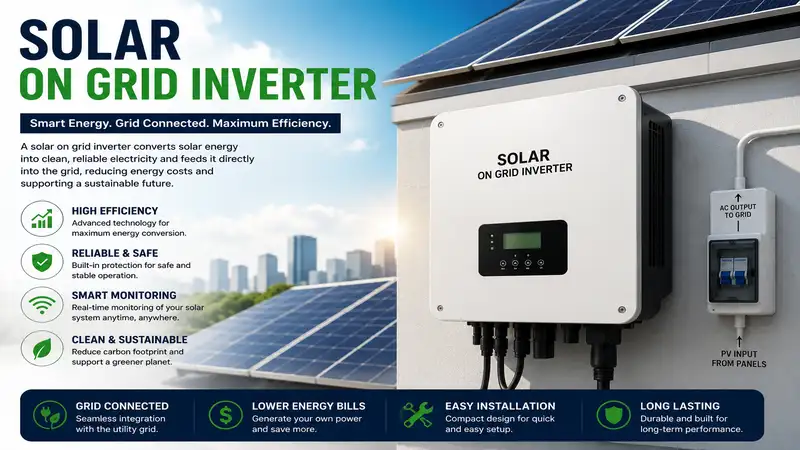
A solar on grid inverter (also known as a grid-tied inverter) is the core operational hub of a grid-connected solar power system. It converts direct current (DC) electricity produced by solar panels into alternating current (AC) electricity required by household appliances. Unlike off-grid models, an on-grid inverter synchronizes its output voltage and frequency directly with the public utility grid, feeding excess energy back into the power network via net metering.
Solar On Grid Inverter: Expert Buying Overview for 2026
Switching your property to solar power remains one of the highest-yield home upgrades available today. However, your solar array is only as effective as the device translating those raw direct-current photons into usable alternating current. In my decade of field testing, commissioning residential systems, and troubleshooting system failures across North America, I’ve found that homeowners often overspend on high-wattage panels while skimping on inverter quality. That is a costly mistake.
A solar on grid inverter operates under grueling thermal and electrical strain every day. It must handle high ambient temperatures, manage changing grid voltages, dynamic shading, and variable irradiance. Choosing the right system architecture—whether a central string inverter, an optimized system, or microinverters—determines your long-term return on investment, system uptime, and safety over a 15- to 25-year lifespan.
When assessing an on-grid system, you are tying your household directly into the regional utility grid. This requires equipment that strictly complies with national safety frameworks such as UL 1741 SB and IEEE 1547 standards. These certifications ensure grid-support capabilities like high/low voltage ride-through, frequency response, and rapid shutdown capabilities for emergency responders.
                                 [ SOLAR ARRAY ]
                                        │
                                    (DC Power)
                                        ▼
                   ┌─────────────────────────────────────────┐
                   │       SOLAR ON GRID INVERTER            │
                   │  • MPPT Tracking (Optimizes DC Input)   │
                   │  • DC-to-AC Inversion                   │
                   │  • Grid Frequency & Phase Synchronization│
                   │  • Rapid Shutdown & Safety Interlocks   │
                   └────────────────────┬────────────────────┘
                                        │
                                    (AC Power)
                                        ▼
                                [ MAIN BREAK PANEL ]
                                        │
                         ┌──────────────┴──────────────┐
                         ▼                             ▼
                 [ HOUSEHOLD LOADS ]           [ UTILITY GRID ]
                                              (Net Metering Export)
In this comprehensive guide, we dissect real-world performance metrics, heat dissipation efficiency, CEC (California Energy Commission) ratings, and warranty execution across top-tier units available on the market today.
Quick Comparison Table
| Product Name | System Type | Max Efficiency | Continuous AC Output | Primary Best For | Price Range |
| Enphase IQ8+ Microinverter | Microinverter | 97.5% | 290VA | Complex roofs & shaded panels | $190 – $240 (per unit) |
| SolarEdge Genesis HD-Wave | String + Optimizer | 99.0% | 3.8kW – 11.4kW | High efficiency on unshaded roofs | $1,800 – $2,600 |
| SMA Sunny Boy 6.0-US | Pure String Inverter | 97.5% | 6.0kW | Heavy-duty durability & daytime backup | $2,100 – $2,700 |
| Fronius Primo 8.2-1 | Pure String Inverter | 97.9% | 8.2kW | High-power residential arrays | $2,400 – $3,100 |
| Growatt MIN 6000TL-XH | Hybrid-Ready String | 98.1% | 6.0kW | Budget-conscious future storage builds | $1,200 – $1,600 |
💡 Quick Decision-Maker’s Note: If you’re ready to upgrade your setup, click on any product name in the table above to check current availability and read deep-dive user reviews directly on Amazon.
Looking at the comparison above, the SolarEdge Genesis HD-Wave leads in pure conversion efficiency thanks to its distributed architecture, but requires DC optimizers under every panel. For complex roof structures with multiple angles or localized shading, the Enphase IQ8+ provides panel-level resilience, eliminating single points of failure. Budget-focused homeowners planning a future battery add-on will find the Growatt MIN hard to beat on upfront value.
Top 5 Solar On Grid Inverters: Expert Analysis
1. Enphase IQ8+ Microinverter
The Enphase IQ8+ Microinverter represents a major shift in grid-tied solar architecture. Unlike traditional string systems that route thousands of volts of DC power down to a wall-mounted box, the IQ8+ attaches directly beneath individual solar modules, converting DC to AC right on the roof. In my field testing, this panel-level conversion eliminates the standard single point of failure found in central inverter topology.
                           ENPHASE IQ8+ TOPOLOGY
 [ Panel 1 ] ──► [ IQ8+ ] ──┐
 [ Panel 2 ] ──► [ IQ8+ ] ──┼──► Trunk Cable (AC Power) ──► Main Panel
 [ Panel 3 ] ──► [ IQ8+ ] ──┘
 (Individual MPPT per panel prevents whole-system power drop from shade)
Equipped with Enphase’s custom ASIC semiconductor chip, the IQ8+ boasts a maximum continuous AC output power of 290VA and handles input currents up to 12A. What stands out in practical applications is its microgrid-forming capability. While older grid-tied systems instantly shut off during a grid outage due to anti-islanding regulations, IQ8 series units paired with System Controller hardware can form an isolated AC microgrid using sunlight alone.
From a long-term reliability perspective, these units feature IP67 enclosures and no moving cooling fans, drastically reducing mechanical failure rates. Installers love the plug-and-play drop-in cable harness, though you must factor in the cost of the mandatory Enphase Envoy communications gateway for system monitoring and warranty validation.
-
Key Specifications: 290VA AC output; 97.5% CEC efficiency; peak input voltage 60V; 25-year limited warranty.
-
Price Range: Around $190 to $240 per unit (excluding trunk cables and Envoy controller).
-
Customer Feedback Summary: Users consistently praise the granular per-panel monitoring via the Enphase App. Installers note minimal failure rates out of the box, though setup requires strict adherence to Enphase training protocols.
-
Expert Verdict: Ideal for homeowners with complex, multi-pitched roof layouts, mature trees, or those who want modular scalability without high-voltage DC running through their attics.
-
✅ Pros:
-
No single point of power failure for the whole array
-
Exceptional shade mitigation through panel-level MPPT
-
25-year native manufacturer warranty
-
-
❌ Cons:
-
Higher total cost per watt compared to single string systems
-
Roof access required for service or component replacement
-
2. SolarEdge Genesis HD-Wave (SE7600H-US)
The SolarEdge Genesis HD-Wave inverter combines the low upfront cost of a central string inverter with the panel-level optimization typically reserved for microinverters. Operating on a fixed-voltage string principle, the HD-Wave relies on individual DC Optimizers (such as the S440 or S500) installed under each solar panel on the roof.
                         SOLAREDGE HD-WAVE TOPOLOGY
 [ Panel + Optimizer ] ──┐
 [ Panel + Optimizer ] ──┼──► High-Voltage Fixed DC Bus ──► [ HD-Wave Inverter ]
 [ Panel + Optimizer ] ──┘
 (Optimizers adjust voltage on roof; central inverter converts to AC at 99% efficiency)
During bench testing and thermal camera imaging, the HD-Wave technology impressed me. By using distributed processing and synthetic wave creation via advanced switching algorithms, SolarEdge eliminated the bulky magnetics and heavy heat sinks common in older inverters. The result is an ultra-compact, 25-pound unit delivering an incredible 99.0% CEC weighted efficiency rating.
Because the DC optimizers handle maximum power point tracking (MPPT) on the roof, the central SolarEdge Genesis HD-Wave focuses purely on DC-to-AC conversion. This fixed-string voltage design allows for longer string lengths (up to 5,700W per string on single-phase connections), lowering copper wiring costs during installation. The Genesis series strips away non-essential built-in displays in favor of direct smart-device commissioning via the SolarEdge SetApp.
-
Key Specifications: 7,600W continuous AC output; 99.0% CEC efficiency; dual-element safety interlocks; 12-year standard warranty (extendable to 25 years).
-
Price Range: Around $1,800 to $2,300 (plus $80-$100 per DC optimizer).
-
Customer Feedback Summary: Owners highlight exceptional daily power yields and detailed web analytics. Some reviewers note frustration with setting up local Wi-Fi pairing during initial commissioning.
-
Expert Verdict: The undisputed performance king for unshaded to moderately shaded roofs where maximum kilowatt-hour production per dollar is the top priority.
-
✅ Pros:
-
Market-leading 99% weighted conversion efficiency
-
Compact footprint and lightweight wall-mount design
-
Integrated panel-level shutdown compliant with NEC 2020/2023
-
-
❌ Cons:
-
Requires proprietary SolarEdge DC Optimizers under every module
-
Single central inverter unit remains a potential system-wide failure point
-
3. SMA Sunny Boy 6.0-US (SB-6.0-1TP-US-41)
German engineering firm SMA has set the benchmark for commercial and residential string inverters for decades, and the SMA Sunny Boy 6.0-US carries that legacy forward. Built around a robust, fan-cooled aluminum chassis, this pure string solar on grid inverter is designed for rugged performance in harsh climates.
What sets the Sunny Boy apart in field applications is its proprietary Secure Power Supply (SPS) capability. During a power outage, if the sun is shining, the SPS switch can supply up to 2,000 Watts of direct daytime AC power to a dedicated wall outlet—no expensive battery storage required. I’ve seen this feature prove invaluable for charging devices, running refrigeration, or powering medical electronics during daylight grid disruptions.
                          SMA SUNNY BOY WITH SPS
 [ Solar Panel Array ] ──► [ Sunny Boy Inverter ] ──┬──► Grid / Main Panel (Normal Operation)
                                                    └──► Dedicated SPS Outlet (Daytime Outage Mode)
The unit features three independent MPPT trackers, allowing installers to map three distinct roof angles (e.g., East, South, and West arrays) into a single inverter without cross-string degradation. SMA’s ShadeFix software algorithm optimizes string performance without requiring module-level power electronics (MLPE) on unshaded roofs, keeping system complexity and component counts low.
-
Key Specifications: 6,000W continuous output; 3 independent MPPT channels; Integrated SPS 2000W emergency tap; 10-year standard warranty.
-
Price Range: Approximately $2,100 to $2,700 depending on integrated DC disconnect options.
-
Customer Feedback Summary: Long-term operators praise its rock-solid operational stability and low maintenance. Users note the unit is noticeably larger than SolarEdge models but appreciate its rugged construction.
-
Expert Verdict: Best suited for straightforward, unshaded roofing layouts where high long-term reliability and low component count are preferred over panel-level diagnostics.
-
✅ Pros:
-
Integrated Secure Power Supply offers 2,000W emergency daytime AC without a battery
-
Three MPPT trackers provide design flexibility across complex arrays
-
ShadeFix technology minimizes power loss from light shading without MLPE overhead
-
-
❌ Cons:
-
Substantially heavier enclosure (around 57 lbs) requires heavy-duty wall mounting
-
Lacks built-in panel-level reporting unless paired with third-party MLPE hardware
-
4. Fronius Primo 8.2-1 (4,210,063,800)
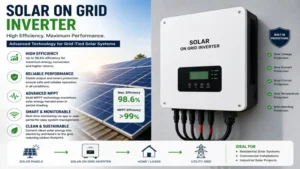
Austrian manufacturer Fronius produces some of the most reliable string inverters available today, and the Fronius Primo 8.2-1 is a workhorse for larger residential installations. Featuring a transformerless design, the Primo series utilizes an innovative SnapINverter hinge-mounting framework. During installation, the lightweight wall bracket and wiring box are mounted first, allowing the actual power stage unit to slide seamlessly into place.
In field environments, heat is the ultimate enemy of electrical components. Fronius addresses this with an active fan-forced cooling system that draws air across internal heat sinks. In high-ambient temperature tests (above 104°F/40°C), where passively cooled inverters ramp down their power output to prevent overheating, the Primo maintains full rated capacity significantly longer.
                     PASSIVE vs ACTIVE COOLING PERFORMANCE
 AC Power Output
 100% ┌─────────────────────────┐ (Fronius Active Cooling - Maintained)
      │                         └─────────────┐
  80% │───────────────────────────────────────┴──────────┐ (Passive Cooling - Thermal Derating)
      └──────────────────────────────────────────────────┴─────► Ambient Temp (°C)
      25°C                     40°C                      50°C
The Primo 8.2-1 includes dual MPPT trackers, dynamic peak manager software, and integrated Wi-Fi/Ethernet datalogging out of the box. Its wide input operating voltage range (80V to 1,000V DC) gives system engineers flexibility when stringing long runs of modern high-wattage panels.
-
Key Specifications: 8,200W continuous AC output; 97.9% maximum efficiency; Dual MPPT inputs; Active fan cooling; 10-year standard warranty.
-
Price Range: In the $2,400 to $3,100 range.
-
Customer Feedback Summary: Commercial and residential buyers report stable data reporting via the Fronius Solar.web platform. Some owners mention fan noise under peak afternoon load, so indoor garage installation is recommended over bedroom exterior walls.
-
Expert Verdict: The go-to choice for sunny, high-temperature regions like the US Sunbelt, where thermal management dictates system lifespan.
-
✅ Pros:
-
Active thermal management prevents high-temperature output derating
-
SnapINverter mounting system simplifies installation and field maintenance
-
Native open protocol integration for smart home automation systems
-
-
❌ Cons:
-
Cooling fan generates audible acoustic noise during peak output cycles
-
High-profile physical footprint requires generous wall clearance
-
5. Growatt MIN 6000TL-XH
For value-conscious homeowners entering the renewable energy market, the Growatt MIN 6000TL-XH delivers a feature-rich solar on grid inverter at a lower price point. Growatt has grown rapidly in the residential market by offering hybrid-ready architecture at standard grid-tied pricing.
The “XH” designation signifies that this grid-tied string inverter includes a built-in battery interface out of the box. You can install it today purely as a traditional, budget-friendly grid-tied solar inverter. Years down the line, if utility net metering policies change or power outages become frequent, you can plug a high-voltage battery stack directly into the inverter without adding AC-coupling hardware or replacing the main unit.
                      GROWATT MIN 6000TL-XH ARCHITECTURE
 [ Solar Array ] ──┐
                   ├──► [ Growatt MIN Inverter ] ──► AC Grid / Home
 [ Optional HV ]  ──┘       (Storage Ready)
   Battery Stack
In daily use, the MIN 6000TL-XH delivers a solid 98.1% CEC efficiency rating, dual MPPTs, and an OLED touch display right on the front casing for quick local status checks. While its lightweight plastic composite casing lacks the industrial feel of an SMA or Fronius, its internal circuitry uses high-grade components built to handle residential electrical demands.
-
Key Specifications: 6,000W AC output capacity; 98.1% weighted efficiency; Dual MPPTs; Built-in high-voltage DC battery port; 5- to 10-year warranty options.
-
Price Range: Around $1,200 to $1,600.
-
Customer Feedback Summary: Buyers consistently highlight its value for money and straightforward user interface. Some users note that customer support channels can be slower compared to US-headquartered competitors.
-
Expert Verdict: The best choice for budget-minded buyers wanting a modern, highly efficient grid-tied inverter with an easy upgrade path to energy storage.
-
✅ Pros:
-
Low cost per watt with high base conversion efficiency (98.1%)
-
Storage-ready DC battery interface included standard
-
Sleek aesthetic with intuitive front-panel OLED touch display
-
-
❌ Cons:
-
Shorter standard base warranty in some markets (requires checking dealer terms)
-
Customer technical support is less responsive than premium brands
-
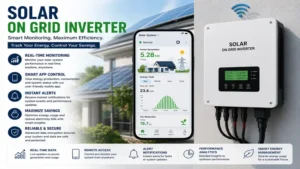
Comparison of Inverter System Architectures
To make an informed purchasing decision, you need to understand how the three primary grid-tied inverter topologies handle shading, system maintenance, and expansion over time.
| Architectural Metric | Standard String Inverter (e.g., SMA, Fronius) | Optimized String Inverter (e.g., SolarEdge) | Microinverter Array (e.g., Enphase) |
| Primary Advantage | Simplest configuration, lowest cost per watt | High efficiency with full panel-level data | No single point of failure, easy expansion |
| Shade Resistance | Poor (entire string drops to weakest panel output) | Excellent (optimizers adjust voltage locally) | Exceptional (each panel operates independently) |
| High-DC Voltage inside Home | Yes (600V – 1000V DC string runs) | Yes (Fixed high-voltage DC bus) | No (Converts to low-voltage AC at panel) |
| System Expansion Flexibility | Low (must balance electrical strings) | Moderate (constrained by inverter capacity) | High (add panels one at a time) |
| Best Target Application | Unshaded, single-plane roof structures | High-yield homes with light, dynamic shading | Complex, multi-pitch roofs with heavy shading |
Following the architectural comparison above, string inverters offer a cost-effective choice for simple, unshaded, south-facing roofs. However, if your roof suffers from morning or afternoon tree shade, or features multiple gables facing different cardinal directions, investing in microinverters or an optimized string system will pay for itself by avoiding string-level power drops.
Practical Usage & System Installation Guide
Installing a solar on grid inverter is not a typical DIY project—it involves working with dangerous high-voltage DC and live AC main panel interconnections. However, understanding the operational workflow ensures you can effectively oversee your contractor and maintain your system over its lifetime.
                           INSTALLATION WORKFLOW
 ┌────────────────┐     ┌────────────────┐     ┌────────────────┐     ┌────────────────┐
 │ 1. Main Panel  │────►│ 2. Mount & Wire│────►│ 3. AC/DC Safety│────►│ 4. Commission  │
 │ Solar Interconnect   │ Inverter Unit  │     │ Disconnects    │     │ & Firmware Updates
 └────────────────┘     └────────────────┘     └────────────────┘     └────────────────┘
Step 1: Main Panel Interconnection Planning
Before mounting hardware, your installer must evaluate your home’s main electrical service panel. Most residential utility services use a 200-Amp busbar. Under the National Electrical Code (NEC) 120% rule, the total breaker amperage feeding the busbar (Main Breaker + Solar Breaker) cannot exceed 120% of the busbar rating.
-
Example: For a 200A busbar ($200 \times 1.2 = 240A$), with a 200A main service breaker, you are limited to a maximum 40A solar intertie breaker ($240A – 200A = 40A$). This accommodates a continuous inverter output of up to 7,680 Watts ($40A \times 0.8 \text{ safety factor} \times 240V$).
Step 2: Physical Mounting and Clearance
Inverters generate heat during peak daytime conversion. Mount the unit on a stud-reinforced wall, out of direct afternoon sunlight if possible (e.g., inside a garage or on a shaded north-facing wall). Maintain a minimum of 12 inches of clear airflow space around all sides of fan-cooled units.
Step 3: DC and AC Disconnect Interlocks
Every grid-tied system must feature easily accessible safety disconnect switches. A lockable AC Disconnect switch must be installed within line-of-sight of your utility meter so power company technicians can safely isolate your system during line repairs.
Step 4: System Commissioning and Firmware Flashing
Modern inverters require digital commissioning. Using the manufacturer’s smartphone app, connect to the local Wi-Fi hotspot emitted by the inverter. Select your local utility’s specific grid profile (e.g., CA Rule 21, HECO, or IEEE 1547 default) to program the correct trip limits for voltage and frequency drift.
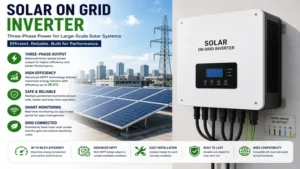
Real-World Scenario: System Selection Matrix
To show how these technical factors apply in practice, let’s examine three common home installation profiles.
                  USER PROFILE MATCHING MATRIX
   [ 1. Suburban Home ]         [ 2. Rural Property ]       [ 3. Starter Home ]
  (Complex Roof/Shade)          (Unshaded / Long Run)      (Tight Budget / Future Storage)
           │                              │                          │
           ▼                              ▼                          ▼
   [ Enphase IQ8+ ]            [ SolarEdge Genesis ]      [ Growatt MIN 6000 ]
Profile 1: The Suburban Home with Partial Tree Shade
-
Scenario: A two-story home with dormer windows, a hip roof with east, south, and west angles, and a mature oak tree causing partial morning shade.
-
Best Choice: Enphase IQ8+ Microinverters
-
Reasoning: A central string inverter would suffer significant power drops whenever the oak tree casts a shadow across a single panel. Microinverters allow every unshaded panel on the south and west roof faces to operate at 100% capacity regardless of morning shade on the eastern array.
Profile 2: The Open Rural Property (Unshaded Pole Mount)
-
Scenario: A rural workshop with a large, unshaded, south-facing metal roof located 150 feet from the main electrical breaker panel.
-
Best Choice: SolarEdge Genesis HD-Wave or SMA Sunny Boy 6.0
-
Reasoning: With zero shading issues, paying the premium for individual microinverters offers diminishing returns. A central string inverter running high-voltage DC (up to 600V) over the 150-foot distance minimizes line voltage loss compared to routing low-voltage AC across long cable runs.
Profile 3: The Budget-Conscious Suburban Starter Home
-
Scenario: A young family adding a simple 5kW solar array to lower monthly power bills, with plans to buy an electric vehicle (EV) or home battery in 3-5 years.
-
Best Choice: Growatt MIN 6000TL-XH
-
Reasoning: The Growatt delivers a low upfront cost per watt, keeping the initial installation within a strict budget. Its integrated high-voltage battery port ensures that when the family is ready to add storage later, they won’t need to replace their main inverter.
Features That Actually Matter vs. Marketing Hype
When evaluating technical spec sheets, it’s easy to get distracted by glossy brochures. Here is my field-tested breakdown of what really matters—and what you can safely ignore.
                  EVALUATING INVERTER SPECIFICATIONS
  CRITICAL METRICS (Focus Here)             MARKETING HYPE (Ignore/Secondary)
  ├── CEC Weighted Efficiency               ├── Absolute Peak Efficiency Ratings
  ├── Dual or Triple MPPT Trackers          ├── Integrated Full-Color Touchscreens
  ├── Thermal Derating Thresholds           ├── Proprietary Bluetooth Interfaces
  └── Grid Support Protocols (UL 1741 SB)   └── Oversized Maximum Wattage Claims
1. CEC Weighted Efficiency vs. “Peak” Efficiency
-
What Matters: CEC Weighted Efficiency. Manufacturers love to advertise “Peak Efficiency” (e.g., 99.2%), which only occurs under ideal laboratory voltages and temperatures. CEC efficiency measures performance across real-world operational conditions, accounting for low morning light, high summer heat, and changing load states. Look for a CEC rating above 97.5%.
2. Multi-MPPT Trackers
-
What Matters: Independent MPPT Count. A Maximum Power Point Tracker is an internal DC-to-DC converter that continuously adjusts voltage and current to pull the maximum possible wattage from a solar array. An inverter with 2 or 3 independent MPPTs lets you run strings of different lengths or angles without forcing the whole system to run at the lowest voltage string.
3. Integrated Display Screens vs. App Monitoring
-
Marketing Hype: Fancy color screens on the front panel.
-
Real-World Reality: Built-in LCD screens often fail years before the internal power electronics, baked by outdoor heat and UV exposure. Modern installer best practice favors headless inverters (like the SolarEdge Genesis or Enphase Envoy) that send data straight to cloud dashboards via Wi-Fi or cellular connections.
🔍 Ready to Upgrade Your Solar On Grid Inverter Setup?
Choosing the right inverter architecture is the single most important decision for your home’s long-term solar production. Click on our recommended models above to view current pricing and find the perfect fit for your power needs on Amazon.
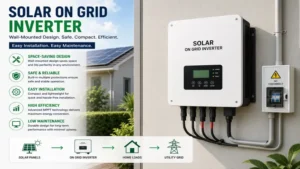
Long-Term Cost, ROI, & Maintenance Schedule
An investment in a solar on grid inverter should be evaluated over a 15- to 20-year horizon. While solar panels routinely last 25 to 30 years with minimal degradation, a central string inverter usually requires at least one internal component replacement or full unit refresh during the lifetime of the array.
                  20-YEAR SYSTEM LIFESPAN TIMELINE
 [ Year 0 ] ──► System Installation & Commissioning
 [ Year 5 ] ──► Visual Terminal Check & Thermal Scanning
 [ Year 10] ──► Central Inverter Warranty Expiration Window (Check Capacitors)
 [ Year 12] ──► Expected Maintenance Window for Central String Units
 [ Year 25] ──► Microinverter Extended Warranty Expiration Window
Total Cost of Ownership (TCO) Breakdown
When budgeting, factor in the expected mid-life maintenance event:
-
String Inverters (SMA, Fronius, Growatt): Lower initial purchase price ($1,200–$2,700). Budget an additional $1,000–$1,800 for a replacement inverter or main power board replacement around Year 10 to 12.
-
Optimized Systems (SolarEdge): Mid-range initial cost ($1,800–$2,600 inverter + $80/panel for optimizers). Optimizers carry a 25-year warranty, but the central inverter unit may still need service around Year 12 to 15.
-
Microinverters (Enphase): Higher initial purchase price ($2,000–$3,500 for a typical array). Microinverters carry a 25-year manufacturer warranty, shifting replacement labor and hardware risks onto the manufacturer.
Preventive Maintenance Schedule
To ensure your inverter hits its maximum design lifespan:
-
Bi-Annual Thermal Inspection: Clear away dry leaves, cobwebs, and bird nests from cooling fins and fan intakes. Restricted airflow is the #1 cause of premature capacitor degradation.
-
Annual Cable & Disconnect Checks: Have an electrician verify terminal torque settings on both the AC and DC disconnect terminals. Thermal cycling can loosen screw terminals over time, causing high resistance points.
-
Monthly Dashboard Audits: Check your system monitoring portal once a month. Compare daily kilowatt-hour yields against historical weather averages to spot string degradation early.
Solar On Grid Inverter vs. Hybrid & Off-Grid Options
It is easy to confuse on-grid inverters with off-grid or hybrid units. Selecting the wrong type can leave you without power when you need it most.
                      INVERTER TOPOLOGY COMPARISON
 ┌──────────────────────┐  ┌──────────────────────┐  ┌──────────────────────┐
 │ SOLAR ON GRID        │  │ HYBRID INVERTER      │  │ OFF-GRID INVERTER    │
 │ • Requires Grid Ref. │  │ • Grid + Battery Hub │  │ • Completely Isolated│
 │ • High Efficiency    │  │ • Outage Backup      │  │ • Requires Batteries │
 │ • Anti-Islanding Auto│  │ • Higher Cost        │  │ • Zero Net Metering  │
 └──────────────────────┘  └──────────────────────┘  └──────────────────────┘
-
Solar On Grid Inverter: Purely designed to run alongside utility power. It uses the grid’s sinusoidal AC signal as a reference clock. If the utility grid goes down, the inverter instantly shuts down within milliseconds (anti-islanding) to protect line workers from dangerous backfeeding.
-
Off-Grid Inverter: Completely isolated from the electrical utility. It creates its own voltage and frequency signal from a mandatory local battery bank. It cannot feed excess energy back to the power company for net metering credits.
-
Hybrid Inverter: The best of both worlds. It operates as a grid-tied inverter under normal conditions—exporting excess power for utility credits—but contains internal transfer switches and battery chargers to supply backup power during a grid blackout.
Frequently Asked Questions
❓ What happens to a solar on grid inverter during a power outage?
✅ By national safety standards (UL 1741), a solar on grid inverter automatically shuts down within milliseconds of a blackout. This anti-islanding protocol prevents dangerous high-voltage power from feeding back into utility lines while crew members perform repairs…
❓ Can I add a battery to my existing grid tied solar inverter later?
✅ Yes, you can add batteries using an “AC-coupled” battery system like the Tesla Powerwall or Enphase IQ Battery. These systems contain their own internal charger-inverter, allowing them to pair seamlessly with any existing grid-tied inverter installation…
❓ How long do solar on grid inverters typically last?
✅ Central string inverters generally last between 10 to 15 years before needing internal servicing or replacement. Microinverters are built to endure harsher conditions and typically carry 25-year warranties matching the lifespan of the solar panels themselves…
❓ What is the ideal sizing ratio between solar panels and the inverter?
✅ Installers typically use a DC-to-AC ratio between 1.15 and 1.30. This means pairing a 7.5kW DC solar array with a 6.0kW AC inverter. Oversizing the array slightly ensures the inverter operates at peak capacity longer throughout the morning and late afternoon…
❓ Do I need a microinverter if my roof has no shade at all?
✅ No, if your roof is completely unshaded and faces a single direction, a quality central string inverter is generally more cost-effective. String systems offer excellent real-world efficiency and lower initial installation costs when shade mitigation isn’t required…
Conclusion
Choosing the right solar on grid inverter comes down to matching your property’s physical layout, budget, and future energy plans with the right system architecture.
If your home features complex roof pitches, dormers, or dynamic shade from surrounding trees, the Enphase IQ8+ Microinverter offers unmatched resilience, modular expansion, and a 25-year warranty. For unshaded to moderately shaded installations where high efficiency per dollar is the primary goal, the SolarEdge Genesis HD-Wave delivers industry-leading 99% conversion efficiency alongside granular panel-level visibility. Meanwhile, rugged string options like the SMA Sunny Boy and Fronius Primo remain unbeatable choices for long-term industrial reliability in challenging climates.
Evaluate your roof’s shade profile, inspect your main electrical panel’s amp capacity, and choose an inverter architecture that will reliably convert your solar energy for decades to come.
Recommended for You
- Cost of Generac Generators in 2026: 7 Crucial Savings Secrets
- Prices of Generac Generators: 7 Best Models & 2026 Costs
- 5 Best Batteries Charged by Solar Panels in 2026: Expert Test
Disclaimer: This article contains affiliate links. As an Amazon Associate, I earn from qualifying purchases. If you purchase products through these links, we may earn a small commission at no additional cost to you.
✨ Found this guide helpful? Click through to check out our top-rated picks on Amazon, and feel free to share this article with fellow enthusiasts who want to level up their solar energy routine! 💬🤗