
In This Article
Introduction: Why 200 Watts Is the Portable Solar Sweet Spot
Picture this: it’s day three of a boondocking trip in southern Utah. Your 12V fridge is humming, your phone is at 9%, and the power station you packed is flashing a sad red battery bar. A small 100W panel would still be playing catch-up at sundown. That gap is exactly where 200w portable solar panels earn their spot in the gear bin.
Two hundred watts is the size where portable solar stops being a novelty and starts acting like a real power source. It’s big enough to meaningfully refill a 500–1,000Wh power station on a sunny day, yet most models still fold down to roughly the footprint of a large pizza box and weigh somewhere between 10 and 21 pounds. Go bigger, and you’re wrestling a 400W panel across a campsite. Go smaller, and you’re rationing watts.
In this guide, we compare seven real 200w portable solar panels you can order on amazon.com in 2026, from budget 12V kits to premium bifacial flagships. Instead of recycling listing copy, we translate spec sheets into plain English, summarize what reviewers and owners actually report, and show you where each panel makes sense — and where it doesn’t.
What Are 200w portable solar panels?
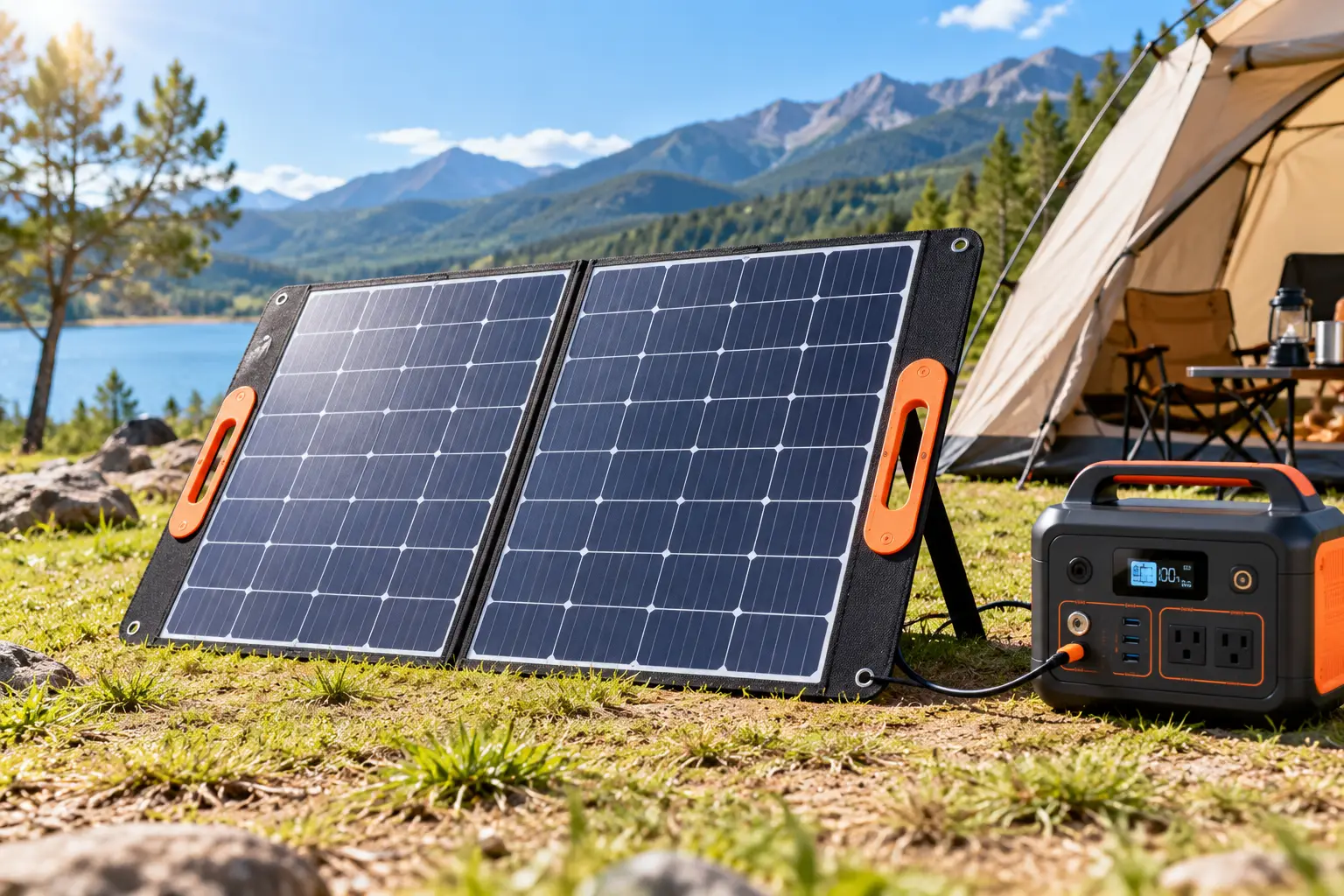
200w portable solar panels are foldable or suitcase-style photovoltaic panels rated to produce up to 200 watts under standard lab test conditions. They plug into portable power stations or, through a charge controller, into 12V batteries, and typically deliver roughly 600–1,000 watt-hours on a clear day, depending on sun hours, angle, and heat.
How many usable sun hours you get depends heavily on where you live and the season — NREL’s solar resource maps show just how different a December day in Seattle is from a June day in Phoenix. Keep that in mind as you read every “charges in X hours” claim below.
Quick Comparison: The Best 200w portable solar panels at a Glance
| Product | Cells & Claimed Efficiency | Approx. Weight | Water/Dust Rating | Price Range | Best For |
|---|---|---|---|---|---|
| Jackery SolarSaga 200W | Bifacial mono, ~25% (current version) | ~14 lb (current version) | IP68 | ~$400–$700 | Jackery owners who want top output |
| EcoFlow NextGen 220W Bifacial | Bifacial TOPCon, up to 25% | ~15.4 lb | IP68 | ~$400–$650 | EcoFlow owners and wet climates |
| Anker SOLIX PS200 | Monocrystalline, up to 23% | ~16–20 lb (listings vary) | IP67 | ~$300–$550 | Precise tilt control, winter sun |
| BLUETTI PV200 | Monocrystalline, up to 23.4% | ~16.1 lb | IP65 (junction box) | ~$300–$500 | Mid-range value, mixed brands |
| Renogy E.Flex 200W | N-type 16BB, up to 25% | ~13.9 lb | IP65 | ~$200–$350 | Most campers |
| BougeRV 200W Portable | N-type, up to 25% | Check listing | IP65 | ~$200–$350 | 12V fridge setups |
| DOKIO 200W Foldable Kit | Monocrystalline | ~9.7 lb | Weather-resistant (no clear IP rating listed) | ~$150–$250 | Budget 12V battery charging |
Looking at the table, the Renogy E.Flex 200W hits the sweetest balance of weight, efficiency, and price, which is why it’s the default pick for most campers. If you already own a Jackery or EcoFlow station, the Jackery SolarSaga 200W and EcoFlow NextGen 220W Bifacial justify their premium through IP68 sealing and bifacial gains, not raw front-side wattage. Budget shoppers charging a trailer battery should look hard at the DOKIO 200W Foldable Kit, while accepting its thinner weatherproofing details.
💬 Found a panel that fits? Click a highlighted name to check current pricing — one click also helps other shoppers make an informed choice too! 😊
Top 7 200w portable solar panels: Expert Analysis
1. Jackery SolarSaga 200W — best all-weather performer
Jackery’s flagship folding panel is the one to beat when you want maximum harvest from a single, fully sealed unit.
The current version uses bifacial monocrystalline cells rated around 25% efficiency, so the back side catches light bouncing off sand, gravel, or snow — in practice, that means a few extra watts in the mornings and evenings, when the front face sits at a poor angle. It carries an IP68 rating, and newer units list roughly 13.7–14.3 pounds; older single-sided units weighed closer to 17.5 pounds and were rated IP67, so check which version a listing ships. Output uses Jackery’s DC8020 plug, with an adapter included for older Explorer stations.
Based on comparing the specs, this panel suits Jackery Explorer owners who value plug-and-play simplicity over saving money. If you own another brand’s station, you’ll need adapters, which erodes much of the convenience premium.
Reviews consistently report strong real-world output, even under clouds, and Outdoor Life’s reviewer noted it produced power in shade near dusk. The most common criticism is that its kickstands feel less positive than the snap-adjust legs on the Anker SOLIX PS200 and BLUETTI PV200.
Pros:
- ✅ IP68 sealing handles rain, dust, and sand
- ✅ Bifacial cells add output over reflective ground
- ✅ Lighter than earlier SolarSaga 200W versions
Cons:
- ❌ Proprietary DC8020 output needs adapters for other brands
- ❌ Premium price compared with similar-watt rivals
Expect roughly $400–$700 depending on version and promotions — a fair price for Jackery owners, a harder sell for everyone else.
2. EcoFlow NextGen 220W Bifacial — most watts per square foot
Technically rated at 220W, this panel competes head-to-head with every 200W flagship while giving you a built-in 10% cushion.
EcoFlow says it was the first portable panel to use TOPCon cells, rated at up to 25% efficiency, and the bifacial design lets the rear face harvest reflected light for extra energy over bright surfaces. It’s rated IP68, weighs about 15.4 pounds, and adds an integrated stand with a sun-angle guide. That guide sounds gimmicky, yet it genuinely helps beginners who don’t know what “perpendicular to the sun” looks like at 4 p.m.
Here’s what to weigh: the bonus 20W matters most when you run two or more panels into a DELTA-series station, because every extra watt stacks. On the other hand, the older non-NextGen 220W weighed about 20.9 pounds, so read the model name carefully.
Independent testing of EcoFlow’s original 220W Bifacial reported front-side output consistently in the 190–200W range in direct sun, and reviewers agree the rear-side bonus depends heavily on what’s underneath — on dark soil or grass, it shrinks dramatically.
Pros:
- ✅ TOPCon cells squeeze more power from less space
- ✅ IP68 rating suits lakeside and boat use
- ✅ Built-in angle guide simplifies setup
Cons:
- ❌ Bifacial gains fade over grass or dark soil
- ❌ Easy to confuse with the heavier older model
Prices typically land between $400 and $650, making it the best-value premium panel if you already run EcoFlow gear.
3. Anker SOLIX PS200 — easiest angle dialing
Anker’s panel is the fussy tinkerer’s favorite, thanks to legs that lock into four precise tilt positions.
It uses monocrystalline cells rated up to 23% efficiency under an ETFE coating, carries an IP67 rating, and connects via MC4 with an included MC4-to-XT60 cable. The standout feature is the adjustable kickstand with set angles of 30°, 40°, 50°, and 80°. That 80° setting isn’t a gimmick: in a Minnesota January, the sun hangs low, and a steep tilt can noticeably improve midday harvest versus a panel stuck at 45°.
What most buyers overlook is weight. REI lists it around 16.3 pounds, while other retailers list over 20 pounds, so expect it to feel heavier than N-type rivals like the Renogy E.Flex 200W. It pairs naturally with Anker SOLIX C800, C1000, and F-series stations, though MC4 keeps it brand-flexible. Anker also sells a newer PS200 Bifacial variant rated at 25%, worth comparing if you find both listed.
Outdoor Life specifically praised the snap-button legs on Anker’s 200W panel as among the most secure it tested, and Anker itself notes the output port needs its rubber plug in wet weather.
Pros:
- ✅ Four locking tilt angles, including a steep 80°
- ✅ IP67 rating with a scratch-resistant ETFE surface
- ✅ Universal MC4 output plus XT60 adapter
Cons:
- ❌ Heavier than newer N-type competitors
- ❌ Efficiency trails the latest 25% panels
At roughly $300–$550, it’s a solid mid-to-upper value, especially when bundled with an Anker station.
4. BLUETTI PV200 — best value near-flagship output
BLUETTI’s PV200 delivers output close to premium panels while costing noticeably less.
Its monocrystalline cells are rated up to 23.4% efficiency under an ETFE layer, it weighs about 16.1 pounds, and it folds to roughly 23.4 × 24.8 inches. The electrical specs are refreshingly transparent: 20.5V at max power and 26.1V open-circuit. On paper, that means two PV200s wired in series reach about 52V — comfortably under the 60V input ceiling many mid-size stations use, which makes a 400W series array straightforward.
Here’s the catch worth knowing: the IP65 rating applies to the junction box, and BLUETTI itself advises against leaving the panel in rain. So it’s a fair-weather workhorse, not a set-and-forget storm panel.
Outdoor Life found it came close to the Jackery SolarSaga 200W in both sun and clouds for roughly a third less money, and praised its snap-adjust kickstands and zippered cable pouch. One owner review on BLUETTI’s site mentions preferring the older clip-style closure over the newer snap design.
Pros:
- ✅ Near-premium output at a mid-range price
- ✅ Published voltage specs simplify series wiring
- ✅ Adjustable legs and tidy cable storage
Cons:
- ❌ IP65 covers the junction box, not rain exposure
- ❌ Bulkier folded size than the Renogy
Typically $300–$500 — excellent value if you want strong output across mixed-brand gear.
5. Renogy E.Flex 200W — lightest high-efficiency all-rounder
Renogy’s E.Flex packs 25%-class N-type cells into the lightest full-size panel in this lineup.
The 16BB N-type cells are rated at 25% efficiency, and the panel weighs about 13.9 pounds, folding to roughly 23.7 × 23.0 × 2.0 inches with a magnetic closure. Four kickstands offer 40°, 50°, and 60° angles, while built-in USB-A and USB-C outputs let you charge a phone directly — no power station required. It’s rated IP65 and backed by a two-year warranty.
Based on comparing the specs, this is the panel for most people: car campers, overlanders with tight cargo space, and anyone who hates hauling heavy gear. In fact, OutdoorGearLab’s portable solar testing named Renogy’s 200W portable its overall favorite, citing the balance between charging efficiency and genuine portability.
The same testers found its legs sturdier and more wind-resistant than typical budget panels, while flagging a lower waterproof rating than IP68 rivals such as the EcoFlow NextGen 220W Bifacial. Their point is practical: because it’s light, you can grab it quickly when a storm rolls in.
Pros:
- ✅ About 13.9 pounds with 25%-rated N-type cells
- ✅ USB-A and USB-C ports for direct charging
- ✅ Sturdy, wind-resistant kickstand design
Cons:
- ❌ IP65 means bringing it in during downpours
- ❌ Only three preset tilt angles
At roughly $200–$350, it offers the best overall value per pound in this guide.
6. BougeRV 200W Portable — built for 12V fridge campers
BougeRV built this panel around a clear mission: keeping a compressor fridge cold all day without draining your battery.
The latest version uses N-type cells rated up to 25% efficiency under a fiberglass surface layer, with IP65 water and dust resistance and built-in side handles. Crucially, it ships with an 8.2-foot extension cable. That detail matters more than it sounds: lithium batteries and power stations hate heat, so you can keep them shaded under the camper awning while the panel bakes in full sun.
Here’s what to weigh: BougeRV is best known for 12V car fridges, and this panel is clearly designed to pair with its fridge batteries and 277Wh power station, although its connectors also work with many third-party stations. Be aware that several BougeRV 200W listings exist, including an older 23%-efficiency, IP67 version, so confirm the model before buying.
Honestly, independent long-term testing is thinner than for Jackery or Renogy. PowerStationLab named it a top budget pick for 2026, but we couldn’t verify a broad, consistent body of owner feedback, so weigh it accordingly.
Pros:
- ✅ 25%-rated N-type cells at a budget-friendly price
- ✅ Included 8.2-foot extension keeps batteries shaded
- ✅ Natural match for BougeRV fridge systems
Cons:
- ❌ Less independent testing than major brands
- ❌ Multiple similar listings can cause confusion
Expect about $200–$350, which is strong value for fridge-first campers.
7. DOKIO 200W Foldable Kit — lightest budget kit for 12V batteries
DOKIO’s kit is the pick when you want to charge a plain 12V battery on a tight budget.
At about 9.7 pounds, folding to roughly 20 × 27 × 1.1 inches, it’s the lightest panel here by a wide margin. It includes a standalone PWM charge controller, dual USB ports, and adapters for batteries and power stations. That controller is the key differentiator: you can clip directly onto a trailer’s deep-cycle, AGM, or LiFePO4 battery without buying extra hardware. For power stations, you’d typically bypass the controller and let the station’s built-in charger handle regulation — check DOKIO’s manual for the exact cable path.
What most buyers overlook is that PWM controllers waste more energy than MPPT designs, especially in cold weather, so real-world harvest may trail premium panels. Also, the listing doesn’t state a clear IP rating, which is a real consideration in wet climates.
Third-party roundups frequently rate it highly for weight and value, but we couldn’t find rigorous independent output testing, so treat its 200W figure as a best-case lab number.
Pros:
- ✅ About 9.7 pounds — lightest in this lineup
- ✅ Charge controller included for 12V batteries
- ✅ Dual USB ports for small devices
Cons:
- ❌ PWM controller is less efficient than MPPT
- ❌ No clearly stated IP rating
Usually $150–$250, it’s the lowest-cost route to 200W, with trade-offs you should accept knowingly.
Side-by-Side: Top 7 Detailed Spec Comparison
| Product | Output Connector | Direct USB Charging | Angle Adjustment | Standout Spec | Best For |
|---|---|---|---|---|---|
| Jackery SolarSaga 200W | DC8020 (adapter included) | Varies by version | Adjustable stands | Bifacial, IP68 | Jackery Explorer owners |
| EcoFlow NextGen 220W Bifacial | MC4 | No | Stand with sun-angle guide | TOPCon, IP68 | EcoFlow DELTA owners |
| Anker SOLIX PS200 | MC4 + XT60 cable | No | 30°/40°/50°/80° | 80° winter setting | Northern-state winter use |
| BLUETTI PV200 | MC4 | No | Snap-adjust legs | 26.1V Voc for easy series | Mixed-brand 400W arrays |
| Renogy E.Flex 200W | MC4 + adapters | USB-A + USB-C | 40°/50°/60° | ~13.9 lb, 25% cells | Most campers |
| BougeRV 200W Portable | XT60/DC7909 (per listing) | Check listing | Foldable stand | 8.2-ft extension cable | 12V fridge campers |
| DOKIO 200W Foldable Kit | Via PWM controller | Dual USB | Basic | ~9.7 lb, controller included | 12V battery owners |
Reading across the rows, connector type is the silent deal-breaker: the Jackery SolarSaga 200W is effortless with Jackery stations but adapter-dependent elsewhere, while MC4 panels like the BLUETTI PV200 and EcoFlow NextGen 220W Bifacial play nicely with almost anything. If you want to charge a phone without a power station, only the Renogy E.Flex 200W and DOKIO 200W Foldable Kit clearly offer built-in USB. Meanwhile, the Anker SOLIX PS200 is the clear winner for anyone chasing low winter sun.
✨ Don’t miss the right panel for your next trip!
🔍 Take your off-grid power to the next level with this carefully curated lineup. Click any highlighted panel to check current pricing and availability — these picks will help you keep your fridge cold, your devices charged, and your whole crew happy wherever you park!
Getting Started: Your First 30 Days With a foldable solar panel 200w
Unboxing a foldable solar panel 200w is exciting, but the first month is when most owners either learn its rhythm or quietly decide solar “doesn’t work.” Here’s how to land in the first group.
Day 1: Do a Backyard Baseline Test
Before your trip, set the panel up at home around noon on a clear day. Point it squarely at the sun, connect your power station, and note the input wattage. Getting 140–170W from a 200W panel is normal; lab ratings assume ideal light and a cool 77°F cell temperature. Now you have a baseline, so you’ll know if something’s wrong later.
Week 1: Learn to Chase the Sun
Re-angle the panel every 1–2 hours. It sounds tedious, yet it’s the single biggest free upgrade you can make. A quick rule of thumb: the panel’s shadow should fall directly behind it, as compact as possible.
A Simple Maintenance Schedule
- After every trip: wipe the surface with a soft, damp cloth — never abrasive pads that scratch ETFE coatings.
- Monthly: inspect cables and MC4 connectors for cracks, corrosion, or bent pins.
- Every season: check hinges, kickstands, and stitching for wear.
- Storage: keep it folded, dry, and out of hot attics or car trunks in summer.
Common First-Month Mistakes
The classic rookie error is laying the panel flat on the ground at noon and calling it good. Flat panels can lose a meaningful chunk of output, especially in spring and fall. Another is running the power station in direct sun beside the panel — heat throttles charging on many stations. Finally, don’t unplug connectors under full load; disconnect at the station first when possible.
Real-World Scenarios: Which 200w solar panel for camping, RV Life, or Backup Fits You?
Specs only matter in context, so let’s match real buyer profiles with the right 200w solar panel for camping, RV travel, or emergencies.
Profile 1: The Weekend Car Camper (Budget: about $300)
Jenna drives a compact SUV to state parks twice a month and runs a 23-quart compressor fridge from a 500Wh power station. Cargo space is precious, and she sets up solo. The Renogy E.Flex 200W is her best match: at around 13.9 pounds, she can carry it one-handed, and its USB ports keep phones topped up even when the station is busy. If her fridge is a BougeRV, the BougeRV 200W Portable is a strong alternative, largely thanks to its long extension cable.
Profile 2: The Two-Week Boondocker (Budget: $700–$1,000)
Mark and Lisa park a travel trailer on BLM land for up to two weeks, running a 2,000Wh station for lights, a fan, a CPAP, and laptops. One 200W panel won’t keep up, so two BLUETTI PV200 panels wired in series make sense — their published voltage stays well under common 60V inputs. If their station is a Jackery, two Jackery SolarSaga 200W panels simplify cabling instead.
Profile 3: The Gulf Coast Homeowner (Budget: $500–$700)
Carlos wants hurricane-season backup for a fridge-and-phones plan during multi-day outages. Because storms bring humidity and sudden rain, the IP68-rated EcoFlow NextGen 220W Bifacial is his best fit, particularly if he places it on a light-colored driveway, where the rear face gains extra light.
Profile 4: The Trailer Battery Owner (Budget: under $250)
Frequency matters here: if you only need to trickle-charge a 12V battery on weekends, the DOKIO 200W Foldable Kit does the job without extra hardware.
Problem → Solution: Fixing the 5 Most Common Solar Charging Headaches
Even the best 200w portable solar panels run into predictable problems. Fortunately, most have simple fixes.
Problem 1: “My 200W panel only shows 90 watts.”
Solution: Check angle, shade, and heat, in that order. A panel aimed 30–40 degrees off the sun, shaded by a single branch, or baking on hot asphalt can lose a big share of its output. Re-aim it, lift it off hot ground, and move it away from shadows. Also, remember that morning and late-afternoon sun is simply weaker.
Problem 2: “My power station won’t charge at all.”
Solution: First, confirm polarity and adapters — a reversed or wrong adapter is the most common culprit, especially with XT60, Anderson, and DC7909 plugs. Next, check your station’s minimum input voltage; on very cloudy days, some stations won’t start charging until voltage rises.
Problem 3: “Output collapses when a tiny corner is shaded.”
Solution: That’s normal physics, not a defect. Cells are wired in strings, so shading a few cells can drag down a whole section. Rotate the panel away from the shadow, or relocate it entirely. Using an extension cable, like the one bundled with the BougeRV 200W Portable, lets you chase open sun.
Problem 4: “The wind keeps flipping my panel.”
Solution: Stake it down through the grommets, weigh the kickstands with rocks, or tie it to your vehicle. Panels act like sails, and a flipped panel can crack cells.
Problem 5: “Charging slows down in the afternoon heat.”
Solution: Solar cells lose efficiency as they heat up, and power stations also throttle when hot. Shade the station, not the panel, and allow airflow behind the panel wherever possible.
How to Choose 200w portable solar panels
Choosing among 200w portable solar panels is easier when you follow a clear sequence. Here are seven steps, with the reasoning behind each.
- Start with your power station or battery. Check its solar input limits — maximum voltage, current, and wattage — because a panel your station can’t accept is a paperweight.
- Match the connector. MC4 is the universal standard; proprietary plugs like Jackery’s DC8020 are simpler within one brand but require adapters elsewhere.
- Decide on weight versus durability. Lightweight N-type panels around 14 pounds are easy to carry, while heavier, glass-fronted designs often feel sturdier; think about how far you’ll carry it from the car.
- Read the IP rating carefully. Per the IP code standard, the second digit describes water protection — IP65 resists water jets, IP67 handles temporary immersion, and IP68 covers longer immersion. Also check whether the rating applies to the whole panel or just the junction box.
- Compare efficiency, but don’t obsess. A 25% panel is physically smaller than a 22% one at the same wattage, which matters for cargo space, yet real-world output depends more on angle and heat.
- Look for practical extras. Built-in USB ports, locking tilt angles, extension cables, and cable pouches make daily use smoother.
- Check the warranty and support. Warranties vary widely across brands, so read the listing and the manufacturer’s site before buying.
As a bonus step, think about expansion. If you might add a second panel later, choosing a model with clearly published voltage specs, like the BLUETTI PV200, saves real headaches.
Portable Solar Panel for Power Station Setups: Volts, Amps, and Connectors
Buying a portable solar panel for power station charging is mostly a matching exercise, and three numbers do the heavy lifting.
Open-Circuit Voltage (Voc)
Voc is the voltage a panel produces with nothing connected, and it’s the number that must stay below your station’s maximum input voltage. For example, the BLUETTI PV200 lists 26.1V Voc, so two in series produce about 52V. That fits a 60V input, but three in series would not. Importantly, Voc rises in cold weather, so leave a safety margin of roughly 10–15% below your station’s ceiling on winter trips.
Current (Amps)
Wiring panels in parallel adds current instead of voltage. Many power stations cap solar input current, so parallel arrays can hit that limit quickly. When a station supports higher voltage, series wiring is usually the more efficient path, because lower current means less energy lost as heat in cables.
Connectors and Adapters
Most panels here use MC4, while stations may take XT60, Anderson, DC7909, or DC8020 inputs. Therefore, a quality MC4-to-station adapter is essential. The Jackery SolarSaga 200W skips this step for Jackery owners, but anyone else will need the right cable.
Mixing Panels
Ideally, a portable solar panel for power station setups should use identical panels when wired together. Mismatched panels drag the array down toward the weakest one, and BLUETTI itself advises against combining different models or brands.
In short, read your station’s manual first, then pick a panel whose specs fit comfortably within its limits.
When a 200w solar panel kit Beats a Panel Alone: Charging 12V Batteries
Not everyone owns a power station. If you’re charging a trailer, boat, or van’s 12V battery directly, a 200w solar panel kit with a charge controller is the smarter buy — and here’s why.
Why You Need a Controller
A bare panel can push voltage well above what a 12V battery should see, which risks overcharging and damage. A charge controller regulates that flow and stops charging when the battery is full. Power stations have this built in; standalone batteries don’t.
PWM vs. MPPT
Most budget kits include PWM controllers, which are simple and affordable. However, they essentially pull the panel’s voltage down to the battery’s level, wasting some potential power. MPPT controllers convert that excess voltage into additional current, typically harvesting more energy, especially in cold weather or with higher-voltage panels. The trade-off is cost.
Two Kits Worth Knowing
The DOKIO 200W Foldable Kit is the lightweight option, bundling a PWM controller, clips, and USB ports at about 9.7 pounds. Alternatively, the Renogy 200W N-Type Solar Suitcase Kit uses tempered glass, 25%-rated N-type cells, and a 20A PWM Voyager controller, with Renogy claiming degradation under 0.4% per year. It’s heavier and more rigid, yet it’s better suited to semi-permanent use at a campsite or cabin.
Quick Recommendation
If your battery is lithium (LiFePO4), confirm the controller supports lithium charging profiles. For weekend trickle-charging, a PWM 200w solar panel kit is fine; for full-time van life, consider upgrading to an MPPT controller later.
200w portable solar panels vs Gas Generators and Rigid Rooftop Panels
How do 200w portable solar panels stack up against the traditional ways Americans get off-grid power? Here’s a direct comparison.
| Factor | 200W Portable Solar Panel + Power Station | Gas Portable Generator | Rigid Rooftop Solar Panel |
|---|---|---|---|
| Noise | Silent | Loud | Silent |
| Fuel cost | None | Ongoing gasoline cost | None |
| Indoor-adjacent safety | No exhaust | Carbon monoxide risk | No exhaust |
| Output on demand | Weather-dependent | Available anytime | Weather-dependent |
| Setup | Minutes, movable | Minutes, fixed spot | Permanent installation |
| Best for | Camping, RVs, light backup | Heavy loads, long outages | Full-time RV and van builds |
The table makes the trade-off clear: portable solar wins on silence, safety, and running costs, while gas generators win on raw, on-demand power. Rigid rooftop panels beat both for full-timers, but you can’t reposition them toward the sun. That’s why many RVers pair rooftop panels with a portable panel like the Renogy E.Flex 200W that they can place in open sun.
The Safety Argument Deserves Emphasis
Gas generators remain useful, yet their exhaust is deadly when misused. The U.S. Consumer Product Safety Commission estimates that about 85 consumers die each year in the U.S. from carbon monoxide poisoning linked to gasoline-powered portable generators, and it notes that many fatal incidents occur during weather-related outages or when powering cabins and campers. A solar panel and power station produce no exhaust, so you can safely run the station inside a tent vestibule or home.
Where Solar Falls Short
On the other hand, a 200W panel can’t run a central air conditioner or a well pump. For heavy loads, solar is a supplement, not a replacement.
Long-Term Cost and Maintenance: What You’ll Really Pay
Sticker price tells only part of the story. For 200w portable solar panels, the real cost depends on lifespan, durability, and how much energy you actually harvest over the years.
| Product | Approx. Price Range | Approx. Cost per Rated Watt | Durability Notes | Best Value For |
|---|---|---|---|---|
| DOKIO 200W Foldable Kit | ~$150–$250 | ~$0.75–$1.25 | Budget build, no clear IP rating | Occasional 12V charging |
| Renogy E.Flex 200W | ~$200–$350 | ~$1.00–$1.75 | IP65, 2-year warranty | Frequent campers |
| BLUETTI PV200 | ~$300–$500 | ~$1.50–$2.50 | ETFE surface, IP65 junction box | Mid-range multi-panel setups |
| Jackery SolarSaga 200W | ~$400–$700 | ~$2.00–$3.50 | IP68, bifacial | Jackery owners, harsh weather |
Looking at the numbers, the Renogy E.Flex 200W offers the strongest balance of low cost per watt and credible durability for regular use. The Jackery SolarSaga 200W costs more per watt, but its IP68 sealing can pay off in rough conditions where a cheaper panel might fail early. Meanwhile, the DOKIO 200W Foldable Kit is cheapest upfront, though uncertain weatherproofing makes careful storage essential.
Lifespan Expectations
Commonly cited estimates put portable ETFE-coated panels at around 10–15 years with good care, which is shorter than rigid rooftop panels. Hinges, stitching, and cables usually fail before the cells themselves.
The Payback Math
Portable solar rarely “pays for itself” in electricity savings alone. Instead, its value shows up in avoided gas costs, campground hookup fees, and spoiled-food losses during outages. A single avoided hookup night at many RV parks already covers a meaningful slice of a budget panel.
Common Mistakes to Avoid When Buying 200w portable solar panels
Even savvy shoppers trip over the same pitfalls. Here’s expert commentary on the mistakes that cost buyers the most.
Mistake 1: Trusting the “200W” Label Literally
A 200W rating reflects ideal lab conditions. Real-world output of about 70–85% of the rating is normal in good sun, so plan your energy budget around 140–170W, not 200W.
Mistake 2: Ignoring Your Station’s Input Limits
Buying two panels before checking maximum input voltage and current is a costly error. Always read your station’s spec sheet first.
Mistake 3: Assuming “Waterproof” Means Rain-Proof
As the BLUETTI PV200 shows, an IP65 rating may cover only the junction box. If you camp in the Pacific Northwest, prioritize IP67 or IP68 panels like the Anker SOLIX PS200 or EcoFlow NextGen 220W Bifacial.
Mistake 4: Buying the Wrong Listing Version
Several panels here — including the Jackery SolarSaga 200W and the BougeRV 200W Portable — exist in multiple versions with different weights, ratings, and efficiencies. Check the model number and the listing’s spec table before checkout.
Mistake 5: Forgetting the Cable
Extension cables and adapters often cost extra. Budget for them, or choose a panel that includes them.
Mistake 6: Overbuying Weight
A heavy panel you leave in the truck produces zero watts. Be honest about how far you’ll carry it and pick accordingly.
FAQ: 200w portable solar panels
❓ Can a 200W portable solar panel run a 12V refrigerator?
❓ How long does it take a 200W panel to charge a 1,000Wh power station?
❓ Can I connect two different brands of 200W solar panels together?
❓ Are 200w portable solar panels worth buying for home backup?
❓ Can I leave a portable solar panel outside overnight in the rain?
Conclusion: Picking the Right 200W Panel for You
The right choice among 200w portable solar panels comes down to three questions: what are you charging, how far will you carry it, and how wet will it get?
For most campers, the Renogy E.Flex 200W is the smart default, thanks to its roughly 13.9-pound weight, 25%-rated cells, and USB ports. If you’re loyal to one ecosystem, the Jackery SolarSaga 200W and EcoFlow NextGen 220W Bifacial reward you with IP68 sealing and bifacial gains. Winter chasers will appreciate the Anker SOLIX PS200 and its steep 80° tilt, while value-focused multi-panel builders should look at the BLUETTI PV200. Fridge-first overlanders have a natural partner in the BougeRV 200W Portable, and budget 12V battery owners can start with the DOKIO 200W Foldable Kit.
Whichever you choose, remember the fundamentals: aim it at the sun, keep your station cool, and match your connectors and voltages. Do that, and even a modest 200W panel can quietly transform how long you stay off-grid — no gas cans, no generator noise, just free power from the sky.
☀️ Ready to power your next adventure?
🔍 Take your off-grid setup to the next level with this carefully curated lineup. Click a highlighted panel to check current pricing and availability — these picks will help you enjoy longer trips and calmer outages the whole family will appreciate!
Recommended for You
- 1 Kilowatt Solar Panel: 7 Best Picks That Actually Deliver in 2026
- 15k Generator 2026: 7 Best Proven Picks for Whole-Home Backup
- Solar Power Inverter for RV: 7 Best Picks That Won’t Fail (2026)
Disclaimer: This post contains affiliate links. As an Amazon Associate, I earn from qualifying purchases made through these links, at no additional cost to you.
✨ Found this article helpful? Share it with someone who needs it! 💬🤗
