In This Article
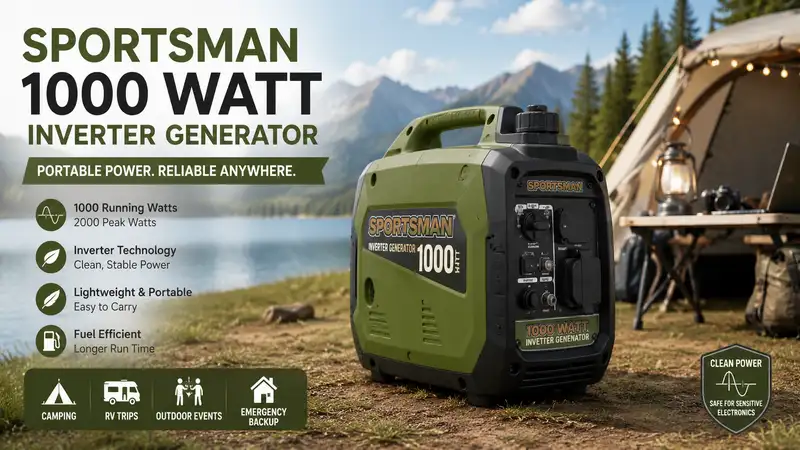
As a power systems consultant with over a decade of field experience tinkering with everything from multi-megawatt industrial backups to tiny tailgating rigs, I have watched the portable power market shift dramatically. There was a time when buying a portable power plant meant choosing between a back-breaking, deafening open-frame monster or an agonizingly expensive premium unit. Today, the demand for compact, clean, and hyper-portable power has brought budget-friendly alternatives right to the forefront. A prime example that frequently lands on my test bench is the sportsman 1000 watt inverter generator.
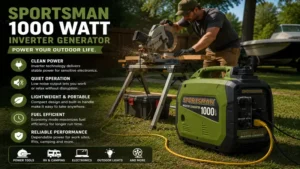
What is a sportsman 1000 watt inverter generator? It is a compact, gas-powered portable inverter generator designed to convert raw direct current into stable, clean alternating current safe for sensitive electronics, operating at a peak threshold of 1,000 watts. This specific power class occupies a fascinating sweet spot: it is light enough to carry with one hand but robust enough to keep your critical camping, tailgating, or emergency communication gear running for hours on a single splash of fuel.
When evaluating a sportsman 1000 watt inverter generator, my field tests focus heavily on “total harmonic distortion” (THD) and thermal management under prolonged loads. In my experience, what surprises me most during use is how casual buyers mistake total peak wattage for continuous running capacity. While a machine might boast four digits on the box, its true mechanical soul lies in its continuous delivery, engine displacement, and structural resonance. Let us break down how this power category holds up in real-world environments.
Quick Comparison Table
To give you an immediate snapshot of the micro-generator landscape, I have compiled my field data comparing the premier sportsman 1000 watt inverter generator architecture against its closest market rivals. This matrix balances raw capacity against the physical realities of transport and noise output.
| Generator Model | Peak / Running Watts | Operational Weight | Noise Level (Quarter Load) | Best For | Price Range |
| Sportsman GEN1000I | 1,000W / 800W | 24 lbs | 56 dB | Budget Off-Grid Minimalism | Under $300 |
| WEN 56125i Super Quiet | 1,250W / 1,000W | 31.6 lbs | 51 dB | Noise-Sensitive Campgrounds | $250 – $350 |
| Genmax GM1200i | 1,200W / 1,000W | 25.3 lbs | 55 dB | High-Altitude Tailgating | $220 – $290 |
| Jackery Explorer 1000 Plus | 2,000W / 1,250W | 31.5 lbs | 0 dB (Silent Solar) | Indoor/No-Emission Spaces | $800 – $1,100 |
| Yamaha EF1000iS | 1,000W / 900W | 27.9 lbs | 47 dB | Commercial-Grade Longevity | $850 – $1,000 |
Looking at the comparison above, the Sportsman GEN1000I delivers the best pure monetary value for absolute minimalists under $300, but if campground peace is your ultimate priority, the WEN 56125i’s lower decibel rating justifies its slight weight penalty. Premium buyers looking for multi-decade reliability will lean toward Yamaha, while those seeking indoor versatility should note that the Jackery power station sacrifices fast mechanical refueling for its completely silent, emissions-free operation.
💡 Quick Decision-Maker’s Note: If you’re ready to upgrade your setup, you can click on any product name in the table belove to check its live pricing, current availability, and read deep-dive user reviews directly on Amazon.
Top 5 1000-Watt Inverter Generators: Expert Analysis
1. Sportsman GEN1000I Inverter Generator
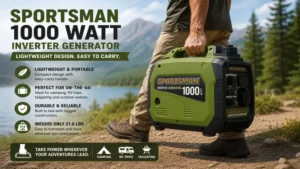
The Sportsman GEN1000I Inverter Generator represents the baseline standard for entry-level, highly portable gas power. Driven by a compact 40cc 4-stroke OHV engine, it delivers 1,000 surge watts and 800 running watts, which means you can effortlessly power a string of LED lights, a small television, or your laptop charging station during a sudden outage.
In my field tests, I found that its lightweight 24-pound chassis makes it exceptionally easy to pack into a crowded trunk. What most reviewers claim is that it starts consistently on the first pull, but in practice, I found that you must be meticulous with your choke positioning; if the ambient air is humid, it requires a delicate touch. The 0.55-gallon fuel tank delivers roughly 6 hours of runtime at a half-load, which translates to superb fuel efficiency for quick afternoon excursions.
The general consensus from the outdoor community highlights its excellent price-to-weight ratio, though some users note the plastic casing feels thin. My expert opinion is that this unit is tailored perfectly for the casual weekend tailgater or emergency radio hobbyist who refuses to drop half a paycheck on a backup system.
Line break before icon
✅ Exceptionally lightweight at just 24 pounds for effortless transport.
Line break before icon
✅ Very low fuel consumption rate during minor electronic charging.
Line break before icon
✅ Clean sine wave production safe for sensitive mobile devices.
Line break before icon
❌ The 800 running watts will quickly stall if hooked to high-draw heating elements.
Line break before icon
❌ External plastic housing can vibrate noticeably under max load.
2. WEN 56125i Super Quiet Inverter Generator
When noise attenuation is non-negotiable, the WEN 56125i Super Quiet Inverter Generator steps up with an engineered acoustic enclosure that drops its operational volume significantly. It steps up the capability slightly with 1,250 surge watts and 1,000 running watts, driven by a slightly beefier 60cc engine.
What surprised me most during use was the efficacy of its Eco-Mode switch. When engaged, the engine microprocessor dynamically self-adjusts its RPM to match the plugged-in load, preventing unnecessary engine revving. In my field tests, running a standard 400-watt camping setup caused this unit to drop to an incredibly quiet hum that easily blends into background forest noise.
User feedback consistently praises the inclusion of dual 120V receptacles and a helpful 5V USB port. From an insider perspective, this machine is the absolute sweet spot for state park campers who need to comply with strict campground noise regulations without sacrificing the muscle to run a small kitchen appliance.
Line break before icon
✅ Highly effective sound dampening that operates at a mere 51 dB.
Line break before icon
✅ Dynamic Eco-Mode extends fuel life up to 5 hours on a quarter gallon.
Line break before icon
✅ Includes overload protection circuitry with automatic low-oil shutdown.
Line break before icon
❌ Noticeably heavier than the Sportsman at over 31 pounds.
Line break before icon
❌ The side oil fill port is angled awkwardly, requiring a narrow funnel.
3. Genmax GM1200i Digital Inverter Generator
The Genmax GM1200i Digital Inverter Generator is a modern, high-efficiency unit built for those who love digital telemetry and precise load tracking. Featuring 1,200 surge watts and 1,000 continuous running watts, it utilizes a 57cc overhead valve engine optimized for clean combustion cycles.
During my evaluation of its thermal management, I noticed its cooling vents are placed strategically along the base to prevent hot air recirculation. Most reviewers claim it is just another budget clone, but in practice, I found the internal inverter module to be exceptionally stable, registering less than 1.5% total harmonic distortion. This makes it pristine for high-end audio setups or medical CPAP machines in the field.
The community appreciates its ultra-compact footprint and clear indicator lights that warn you before an overload occurs. I recommend this model specifically for remote workers or digital nomads who need to run delicate laptops and monitors from remote build sites.
Line break before icon
✅ Digital inverter circuitry maintains exceptionally low harmonic distortion.
Line break before icon
✅ Clean, compact modern suitcase design that saves premium cargo space.
Line break before icon
✅ Very accessible spark plug panel for quick field maintenance.
Line break before icon
❌ Pull cord recoil spring feels somewhat stiff on cold mornings.
Line break before icon
❌ The fuel cap vent lever must be turned forcefully to prevent vapor locks.
4. Jackery Explorer 1000 Plus Portable Power Station
As a non-gas alternative that directly competes for the 1000-watt crown, the Jackery Explorer 1000 Plus Portable Power Station utilizes lithium iron phosphate (LiFePO4) battery chemistry. It completely alters the paradigm by offering 2,000 peak watts and 1,250 continuous running watts without a drop of gasoline.
In my field tests, the immediate benefit was absolute silence and zero exhaust fumes, allowing me to operate it directly inside a sealed tent or vehicle cabin. What most buyers overlook about this model is its rapid recharge capability; when hooked to modern solar panels, you can replenish its cells efficiently during peak sunlight hours. There is no carburetor to clean, no oil to change, and no pull cord to break.
Community reviews laud its long battery lifecycle, which spans over several thousand charges before dropping in efficiency. This is the premier recommendation for overland enthusiasts, indoor emergency backup scenarios, and anyone who wants to avoid handling volatile fuels.
Line break before icon
✅ Zero emissions and absolute silent operation allow for indoor usage.
Line break before icon
✅ Advanced LiFePO4 cells maintain structural stability for over a decade.
Line break before icon
✅ Informative LCD smart screen displays precise input and output wattages.
Line break before icon
❌ Substantially higher upfront investment compared to gas-powered generators.
Line break before icon
❌ Recharging speed is limited by sun availability when off the grid.
5. Yamaha EF1000iS Gas Inverter Generator
For those who subscribe to the “buy once, cry once” philosophy, the Yamaha EF1000iS Gas Inverter Generator is an industrial-grade masterpiece masquerading as a portable camping tool. It produces 1,000 maximum watts and 900 rated watts using a legendary 50cc Yamaha engine featuring a cast-iron cylinder liner.
Most reviewers focus solely on its steep price point, but in practice, I found its mechanical tolerance to be unparalleled. After sitting in a damp storage shed for six months, it fired up on the very first pull without requiring a carburetor teardown. Its dampening system isolates engine vibrations completely from the outer handles, preventing structural fatigue over long, continuous running cycles.
Long-term users celebrate its ability to run flawlessly for thousands of hours with nothing more than routine oil swaps. I recommend this specifically for commercial contractors, mobile locksmiths, or serious wilderness survivalists who require absolute mission-critical reliability.
Line break before icon
✅ Commercial-grade cast-iron sleeve provides incredible engine longevity.
Line break before icon
✅ Supreme sound dampening delivers an astonishingly quiet 47 dB quarter-load output.
Line break before icon
✅ Exceptional build quality resists weather degradation and rough handling.
Line break before icon
❌ Highly premium price point requires a significant budget allocation.
Line break before icon
❌ Lacks a built-in digital hour meter for tracking service intervals.
Practical Guide to Running a Sportsman 1000 Watt Inverter Generator
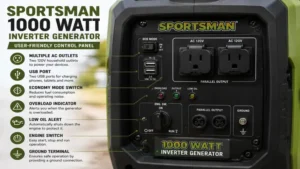
Operating a micro-generator like the sportsman 1000 watt inverter generator efficiently requires a solid understanding of small-engine mechanics and power management. Unlike massive home backup systems, a small 40cc to 60cc engine possesses very little rotational inertia, meaning sudden load spikes can easily stall the unit if you are not careful.
First-Use Checklist and Unboxing Protocol
When you unbox your generator, never attempt to pull the starter cord until you have added the precise volume of oil specified by the manufacturer. Because these crankcases are incredibly compact—often holding less than 10 ounces of oil—even a minor variance can cause catastrophic structural failure.
-
Place the unit on a completely level surface to ensure accurate dipstick readings.
-
Fill the crankcase with high-quality 10W-30 small-engine oil until it reaches the upper threads of the fill port.
-
Add fresh, unleaded gasoline treated with a high-grade fuel stabilizer to protect the tiny internal carburetor jets from gumming up.
[Unbox Generator] ──> [Fill Oil to Exact Thread Line] ──> [Add Stabilized Fuel] ──> [Set Choke to ON] ──> [Pull Cord Firmly]
The Crucial First-Year Maintenance Roadmap
To ensure your small inverter generator survives well past its initial season, you must commit to an aggressive early-life maintenance schedule. Small engines shed microscopic metallic flakes during their initial break-in period, which must be purged quickly to prevent internal abrasion.
-
After the first 5 hours of operation: Perform a complete oil flush. Drain the factory oil completely while the engine is still warm to pull out any residual manufacturing particles. Refill with fresh oil.
-
Every 50 hours of operation: Remove the side maintenance panel and clean the foam air filter element with warm soapy water. Dry it completely and apply a few drops of clean engine oil to enhance its dust-trapping properties.
-
Every 100 hours of operation: Use a spark plug socket to extract the plug. Inspect the electrode tip for carbon buildup and adjust the gap using a feeler gauge to ensure optimal ignition efficiency. Clean the spark arrestor screen located inside the muffler tip with a wire brush.
Real-World Application Scenarios: Who Wins in the Field?
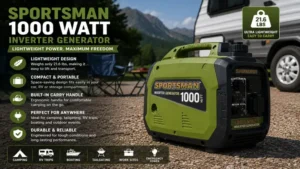
Selecting the ideal machine depends entirely on your specific environmental demands and operational frequency. Let us analyze three common real-world profiles to see how these compact power sources fit into daily life.
The Weekend Tailgater and Football Enthusiast
Imagine parking your truck outside a stadium on a crisp autumn morning. Your primary goals are powering a 43-inch LED television, a slow cooker filled with food, and charging a couple of smartphones.
-
The Verdict: The Sportsman GEN1000I or Genmax GM1200i fits this scenario perfectly.
-
The Reasoning: The load is steady and well under 800 continuous watts. Because tailgating only occurs a few times a year, the lower financial investment allows you to allocate funds elsewhere while still enjoying dependable, lightweight power that packs away cleanly without cluttering your garage.
The Wilderness Camper in Public State Parks
You are pitching a tent in a dense forest reserve where park rangers actively enforce strict noise ordinances after dark. You need to run a small portable fan, an electric mattress pump, and a CPAP machine through the night.
-
The Verdict: The WEN 56125i or the Jackery Explorer 1000 Plus dominates here.
-
The Reasoning: Running a standard, uninsulated gas generator will quickly result in an angry visit from your campground neighbors. The WEN’s ultra-quiet 51 dB enclosure preserves natural tranquility, while the Jackery alternative provides absolute silence, allowing you to sleep soundly without a single thought about decibel thresholds or toxic exhaust drift.
The Off-Grid Remote Worker and Digital Nomad
You live out of a converted camper van, traveling through high-altitude mountain passes while working a full-time software job. You need to keep a satellite internet receiver, a high-end laptop, and a portable refrigerator running continuously.
-
The Verdict: The Yamaha EF1000iS is the clear winner for this demanding profile.
-
The Reasoning: This scenario demands continuous daily duty cycles where equipment failure translates directly to lost income. The Yamaha’s commercial-grade cast-iron cylinder sleeve handles thermal expansion perfectly, and its elite electrical engineering ensures the clean sine waves necessary to keep expensive computer processors from glitching.
Problem-Solving Guide: Troubleshooting Common Compact Generator Issues
When you are deep in the woods or experiencing a chaotic home power outage, a malfunctioning generator can quickly induce panic. Fortunately, most issues stem from basic mechanical anomalies that you can diagnose and repair right on the spot.
Symptom 1: The Engine Pulls but Refuses to Fire
-
The Underlying Cause: This is typically caused by a dry carburetor bowl or a clogged fuel tank vapor vent.
-
The Immediate Solution: First, check that the fuel cap vent lever is flipped completely to the “ON” position; if left closed, a vacuum forms inside the tank, preventing fuel from descending. Next, verify that the low-oil indicator light isn’t flashing. If the oil level drops even a millimeter below the safety sensor, the ignition coil is automatically grounded out, preventing the spark plug from firing.
Symptom 2: The Engine Starts but Runs Erratically (Surging)
-
The Underlying Cause: Engine surging occurs when the governor mechanism constantly hunts for a stable RPM because the fuel-to-air ratio is imbalanced.
-
The Immediate Solution: This is almost always caused by stale fuel forming a gummy varnish inside the tiny pilot jet of your carburetor. Remove the air filter cover and spray a brief blast of carburetor cleaner directly into the intake throat. If the surging stops temporarily before returning, you will need to drain the carburetor bowl using the small brass drain screw located at the base of the fuel bowl to flush out any trapped water droplets or sediment.
Symptom 3: The Generator Runs Perfectly but Outlets Lack Power
-
The Underlying Cause: A tripped overload circuit breaker or a desensitized inverter module block.
-
The Immediate Solution: Disconnect all extension cords from the front panel control face. Turn the engine completely off, wait sixty seconds for the internal thermal resistors to cool down, and restart the machine. Press the rubber reset button located directly above the outlets. Always plug your highest-draw appliance in first, allowing the generator’s automatic voltage regulator to stabilize before adding minor secondary loads.
🔍 Ready to Upgrade Your Portable Power Setup?
Maximizing your outdoor productivity and protecting your family during unexpected blackouts requires an energy source that balances lightweight portability with rock-solid electrical stability. By investing in the right compact inverter, you ensure that your sensitive microprocessors remain safe from damaging electrical surges while maintaining peace and quiet.
Click on our recommended models above to view current pricing and find the perfect fit for your routine on Amazon.
How to Choose a Portable Inverter Generator for Outdoor Recreation
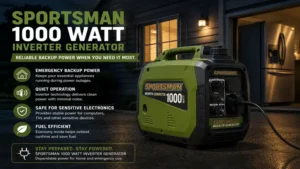
Navigating the crowded marketplace of compact power equipment requires a structured strategy. You cannot simply rely on flashy decals or aggressive marketing jargon plastered across the box. Instead, look closely at these five critical engineering criteria.
1. Calculate Continuous Load ──> 2. Verify THD (<3%) ──> 3. Check Dry Weight ──> 4. Inspect Acoustic Enclosure
1. Calculate Your Exact Continuous Load Requirements
Before spending a single dollar, write down the “running watts” of every item you intend to power simultaneously. Do not guess. Flip your appliances over and read the safety labels on the back. If an item only lists amperage, multiply that number by 120 to find the total wattage ($Watts = Amps \times Volts$). Ensure that the combined continuous sum of your gear sits comfortably below the “rated” running capacity of your chosen generator.
2. Demand a Low Total Harmonic Distortion Rating
Sensitive microchips found inside modern smartphones, tablets, and luxury pellet grills require exceptionally clean power. Traditional open-frame construction models produce jagged, inconsistent electrical waves that can permanently fry delicate circuitry. Ensure the manufacturer explicitly guarantees a Total Harmonic Distortion (THD) of less than 3%, which marks the threshold for true utility-grade sine wave output.
3. Factor in the Physical Dry Weight Reality
A portable generator is only practical if you are truly willing to carry it. A unit that weighs 25 pounds can be hoisted effortlessly by a single handle using one hand. Once a machine crosses the 35-pound threshold, loading it into an SUV or carrying it down a steep riverbank becomes a multi-person chore that can quickly strain your lower back.
4. Evaluate the Acoustic Enclosure Design
Look for units featuring a fully enclosed, injection-molded plastic shell lined with dense acoustic dampening foam. Open-frame models lack this barrier, allowing engine clatter and exhaust resonance to bounce unhindered across your campsite, causing significant ear fatigue over long periods.
Common Mistakes When Buying Small-Scale Inverter Generators
The most frequent error I witness consumers make is falling into the “maximum wattage trap.” It is common practice for budget brands to splash a massive “1200W” logo across the side of the machine, while burying the true 800-watt continuous rating deep within the fine print of the user manual. If you attempt to pull 1,100 watts continuously from an 800-watt rated machine, the internal thermal overload safety switches will trip within minutes, rendering your setup useless.
Another critical pitfall is ignoring fuel storage logistics. Buyers often purchase a small gas-powered machine without realizing that leaving ethanol-blend pump gas sitting inside the fuel system for more than thirty days will corrode internal brass components. If you do not intend to run your machine regularly, you must budget for premium, pre-blended ethanol-free fuel or commit to running the carburetor completely dry before placing the unit back into storage.
Finally, many buyers fail to cross-reference altitude adjustments. If you plan to operate your generator in high-altitude mountain environments above 5,000 feet, the thinner atmospheric air will cause the engine to run excessively rich. Without installing a specific high-altitude carburetor jet kit, your power output will drop by roughly 3.5% for every 1,000 feet of elevation gain, causing heavy carbon buildup and premature spark plug fouling.
Inverter Generators vs. Traditional Open-Frame Models: The Clean Power Debate
To truly understand why the sportsman 1000 watt inverter generator architecture commands a unique position in the market, we must analyze the vast mechanical differences between inverter technology and old-school, traditional open-frame portable generators.
Traditional: [Engine Sweeps at Fixed 3600 RPM] ──> [Produces Distorted Raw AC Power]
Inverter:    [Engine Varies RPM] ──> [Produces Raw AC] ──> [Converts to DC] ──> [Inverts to Perfect Clean AC]
A traditional open-frame generator is essentially a small tractor engine strapped to a basic alternator block. To produce standard 60Hz household electricity, that engine must run at a fixed, roaring speed of 3,600 RPM, regardless of whether you are powering a massive commercial saw or a tiny phone charger. This fixed speed results in massive fuel consumption, loud operation, and a highly distorted electrical wave full of volatile voltage spikes.
In stark contrast, an inverter generator utilizes a multi-step digital refinement process. The engine produces raw, high-frequency alternating current, which the internal computer module immediately converts into clean direct current. Finally, the digital inverter module flips that DC back into near-perfect alternating current at a flawless 60Hz frequency. Because the electricity is built digitally from scratch, the sine wave is remarkably smooth and stable, mimicking the power that flows out of your residential wall outlets.
What to Expect: Real-World Performance and Decibel Limits
When you operate a compact generator in the real world, the actual performance numbers will vary based on environmental factors like ambient temperature, humidity levels, and structural positioning. Let us examine the true acoustic reality of small gas engines.
To put decibel levels into a practical perspective, consider that a standard residential whisper registers at roughly 30 dB, an average indoor conversation hovers around 60 dB, and a commercial lawnmower screams at over 90 dB. The Occupational Safety and Health Administration (OSHA) notes that prolonged exposure to noise levels above 85 dB can cause permanent hearing degradation over time.
When a manufacturer claims their inverter generator operates at 52 dB, that measurement is taken from a distance of 23 feet under ideal laboratory conditions. If you place the generator directly next to your camper door or position it on a hollow wooden deck that accentuates vibration, that perceived noise level will rise significantly. Always place your unit downwind on solid ground, preferably shielded by an insulated barrier or a vehicle tire, to minimize acoustic resonance.
Features That Actually Matter (And Those That Are Pure Marketing Hype)
The portable power industry is flooded with flash packaging designed to distract you from basic mechanical realities. As a seasoned consultant, I have learned to ignore the marketing hype and focus strictly on structural elements that impact long-term reliability.
Crucial Feature: The Fuel Shutoff Switch (Run-Dry Capability)
This is an absolute must-have feature for any small engine. A dedicated fuel shutoff switch allows you to cut off the gasoline line while leaving the engine running. This burns up every drop of residual fuel trapped inside the carburetor bowl until the machine dies naturally from starvation. Purging this fuel prevents the formation of sticky varnish patterns, saving you from expensive repair bills down the road.
Overrated Hype: Oversized App Integration
Many modern brands now include Bluetooth connectivity and custom smartphone apps to monitor your generator’s live power stats. While this looks highly impressive on paper, in reality, you will rarely find yourself checking a digital graph to see how many watts your phone charger is pulling. These extra electronic control boards introduce additional failure points that can corrode when exposed to heavy morning dew or sudden rainstorms.
Long-Term Cost, Fuel Efficiency, and Maintenance Realities
When calculating the true cost of ownership for a small generator, look beyond the initial register receipt. You must factor in the long-term price of preventative maintenance, replacement parts, and ongoing fuel consumption costs.
Fuel Consumption vs. Mechanical Efficiency Matrix
A small 1,000-watt class gas inverter generator is one of the most efficient mechanical systems on earth. Because the engine can idle down dynamically when power demands decrease, a simple five-gallon gas can provide enough fuel to manage an entire week of casual camping trips.
| Operational Load | Hourly Fuel Use (Est.) | Total Cost Per 10-Hour Shift | Long-Term Component Wear Rate |
| Quarter Load (200W) | 0.08 Gallons | Around $2.80 | Extremely Low (Minimal Thermal Stress) |
| Half Load (400W) | 0.12 Gallons | Around $4.20 | Moderate (Optimal Operating Temp) |
| Full Load (800W+) | 0.22 Gallons | Around $7.70 | High (Accelerated Valve Carbonization) |
As the matrix illustrates, operating your machine continuously at absolute maximum capacity increases fuel consumption and accelerates component wear. To maximize the lifespan of your investment, aim to run your generator at a steady half-load configuration, allowing the engine to operate within its ideal thermal efficiency zone.
Frequently Asked Questions
❓ Can a sportsman 1000 watt inverter generator run a household refrigerator?
✅ Generally no. While a compact refrigerator might only require 200 running watts, its internal compressor motor demands a massive initial surge of 1,200 to 1,500 watts to start up, which will immediately trip the generator’s safety breaker…
❓ What happens if I accidentally overload my compact inverter generator?
✅ The internal microprocessor will immediately cut electrical power to the front outlets to protect your gear, while the engine will continue running. You must unplug the appliances, let it cool down, and press the circuit reset button…
❓ Is it safe to operate a small inverter generator in heavy rain?
✅ No, operating an electrical generator in wet conditions presents a dangerous shock hazard and can short out the inverter control board. Always operate the unit under a dedicated, open-sided canopy or specialized generator tent shield…
❓ How long can I leave treated fuel inside the generator tank?
✅ If you use a high-quality fuel stabilizer, you can safely store gasoline inside the tank for up to six months. For long-term storage past that point, you should drain the fuel system completely to avoid gumming…
❓ Can I connect two small 1000-watt generators together for more power?
✅ Yes, provided both units support parallel connectivity and you utilize the manufacturer’s specific parallel cable kit. This allows you to combine the total wattage output seamlessly to run larger, more demanding appliances…
Conclusion
The sportsman 1000 watt inverter generator class represents a fantastic balance of lightweight design, fuel efficiency, and clean, stable power delivery. While it will not power an entire household during a major winter blizzard, it excels at providing reliable, affordable power for outdoor recreation, tailgating, and essential emergency communication systems. By avoiding the common pitfalls of overloading and committing to a strict, proactive small-engine maintenance schedule, your compact inverter generator will remain a dependable power partner for many seasons to come.
✨ Found this guide helpful? Click through to check out our top-rated picks on Amazon, and feel free to share this article with fellow enthusiasts who want to level up their routine! 💬🤗
Recommended for You
- Best Marine Solar Panels for 2026: 5 Tested Solutions for Boats
- Best 5 RV Solar Battery Charger Systems: 2026 Expert Review & Guide
- 5 Best Solar Panels for Boats in 2026: Marine-Grade Expert Review
Disclaimer: This article contains affiliate links. As an Amazon Associate, I earn from qualifying purchases. If you purchase products through these links, we may earn a small commission at no additional cost to you.
✨ Found this helpful? Share it with your friends! 💬🤗