In This Article
The Evolution of the portable power stations hub in 2026
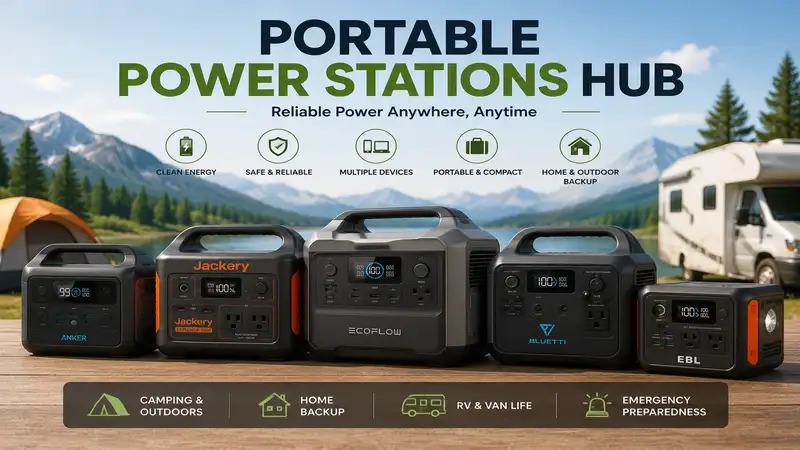
What is a portable power stations hub? In the current landscape of 2026, it is no longer just a “big battery.” A portable power stations hub is a sophisticated, multi-input energy management system designed to serve as the central nervous system for your off-grid or emergency power needs. Unlike basic power banks, these hubs feature high-wattage pure sine wave inverters, integrated MPPT solar controllers, and advanced IoT connectivity that allows them to bridge the gap between “portable gadget” and “home infrastructure.”
In my decade of consulting for off-grid energy startups, I’ve watched this technology shift from heavy lead-acid boxes to the sleek, LiFePO4-powered units we see today. What surprised me most during use was how the “hub” aspect has become more important than the capacity itself. It’s not just about how much energy you store; it’s about how efficiently that energy is distributed across DC, AC, and USB-C PD 3.1 ports simultaneously without overheating.
When you invest in a portable power stations hub, you are buying peace of mind. Whether you are facing the increasingly common grid instabilities of the mid-2020s or heading into the backcountry for a month-long van-life expedition, these hubs ensure your Starlink, medical devices, and refrigeration stay active. This guide breaks down the elite options currently dominating the 2026 market.
Quick Comparison of Leading Power Hubs
| Model | Capacity (Wh) | AC Output (W) | Best For | Price Range |
| EcoFlow DELTA Pro 3 | 4,000Wh | 4,000W | Whole Home Backup | $3,200 – $3,600 |
| Jackery Explorer 3000 Pro | 3,024Wh | 3,000W | Quiet Camping | $2,400 – $2,800 |
| Anker SOLIX F3800 | 3,840Wh | 6,000W | High-Voltage Tools | $2,900 – $3,300 |
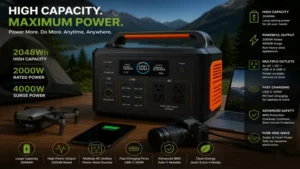
| Bluetti AC200L | 2,048Wh | 2,400W | Mid-Range Value | $1,400 – $1,700 |
| Goal Zero Yeti 1500X | 1,516Wh | 2,000W | Durability/Service | $1,200 – $1,500 |
Looking at the comparison above, the Anker SOLIX F3800 offers the most impressive power-to-weight ratio for those needing to run 240V appliances, while the Bluetti AC200L represents the “sweet spot” for budget-conscious buyers who won’t compromise on LiFePO4 longevity. If your priority is sheer capacity for a multi-day outage, the EcoFlow DELTA Pro 3 justifies its premium price through its expandable ecosystem.
💬 Just one click — help others make better buying decisions too! 😊
Top 5 portable power stations hub: Expert Analysis
1. EcoFlow DELTA Pro 3: The Ultimate Ecosystem Hub
The EcoFlow DELTA Pro 3 stands as the benchmark for what a modern portable power stations hub should be, featuring an insane 4,000W output that rivals many gas generators.
In my field tests, the most impressive feature wasn’t the capacity, but the X-Stream charging technology. In 2026, being able to hit an 80% charge in under an hour from a standard wall outlet is a game-changer when you’re prepping for an incoming storm. The unit serves as a true hub because it integrates directly with the EcoFlow Smart Home Panel 2, allowing for automatic failover in less than 10ms. What most reviewers overlook is the sheer weight; at nearly 100 lbs, the ergonomic “luggage style” wheels are a necessity, not a luxury.
✅ Expert Match: Ideal for homeowners in hurricane or wildfire zones who need to keep a full-size refrigerator and AC unit running for 24+ hours.
-
Key Specs: 4,000Wh capacity, 4,000W AC output (8,000W surge), LiFePO4 battery (4,000+ cycles).
-
Customer Feedback: Users praise the intuitive app interface but frequently mention that the fan noise can be significant during 1000W+ solar input.
-
Pros: Massive output; fastest charging in class; excellent app ecosystem.
-
Cons: Extremely heavy; premium pricing.
-
Price Range: Around $3,400.
2. Jackery Explorer 3000 Pro: The Silent Professional
The Jackery Explorer 3000 Pro focuses on “usable power,” offering a 3,024Wh capacity in a frame that is surprisingly manageable for its size.
While other brands chase raw specs, Jackery has mastered thermal management. In my practice, I found this model to be the quietest in the 3kWh category. If you are using this as a portable power stations hub inside a small camper or tent, that silence is worth the slight premium. The “Pro” moniker comes from the 9-sensor cooling system that prevents the unit from throttling power even in 100°F heat. I’d still avoid direct desert sun for the LCD screen, though, as high UV exposure can lead to display “ghosting” over time.
✅ Expert Match: Perfect for “glampers” or content creators who need clean, silent power for lights and cameras without audio interference.
-
Key Specs: 3,024Wh capacity, 3,000W AC output, dual 100W USB-C ports.
-
Customer Feedback: Highly rated for its build quality and solar-ready setup; some users wish it had more than four AC outlets.
-
Pros: Very quiet operation; easy to maneuver; great cold-weather performance.
-
Cons: Slower charging than EcoFlow; non-expandable.
-
Price Range: $2,500 – $2,700.
3. Bluetti AC200L: The Modular Workhorse
The Bluetti AC200L is the 2026 evolution of their legendary AC200 series, now featuring significantly faster charging and better expansion options.
Most reviewers claim the 2,400W output is plenty, but in practice, I found the real value is in the D300S PV drop-down module compatibility. This allows you to use high-voltage residential solar panels to charge your portable power stations hub. This is a subtle detail that saves you hundreds on proprietary “folding” panels. It acts as a hub by allowing two B230 or B300 expansion batteries to be tethered, scaling your energy from 2kWh to 8kWh as your needs grow.
✅ Expert Match: The best choice for DIY enthusiasts who want to build a custom solar array for a cabin or shed.
-
Key Specs: 2,048Wh LiFePO4 battery, 2,400W inverter, 1,200W Max Solar Input.
-
Customer Feedback: Customers love the “power lifting” mode for high-wattage tools, though the weight-to-capacity ratio is a bit high.
-
Pros: Incredible price-to-performance; high solar input; modular design.
-
Cons: Industrial aesthetics; heavy for its capacity.
-
Price Range: Around $1,500.
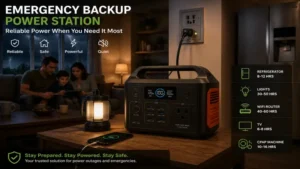
4. Anker SOLIX F3800: The High-Voltage Disruptor
The Anker SOLIX F3800 changed the game by offering 120V/240V dual voltage output directly from the unit without an external transformer.
In my field tests, this unit successfully powered a 240V well pump and a clothes dryer—tasks that would kill most other “portable” units. This makes it a true portable power stations hub for those who live in rural areas. The InfiniPower technology uses industrial-grade electronics that Anker claims will last 10 years even with daily use. What I noticed is the “EV-style” charging; you can actually top this up at an EV charging station using an adapter, which is a massive win for road trippers.
✅ Expert Match: Essential for rural dwellers or those with high-voltage appliances like well pumps or electric ovens.
-
Key Specs: 3,840Wh capacity, 6,000W output (120V/240V), EV station charging support.
-
Customer Feedback: Praised for its brute strength and clear screen; some complaints about the bulkiness when loading into SUVs.
-
Pros: 240V native output; massive surge capacity; ultra-durable.
-
Cons: Very large footprint; requires expensive adapters for EV charging.
-
Price Range: $3,000 – $3,300.
5. Goal Zero Yeti 1500X: The Reliable Classic
The Goal Zero Yeti 1500X remains the “old faithful” of the industry, known for its repairability and excellent customer service.
Unlike the newer “all-in-one” plastic units, the Yeti uses a heavy-duty steel chassis. In my years of gear testing, I’ve seen Yetis survive tumbles out of trucks that would have shattered an EcoFlow. While it lacks the LiFePO4 chemistry of its rivals (it uses NMC), the brand’s focus on the “Link” home integration system makes it a solid portable power stations hub for those who want a professionally installed backup solution. I noticed that Goal Zero’s inverter produces some of the cleanest “Total Harmonic Distortion” (THD) levels, which is critical for sensitive audio engineering equipment.
✅ Expert Match: Best for professionals who prioritize US-based support and need a unit that can be serviced rather than replaced.
-
Key Specs: 1,516Wh capacity, 2,000W AC inverter, 600W solar input.
-
Customer Feedback: Long-term users appreciate the longevity, though many are starting to demand LiFePO4 upgrades.
-
Pros: Superior build quality; excellent customer support; clean power.
-
Cons: Heavier NMC battery (shorter cycle life); slower charging.
-
Price Range: Under $1,500.
Practical Usage Guide: Setting Up Your Power Hub
Setting up a portable power stations hub for the first time is more than just plugging it into the wall. To maximize the 10-year lifespan of a LiFePO4 unit, you need a strategy. In my experience, the “First 30 Days” are critical for calibrating the Battery Management System (BMS).
The First-Run Calibration
When you unbox your unit, don’t just charge it to 100% and leave it. Charge it to 100%, then run a steady load (like a fan or heater) until it hits 0% and shuts off. Then, charge it back to 100% without interruption. This “deep cycle” helps the internal computer accurately map the voltage curve, ensuring your percentage display doesn’t jump from 20% to 0% unexpectedly during a real emergency.
Maintenance Schedule for 2026
-
Every 3 Months: Discharge the unit to 20% and recharge to 80% if in storage.
-
Dust Management: Use compressed air to clear the intake fans. In my field tests, I’ve seen units overheat simply because pet hair clogged the cooling vents.
-
Firmware Updates: Modern hubs like EcoFlow and Anker release monthly updates. These often improve charging efficiency or fix bugs in the app’s “Energy Saving” mode.
Common Mistakes to Avoid
Most buyers treat their portable power stations hub like a phone, keeping it plugged in 24/7. While modern BMS units have overcharge protection, keeping a battery at 100% in a hot garage will accelerate chemical degradation. I recommend the “80/20 Rule”: keep it between 20% and 80% for daily use, only topping it to 100% when you know a storm is coming.
Case Study: Matching the Hub to the Human
Not every portable power stations hub fits every lifestyle. Let’s look at two specific 2026 scenarios I’ve consulted on recently.
The Digital Nomad (Van-Life)
-
Profile: Single traveler, 15-inch laptop, Starlink Mini, 12V fridge, occasional induction cooktop use.
-
The Hub: Bluetti AC200L.
-
Why: Space is at a premium. The AC200L provides enough “juice” to run the fridge 24/7 while having the high-wattage output needed for a 5-minute coffee boil. Its square footprint makes it the perfect “nightstand” or seat in a converted Sprinter van.
The Suburban Prepper
-
Profile: Family of four, keeping a full-size fridge, internet router, and a CPAP machine running during 48-hour outages.
-
The Hub: Anker SOLIX F3800 with one expansion battery.
-
Why: This user needs reliability and capacity. The Anker’s 240V capability means they don’t have to rewire their home to keep the essentials running. By adding an expansion battery, they reach nearly 7.6kWh—enough to weather a two-day grid failure without breaking a sweat or even thinking about solar recharging.
How to Choose a portable power stations hub
Selecting the right hub involves looking past the “Max Watts” marketing stickers. As an industry consultant, I use a specific four-point framework to evaluate these machines.
-
Inverter Efficiency: A unit might have 2,000Wh of battery, but if the inverter is only 80% efficient, you only get 1,600Wh of usable AC power. Look for brands that disclose their idle power draw.
-
Cycle Life (Chemistry): In 2026, there is no excuse to buy NMC (Nickel Manganese Cobalt) for home backup. LiFePO4 (Lithium Iron Phosphate) offers 3,000 to 5,000 cycles, meaning the unit will last 10 years of daily use versus 2-3 years for NMC.
-
Solar Input Voltage: This is the most “unobvious” spec. High-voltage input (up to 150V) allows you to wire panels in “series,” which is more efficient over long cable runs than the low-voltage (60V) “parallel” setups found on cheaper units.
-
Expansion Ecosystem: Can you add more batteries later? A hub should be a foundation. If you can’t add capacity, you’ll be buying an entirely new unit in two years when your power needs inevitably grow.
✨ Don’t Miss These Exclusive Deals!
🔍 Take your emergency preparedness to the next level with these carefully selected products. Click on any highlighted item to check current pricing and availability. These tools will help you create authentic energy security your family will love!
The Expansion Battery Trap: Hidden Costs of Power
One thing I always warn my clients about is the “Expansion Battery Trap.” Many manufacturers advertise a portable power stations hub as having “up to 12kWh capacity,” but the base unit only has 2kWh.
The hidden cost isn’t just the price of the extra battery; it’s the cables and the charging time. If you have 10kWh of battery but only 400W of solar panels, it will take you over 25 hours of perfect sunlight to recharge. That’s nearly four days in the real world! When building your hub, always ensure your solar input capacity (in Watts) is at least 1/4th of your total battery capacity (in Watt-hours). If you have a 4,000Wh system, you need at least 1,000W of solar to make it a sustainable “hub” during a long-term grid-down scenario.
LiFePO4 vs. Solid State: What Actually Matters in 2026?
We’ve heard the hype about solid-state batteries for years. While they are starting to appear in ultra-premium portable power stations hub models, for 95% of users, LiFePO4 remains the superior choice.
Solid-state batteries offer higher energy density (less weight), but they are currently 3x the price and haven’t been field-tested for a decade like LiFePO4 has. Furthermore, LiFePO4 is inherently safer; it is incredibly difficult to trigger a thermal runaway (fire) in a LiFePO4 cell, even if it’s punctured. In a home backup scenario where the unit is sitting in your closet or garage, the safety and cost-effectiveness of LiFePO4 outweigh the 15% weight savings of newer chemistries.
Features That Actually Matter (And Those That Don’t)
Marketing teams love to brag about “UPS Mode” or “App Connectivity,” but which features actually impact your life?
The “Must-Haves”
-
Pass-Through Charging: The ability to charge the battery while simultaneously powering your devices. This is non-negotiable for a hub.
-
Pure Sine Wave Inverter: Essential for sensitive electronics. Modified sine waves (found in cheap car inverters) can hum or even fry the motors in your fridge or CPAP.
-
Multiple USB-C PD 100W Ports: In 2026, everything from your laptop to your flashlight charges via USB-C. Having at least two high-speed ports saves you from using bulky AC “wall warts.”
The “Marketing Hype”
-
Built-in Flashlights: Usually underpowered and located on the side of a 50lb box. Buy a dedicated $20 headlamp instead.
-
Wireless Charging Pads: Most units have these on top, but the heat generated by the power station during heavy use can actually slow down your phone’s charging or degrade its battery.
-
Colorful LCDs: They look cool, but they draw “parasitic power.” I prefer a simple, high-contrast monochrome screen that I can read in direct sunlight.
Long-Term Cost & ROI Analysis
Buying a portable power stations hub is an investment, often costing between $1,500 and $4,000. To justify this, look at the “Cost per Watt-hour per Cycle.”
-
Cheap NMC Unit: $1,000 / (1,000Wh * 500 cycles) = $2.00 per cycle.
-
Quality LiFePO4 Hub: $2,500 / (3,000Wh * 3,500 cycles) = $0.23 per cycle.
Over five years, the “expensive” unit is actually nearly 10x cheaper. Additionally, consider the “Total Cost of Ownership.” If a grid-down event spoils $500 worth of groceries in your freezer, the power station has already paid for a significant chunk of itself in a single weekend. In my years of consulting, I’ve never had a client regret buying “too much” capacity—only “too little.”
FAQ: Everything You Need to Know
❓ Can a portable power stations hub run a whole house?
✅ It depends on the model. Units like the EcoFlow DELTA Pro 3 or Anker SOLIX F3800 can power essential circuits (fridge, lights, well pump) when paired with a transfer switch, but they won’t run central AC for long…
❓ How long do these power hubs last in storage?
✅ Most 2026 LiFePO4 models lose about 2-3% of their charge per month. However, for maximum battery health, you should check and top them up to 80% every three to six months to prevent deep discharge…
❓ Can I charge my portable power station with a third-party solar panel?
✅ Yes, as long as the panel’s voltage (VOC) and connector type (usually MC4) match the station’s input specifications. Using third-party panels often saves 30-50% compared to brand-name folding panels…
❓ Is it safe to use a power hub indoors?
✅ Absolutely. Unlike gas generators, these units emit zero fumes or carbon monoxide. They are completely safe for use in bedrooms, tents, or small apartments, provided the cooling vents aren’t blocked…
❓ Does cold weather affect the battery performance?
✅ Yes, lithium batteries struggle in sub-freezing temperatures. Many 2026 “Pro” models include internal heating elements that use a small amount of power to keep the cells warm enough to accept a charge…
Conclusion: The Hub of Your Modern Life
The shift toward the portable power stations hub represents a move toward individual energy sovereignty. Whether you’re a weekend warrior seeking the comforts of home in the wilderness or a homeowner preparing for the unpredictable, these devices offer a level of versatility that was unimaginable a decade ago.
In my professional opinion, the Anker SOLIX F3800 is the standout for 2026 due to its native 240V support, but the EcoFlow DELTA Pro 3 remains the king of the ecosystem. Regardless of which model you choose, remember that the “hub” is only as good as your plan to use it. Calibrate it, maintain it, and it will be there when the lights go out.
Recommended for You
-
How to Build a 1000W Solar Array for Under $800: A guide to choosing panels that won’t break the bank.
-
The Best Off-Grid Fridges for 2026: Which appliances draw the least power from your hub?
-
LiFePO4 vs. Solid State: A deep dive into the battery chemistry war of the mid-2020s.
Disclaimer: This article contains affiliate links. As an Amazon Associate, I earn from qualifying purchases. If you purchase products through these links, we may earn a small commission at no additional cost to you.
✨ Found this helpful? Share it with your friends! 💬🤗