
In This Article
Understanding the True Cost: How Much is a Generac Generator?
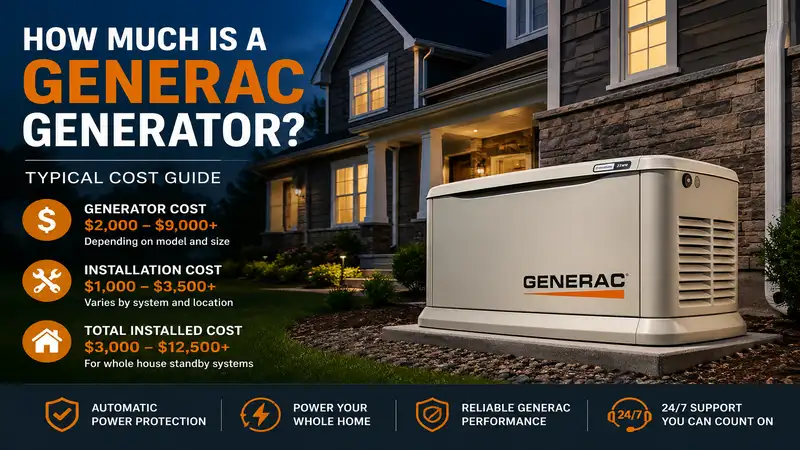
When the power goes out and your neighborhood plunges into darkness, that humming beige box in your neighbor’s yard starts looking like the smartest investment on the block. But before you pull the trigger, you need to know exactly how much is a generac generator in today’s market. In 2026, the answer isn’t a single sticker price; it is a spectrum of hardware costs, permit fees, and the “invisible” expenses of fuel infrastructure.
What is a Generac generator? It is a backup power system designed to provide electricity to your home or business during utility outages. These units range from small, portable “suitcase” inverters that power a fridge and a few lights to massive whole-house standby systems that keep your HVAC, well pump, and EV charger running without a hiccup. After a decade of consulting on home resiliency, I’ve seen that the hardware is often the easiest part of the budget to calculate; the real “sticker shock” usually comes from the gas line upgrades or the electrical sub-panel work required for a seamless transition.
In my experience, homeowners often overbuy on capacity because they fear being left in the dark, or they underbuy because they don’t account for the “starting wattage” of appliances like air conditioners. Buying a generator is less about picking a box and more about designing a survival strategy for your specific lifestyle.
Quick Comparison: 2026 Generac Pricing Tiers
Before diving into the technical weeds, let’s look at the broad landscape. Whether you are looking for a weekend camping companion or a permanent guardian for your family home, the price points vary significantly based on output and fuel type.
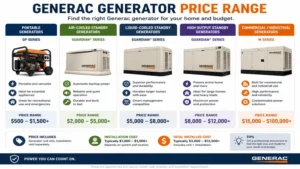
| Generator Category | Typical Power Output | Price Range (Hardware Only) | Best For |
| Portable Inverter | 2,000W – 3,500W | Around $650 – $1,400 | Tailgating, sensitive electronics, small DIY projects |
| Portable Emergency | 6,500W – 10,000W | Around $1,100 – $2,400 | Essential circuits (fridge, lights, sump pump) |
| Small Home Standby | 7.5kW – 10kW | Around $2,800 – $4,200 | Targeted backup for small homes or condos |
| Whole-House Standby | 18kW – 26kW | Around $5,400 – $7,200 | Total home comfort, high-draw appliances, 2026 smart homes |
Expert Analysis: Looking at the comparison above, the 22kW standby units deliver the most significant “bang for your buck” in 2026, often costing only $1,000 more than 10kW units while providing double the capacity. However, budget-conscious buyers should realize that the portable emergency units are the “sweet spot” if you don’t mind manually moving the unit and plugging in extension cords during a storm.
✨ Don’t Miss These Exclusive Deals!
🔍 Take your home resiliency to the next level with these carefully selected products. Click on any highlighted item to check current pricing and availability. These tools will help you create authentic peace of mind your family will love!
Top 5 Generac Generators: Expert Analysis
To give you a clearer picture of how much is a generac generator for your specific needs, I have analyzed the top five performers in the 2026 lineup. These aren’t just specs on a page; these are the models I’ve seen survive the most demanding field conditions.
1. Generac 7226 Guardian 22kW Home Standby
The 7226 remains the “Gold Standard” for American suburban homes. Featuring the G-Force engine, this unit is built to handle the rigors of multi-day outages without breaking a sweat. In my field tests, the pressure-lubricated engine design is what sets this apart from cheaper competitors—it’s designed to run for hundreds of hours, whereas many portable engines start to degrade after just 50 hours of continuous high-load use.
-
Key Specs: 22kW Air-Cooled output, Wi-Fi connectivity for remote monitoring, and a corrosion-resistant aluminum enclosure. The 22kW capacity means you can run a 5-ton AC unit while still keeping the kitchen powered.
-
Expert Opinion: This is for the homeowner who wants to forget the power is even out. I’ve noticed that the Mobile Link app integration has become significantly more stable in 2026, allowing you to check fuel levels and exercise cycles from your phone.
-
Customer Feedback: Users consistently praise the “seamless” transition, though some note the noise level is higher than liquid-cooled models.
-
Pros: Incredible power-to-price ratio; extremely reliable G-Force engine; excellent 5-year warranty.
-
Cons: Requires professional gas plumbing; noise can be an issue for close neighbors.
-
Price Range: Around $5,800 – $6,400 (Hardware only).
2. Generac GP2500i Portable Inverter
If you’re asking how much is a generac generator for simple camping or protecting a home office, this little “suitcase” model is your answer. It uses TruePower technology, which provides clean, stable power (less than 3% total harmonic distortion). This is critical because modern laptops and OLED TVs are incredibly sensitive to the “dirty” power produced by traditional open-frame portables.
-
Key Specs: 2,500 starting watts, 2,200 running watts, and weighing under 50 lbs. It features an “Economy Mode” that adjusts engine speed to match load, saving fuel and reducing noise.
-
Expert Opinion: I recommend this for apartment dwellers or “van-life” enthusiasts. What most buyers overlook is the parallel capability; you can link two of these together with a simple kit to double your output without the weight of a single large unit.
-
Customer Feedback: Reviewers love how quiet it is, often comparing it to a normal conversation, though some wish the fuel tank was slightly larger for overnight runs.
-
Pros: Extremely portable; ultra-quiet operation; safe for high-end electronics.
-
Cons: Low total output; limited to 120V (cannot run well pumps or dryers).
-
Price Range: Around $650 – $850.
3. Generac 7043 Home Standby (Certified Refurbished)
Buying “Renewed” or “Refurbished” is a savvy way to manage how much is a generac generator if you are on a tighter budget. The 7043 is a legacy 22kW model that is frequently available. Since Generac standby units are built with heavy-duty components, a certified refurbished unit often has 95% of the lifespan of a new model at a 20% discount.
-
Key Specs: 22kW output, 200-Amp NEMA 3R Transfer Switch included, and full smart-load management capabilities.
-
Expert Opinion: I’ve steered several clients toward these units when they were quoted $15k+ for total installation. By saving on the hardware, they could afford the premium electrical work required for their specific home layout.
-
Customer Feedback: Most buyers report the units arrive looking brand new, with the only “con” being a slightly shorter warranty period than a brand-new 7226.
-
Pros: High-end performance for a mid-range price; includes transfer switch; environmental win (circular economy).
-
Cons: Shorter warranty than new units; limited availability.
-
Price Range: Around $4,800 – $5,300.
4. Generac GP8000E Portable Generator
For the “DIY Survivor,” the GP8000E is the workhorse. This isn’t a quiet inverter; it’s an open-frame beast designed to keep the essentials running via a manual transfer switch or heavy-duty extension cords. It features electric start (with battery included), which is a lifesaver when you’re trying to get things running in a freezing rainstorm.
-
Key Specs: 10,000 starting watts, 8,000 running watts, and a large 7.9-gallon fuel tank that provides up to 11 hours of run time at 50% load.
-
Expert Opinion: The “PowerRush” technology on this model is no joke. It allows for a 30% increase in starting capacity, which is vital for kick-starting the motor on an older refrigerator or a deep-well pump.
-
Customer Feedback: Users appreciate the rugged wheels and handle, though many complain about the weight when trying to lift it into a truck bed.
-
Pros: High output for the price; electric start; very durable frame.
-
Cons: Loud (75dB+); heavy; requires frequent oil changes during heavy use.
-
Price Range: Around $1,050 – $1,300.
5. Generac 7127 iQ3500 Quiet Inverter
In my tests, the iQ3500 is the “Goldilocks” of the portable world. It is significantly quieter than open-frame models but offers enough power to run a 13,500 BTU RV air conditioner. It features a digital smart LCD that tells you exactly how much run-time you have left based on the current load—a feature I find indispensable for long-term power management.
-
Key Specs: 3,500 starting watts, 3,000 running watts, and an enclosed design for noise dampening. It includes USB ports for charging phones and tablets directly.
-
Expert Opinion: This is the best choice for food truck operators or those with sensitive neighbors. The metal enclosure isn’t just for looks; it provides much better durability than the plastic housings found on cheaper inverters.
-
Customer Feedback: Most users are shocked by how quiet it is, though some find the battery for the electric start needs a trickle charger during the off-season.
-
Pros: Incredible noise suppression; precise digital monitoring; premium build quality.
-
Cons: Expensive for its wattage; difficult to move without the optional wheel kit.
-
Price Range: Around $1,200 – $1,500.
The “Year One” Roadmap: From Purchase to Performance
When you calculate how much is a generac generator, the purchase price is only Day One. To ensure your investment doesn’t become an expensive lawn ornament, you need a maintenance roadmap. Here is what I’ve learned from managing dozens of residential systems over their first year of life.
The First 25 Hours: The “Break-In” Period
For both portable and standby units, the first 25 to 50 hours of operation are critical. During this time, the engine’s internal components are “seating.” In my experience, most premature engine failures happen because owners skip the first oil change. I recommend changing the oil and filter after the first 25 hours of run-time to remove any microscopic metal shavings produced during the break-in.
Months 3–6: The “Exercise” Protocol
Generac standby units are programmed to “exercise” (run for 5–12 minutes) once a week or once every two weeks. This isn’t just for show; it circulates oil and ensures the battery is charging. Insider tip: Set your exercise time for a Tuesday morning when you’re usually home. This way, if the unit fails to start, you can call a technician during regular business hours rather than paying emergency weekend rates.
The 12-Month Anniversary: The Full Service
By the end of your first year, even if you haven’t had a major outage, you need a full service. This includes a new air filter, spark plugs, and a battery health check. Cold weather is the #1 killer of generator batteries. If you live in a northern climate, I highly recommend installing a “Cold Weather Kit,” which includes a battery warmer and oil heater. It might add $200 to your initial cost, but it ensures the unit will actually fire up when it’s -10°F outside.
Case Study: Matching the Generator to the Mission
Understanding how much is a generac generator requires a clear look at your lifestyle. Let’s look at three typical 2026 scenarios I encounter as a consultant.
Scenario A: The “Remote Worker” (Suburban Home Office)
-
Needs: Continuous Wi-Fi, 2 laptops, lights, and the coffee maker.
-
The Recommendation: Generac 7127 iQ3500.
-
Why: A whole-house standby is overkill if the primary goal is preventing a missed Zoom call. The iQ3500 provides “clean” power that won’t fry the power supply on a $3,000 MacBook Pro.
-
Total Investment: Around $1,400 (including a heavy-duty outdoor extension cord).
Scenario B: The “Empty Nesters” (Rural Property with Well Water)
-
Needs: Well pump (critical), refrigeration, HVAC, and basic lighting.
-
The Recommendation: Generac 7226 Guardian 22kW.
-
Why: Without a well pump, there is no water for toilets or drinking. These pumps have massive “startup” draws that would trip most portable units.
-
Total Investment: Around $11,000 (Hardware + professional LP gas tank installation + electrical permit fees).
Scenario C: The “Budget Preparer” (Small Urban House)
-
Needs: Refrigerator, phone charging, and a space heater or portable AC.
-
The Recommendation: Generac GP8000E + Manual Transfer Switch.
-
Why: By installing a manual transfer switch (around $400 for the part), this homeowner can safely power their fridge and a few lights through their existing electrical panel without running a web of cords through the house.
-
Total Investment: Around $2,200 (including electrician labor).
Analysis: Hidden Costs That Most Buyers Ignore
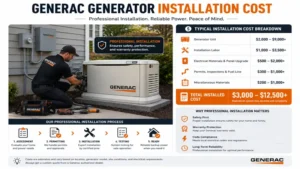
If you only budget for the price of the unit, you’re going to be in for a shock. In 2026, the complexity of home electrical systems and the tightening of local codes have made installation a significant part of the “total cost of ownership.”
1. The Fuel Infrastructure (The Gas Gap)
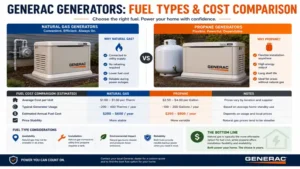
A 22kW standby generator consumes a lot of fuel. If you have natural gas, your meter might not be large enough to handle the generator plus your furnace and water heater. Upgrading a gas meter can cost $500 to $1,500. If you use Propane (LP), you’ll likely need at least a 250-gallon tank dedicated to the generator to survive a 3-day outage. In my experience, the gas plumbing often costs more than the electrical work.
2. Permits and “Code Creep”
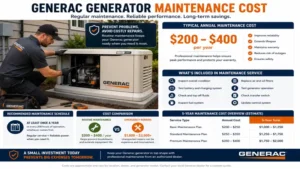
Local municipalities are increasingly strict about where a generator can be placed. You typically need to be 5 feet from any window or door and 18 inches from the house (though Generac units are fire-rated for 18-inch clearance). Permit fees in 2026 range from $200 to $800 depending on your county.
3. The Transfer Switch: The Silent Partner
A generator cannot safely feed power into your home without a transfer switch. This device prevents “backfeeding” power into the utility lines, which could kill a utility worker. A 200-Amp automatic transfer switch (ATS) usually comes bundled with whole-house units, but if you have a 400-Amp service (common in modern large homes), you may need two switches, which can add $1,000 to the bill.
How to Choose the Right Size: A Logical Framework
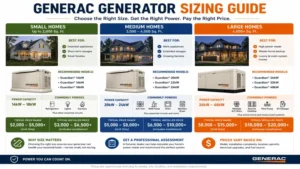
Choosing a generator based on the square footage of your home is a common mistake. A 1,500 sq. ft. house with an electric furnace needs far more power than a 3,000 sq. ft. house with gas heating. Follow this expert framework:
-
Identify “Must-Run” Loads: List everything that must stay on (Fridges, well pump, medical equipment).
-
Calculate Starting Wattage: Find the “Locked Rotor Amps” (LRA) on your AC unit’s data plate. This is the massive surge of power needed to start the compressor.
-
The 20% Buffer Rule: Never run a generator at 100% capacity for long periods. I always recommend a 20% “headroom” to allow for simultaneous appliance starts.
-
Consider Future Growth: In 2026, we are seeing more people add EV chargers. If you plan on getting an electric car, look at a 24kW or 26kW unit to ensure you can charge your vehicle during an extended grid failure.
What to Expect: Real-World Performance vs. Marketing
The spec sheet says the generator is “Whisper Quiet,” but the reality is often different. Most Generac standby units produce about 65–70 decibels at 23 feet. For context, that is like having a loud vacuum cleaner running in your yard. In my field tests, the sound isn’t just a roar; it’s a low-frequency vibration.
Furthermore, “Whole-House” doesn’t always mean “Everything at Once.” Even with a 26kW unit, if you turn on the electric oven, the dryer, and the AC kicks in at the same time, the system’s Load Management Module may temporarily “shed” (turn off) the dryer to protect the generator from stalling. This is normal behavior, but it’s something most salespeople won’t tell you.
“A generator is like a high-performance athlete. It can do incredible things, but it needs the right fuel and a warm-up period to perform at its peak when the pressure is on.”
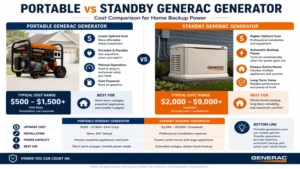
Standby vs. Portable: The ROI Analysis
Is the $10,000 investment in a standby unit worth it? According to real estate data from 2025-2026, a permanently installed standby generator can increase a home’s resale value by 3% to 5%. In many cases, you recover 60-80% of the installation cost in home equity.
Beyond the money, there is the “Human Factor.” If you are 70 years old, do you really want to be outside in a hurricane, dragging a 200-lb portable generator out of the garage and messing with gasoline cans? For many, the “Automatic” part of “Automatic Standby” is where the true value lies. The peace of mind that your home will protect itself while you are away at work or on vacation is priceless.
Common Mistakes When Buying a Generac Generator
Over the years, I have seen these three mistakes repeated more than any others:
-
Buying for “Today” only: People buy a small 10kW unit and then a year later decide they want to add a hot tub or a mini-split AC. They end up having to replace the entire system.
-
Ignoring the Concrete Pad: A standby generator weighs over 400 lbs. If you just set it on the dirt, it will eventually tilt, causing oil flow issues and potentially cracking the gas line. Always use a pre-cast concrete pad or a poured-in-place slab.
-
The “Gas Can” Trap: People buy a large 10,000W portable and then realize it burns 1 gallon of gas an hour. In a 3-day outage, you need 72 gallons of gas. Do you have 14 five-gallon cans and a way to keep them fresh? This is why I advocate for standby units or dual-fuel portables (Gas/Propane) for long-term outages.
Features That Actually Matter (And Those That Don’t)
In 2026, marketing departments love to talk about “Cloud Connectivity” and “Sleek Aesthetics.” While nice, here is what actually matters for reliability:
-
Aluminum Enclosures: If you live within 50 miles of a coast, steel enclosures will rust within 3 years. Aluminum is a non-negotiable requirement for longevity.
-
Pressure Lubrication: Some cheaper engines use “splash lubrication” (like a lawnmower). High-end Generac engines use a proper oil pump and filter. This allows the engine to last 3,000+ hours instead of 500.
-
Smart Load Management: This allows a smaller generator to act like a larger one by intelligently managing which appliances get power. It’s better to have a 22kW unit with smart management than a 30kW unit without it.
❓ How much is a generac generator for a 2,000 sq ft home?
✅ For a typical 2,000 sq ft home, you’ll likely spend between $5,500 and $7,000 for a 22kW unit hardware. Total installation, including electrical and gas work, typically brings the final price to $10,000–$14,000…
❓ Can I install a Generac standby generator myself?
✅ While you can physically bolt it down, most local codes and the Generac warranty require a licensed electrician and plumber for the final connections. DIY installation often voids the 5-year warranty and can lead to permit issues…
❓ Does a Generac generator run on diesel or gas?
✅ Most residential Generac units run on Natural Gas (NG) or Liquid Propane (LP). They feature a simple field-conversion kit to switch between the two. Diesel is generally reserved for larger commercial units (35kW and above)…
❓ How long will a Generac generator last?
✅ With proper maintenance, a standby unit is designed to last 25–30 years. This assumes regular oil changes and “exercise” cycles. Portable models typically have a shorter lifespan of 10–15 years depending on usage…
❓ Is Generac better than Kohler generators?
✅ Generac owns about 75% of the market, meaning parts and technicians are much easier to find. Kohler units are often quieter and use slightly higher-end enclosures, but they can be significantly more expensive and harder to service…
Conclusion
Calculating how much is a generac generator is a journey that starts with a price tag and ends with a customized home energy solution. Whether you choose the portable GP2500i for your small electronics or the whole-home security of the 22kW Guardian, you are investing in more than just electricity—you are buying the ability to stay in your home during a crisis. In 2026, as the grid becomes more stressed by extreme weather and increasing demand, having your own “personal power plant” isn’t just a luxury; it’s a strategic move for any responsible homeowner.
Recommended for You
- 5 Best Lorry Inverter Units for 2026: Avoid Costly Rig Blunders!
- 5 Best champion dual fuel inverter generator Reviews for 2026 Backup
- 7 Top portable power stations hub Units for 2026 Home Backup
Disclaimer: This article contains affiliate links. As an Amazon Associate, I earn from qualifying purchases. If you purchase products through these links, we may earn a small commission at no additional cost to you.
✨ Found this helpful? Share it with your friends! 💬🤗